


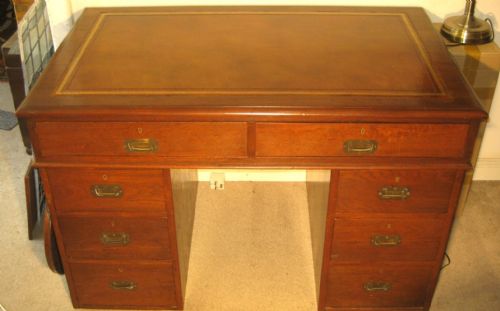


Colonial Furniture Writing Desk
A colonial furniture writing desk brings travel-worn craftsmanship and dense tropical hardwoods straight into a study.
Colonial Furniture Writing Desk
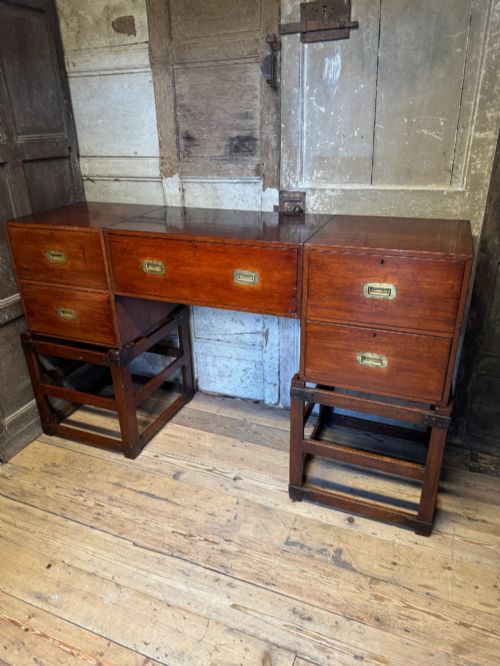
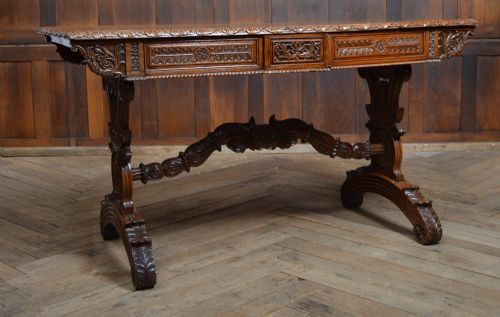
A colonial furniture writing desk spans campaign pieces designed for travel and intricately carved Anglo-Indian forms made for expatriate households. These items emerge across the nineteenth century, including Victorian examples alongside earlier seventeenth and eighteenth-century Spanish and Portuguese influences.
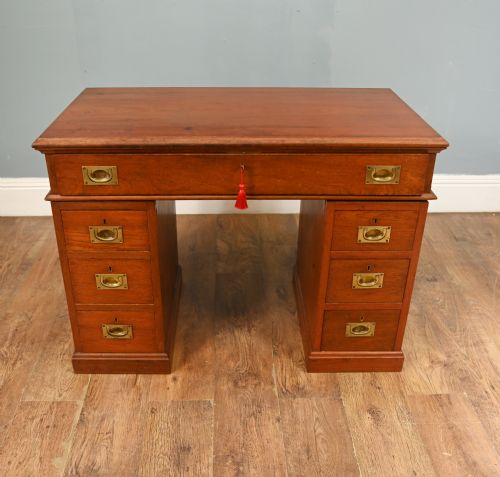
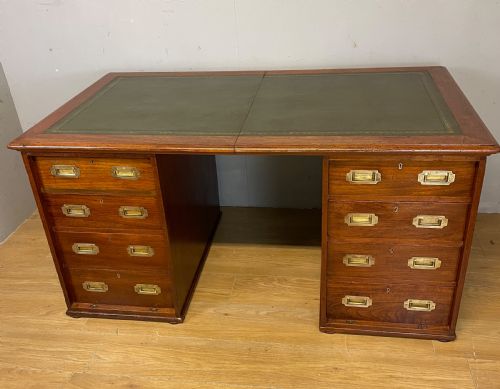
The most common forms on this page include campaign desks, secretaire chests fitted with drop-front writing surfaces, partner desks, and Davenport desks. Many incorporate practical compartments suited to administration and correspondence far from home.
How they were made
Cabinetmakers utilised dense timbers such as teak, padauk, camphorwood, walnut, and rosewood, often pairing them with brass reinforcement for structural resilience. Inset leather surfaces frequently top the writing areas of campaign and library desks.
Construction techniques prioritised modular dismantling for transport, seen in two-part and three-part campaign chests with recessed brass carrying handles. Other examples feature deep relief carving executed in hardwood.
Listings feature items built from teak, padauk, camphorwood, walnut, and rosewood, spanning periods from the seventeenth to the nineteenth century.
What varies in quality
Quality rests in the selection of the timber and the crispness of the carving or the precision of the brass hardware fittings. Finely figured grain and intact original leather inserts distinguish the finer examples.
Structural integrity of the modular joints and drawers determines the standard of campaign pieces. Superior items retain their original fitted interiors and working locking mechanisms.
Captain Fairbrother
The Colonial Furniture Writing Desk Glossary
- Campaign desk
- Portable furniture built in sections with recessed handles and brass corners designed for military officers on the move. These pieces dismantle easily for transport.
- Secretaire chest
- A chest of drawers featuring a fitted top drawer with a drop-front writing surface. Inside lie pigeonholes and small drawers for stationery.
- Padauk
- A heavy, durable tropical hardwood displaying a warm reddish hue that darkens with age. Cabinetmakers favoured it for carved Anglo-Indian furniture.
- Vargueno
- A traditional Spanish cabinet with a drop-front writing flap enclosing small drawers, often mounted on a decorative stand. They date back to the seventeenth century.
Colonial Furniture Writing Desk: Frequently Asked Questions
What is a campaign writing desk?
A campaign writing desk is a portable piece of furniture built to withstand military travel. These desks often feature modular sections and brass hardware for durability.
Officers used them in the field to maintain correspondence and records during postings abroad.
How do I identify Anglo-Indian furniture?
Anglo-Indian furniture typically combines traditional British forms with dense tropical hardwoods like padauk or teak. Look for deep, intricate floral or foliate carving executed by local artisans.
These pieces often date from the nineteenth century and reflect colonial trade and residency.
What woods were used for colonial desks?
Cabinetmakers utilised durable exotic timbers capable of surviving humid climates. Common materials include teak, padauk, camphorwood, and rosewood.
These woods provide both structural strength and rich natural colour.
How do I care for a leather desk top?
Keep the leather top away from direct sunlight to prevent drying and cracking. Clean gently with a slightly damp cloth and condition periodically.
Avoid using harsh chemical polishes on the leather insert.