

Vintage Carved Side Table
A vintage carved side table brings character and a worked surface to a room, drawing on periods from the Victorian era to the 1930s.
Vintage Carved Side Table
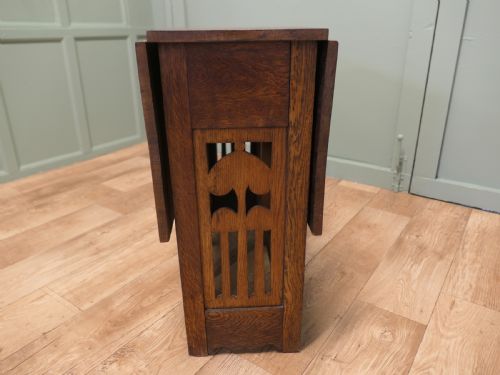
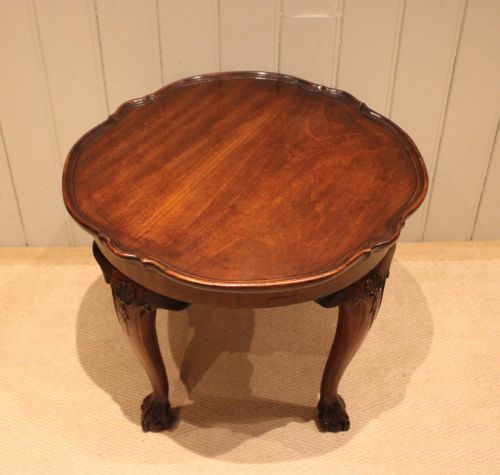
When you search for a vintage carved side table, you encounter a wide assortment of small foundational furniture designed for everyday placement beside chairs or beds. The selections span compact occasional tables, bedside cabinets, and wine tables originating from the Victorian and Edwardian periods through to the 1930s.
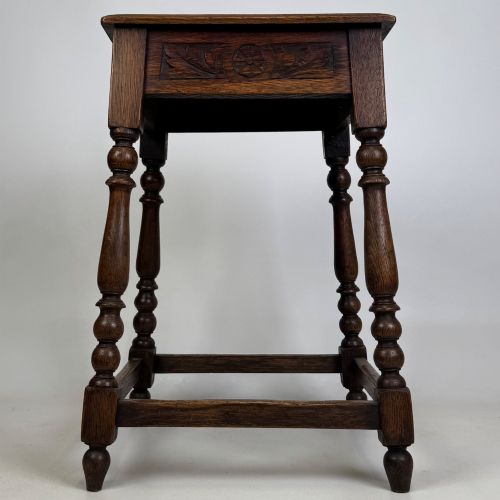
Oak and mahogany form the backbone of these pieces, alongside walnut and burr walnut iterations that showcase detailed grain patterns. You will frequently find stylistic revivals, including Jacobean Revival and Arts and Crafts examples, alongside French provincial designs and chip-carved surfaces.
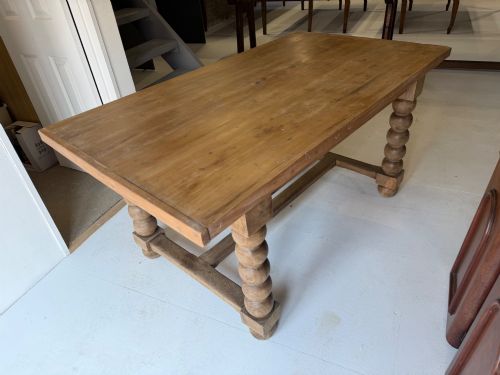
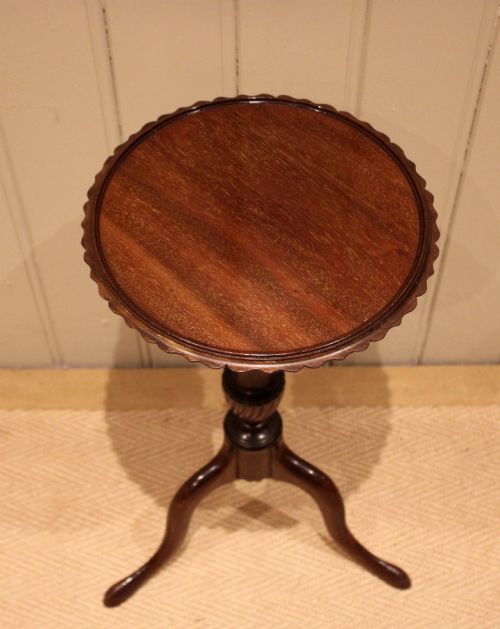
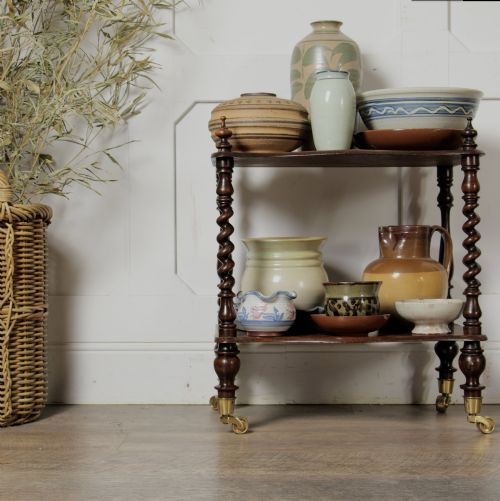
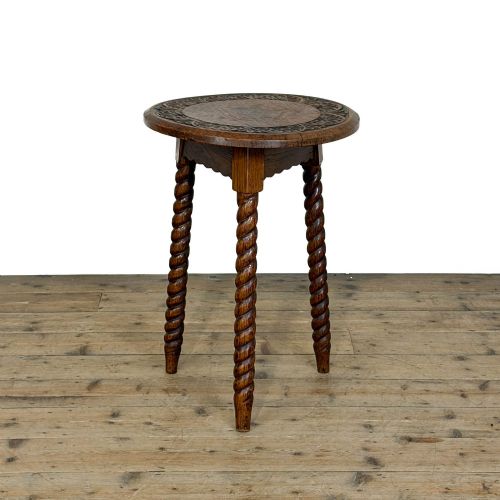
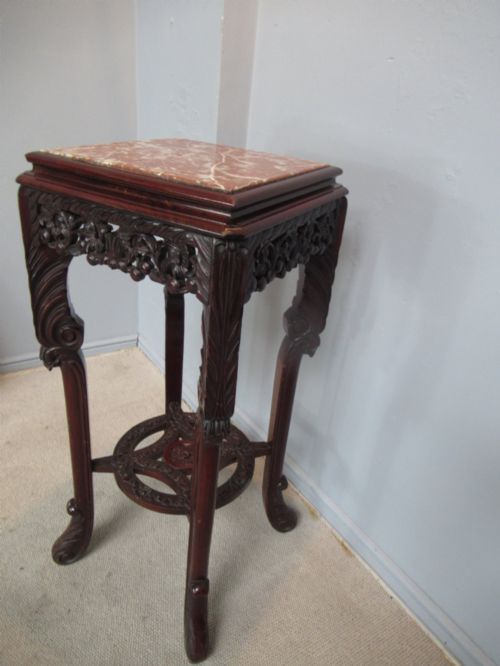
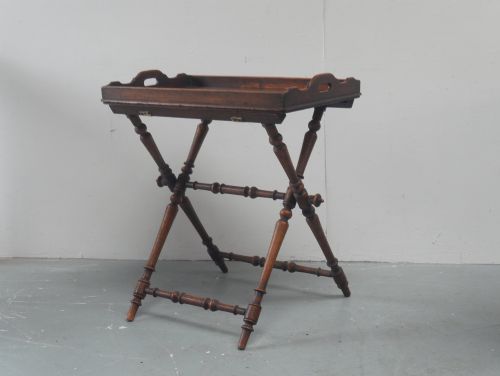
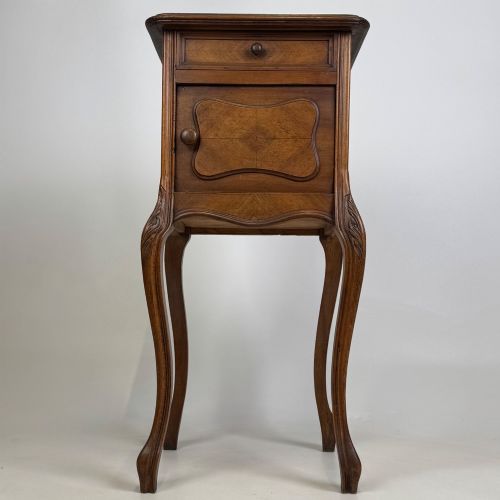
Formats range from simple tripod cricket tables and bobbin-legged stands to two-tier plant stands and marble-topped cabinets. These items served functional roles as lamp tables, washstands, and small serving surfaces in period homes.
How they were made
Cabinet makers utilised solid timbers such as oak, mahogany, walnut, and rosewood, often pairing them with marble tops or leather inserts. Turning and hand-carving defined the structural supports, resulting in barley twist legs, bobbin legs, and intricate chip carving.
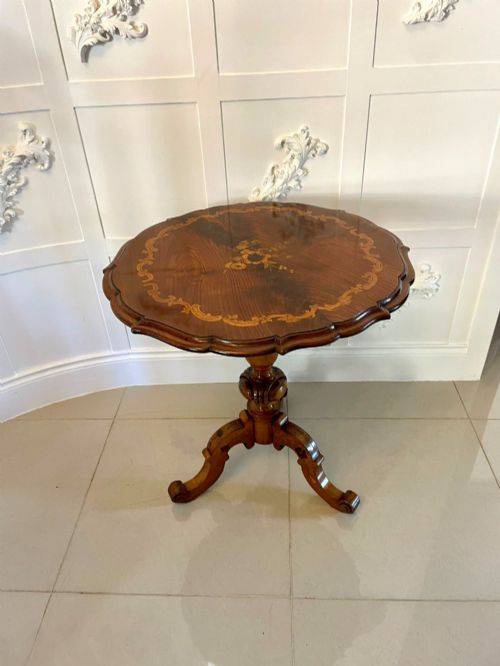
Inlaid decoration added visual depth, utilising marquetry and mother-of-pearl inlay embedded directly into the wooden surfaces. Brass hardware and fittings appeared on drawers and cabinets, complementing the darker tones of the polished timbers.
Makers occasionally incorporated mother-of-pearl inlay into Chinese occasional tables to catch the flickering light of oil lamps.
What varies in quality
The distinction between standard examples and superior pieces rests on the depth and crispness of the carving, alongside the selection of timber. Marquetry inlaid walnut and figured burr walnut require greater joinery skill than plain pine or basic oak variants.
The integrity of the construction, such as the snugness of joints on tripod bases and gateleg mechanisms, dictates the longevity of the table. Original surfaces and patination achieved through decades of polishing distinguish untouched examples from later alterations.
Maple and Co
The Vintage Carved Side Table Glossary
- Jacobean Revival
- A style popular in the late nineteenth and early twentieth centuries that mimics seventeenth-century English furniture, often featuring heavy turning and deep carving.
- Marquetry
- A decorative technique where thin pieces of wood veneer are fitted together to form pictorial or geometric patterns on a tabletop.
- Occasional table
- A small, versatile table intended to be moved around a room as needed for drinks, lamps, or books.
- Tripod table
- A small circular table supported by a pillar above three spreading feet, common in various eighteenth and nineteenth-century forms.
- Burr walnut
- Timber taken from a walnut tree growth, prized by cabinet makers for its highly swirling and intricate grain patterns.
Vintage Carved Side Table: Frequently Asked Questions
What rooms suit a side table?
These tables adapt easily to sitting rooms as lamp or occasional surfaces, or to bedrooms as bedside cabinets.
Their compact footprints allow them to fit into narrow hallways or beside armchairs without crowding the floor space.
How do I date a table?
Dating relies on identifying the prevailing timber choices, construction methods, and stylistic revival markers recorded in the design.
Edwardian and Victorian pieces often exhibit specific turning styles and hardware that link them to their decade of manufacture.
Are marble tops original?
Marble tops frequently appear on washstands, bedside cabinets, and plant stands from the Victorian and Edwardian periods.
They provided a durable, water-resistant surface for practical daily use in bedrooms and dressing rooms.
How should I clean walnut?
Maintenance involves dusting with a soft cloth and occasionally applying traditional beeswax to nourish the polished wood grain.
Avoid harsh chemical cleaners and keep antique timber away from direct heat sources to prevent the wood from drying out.