
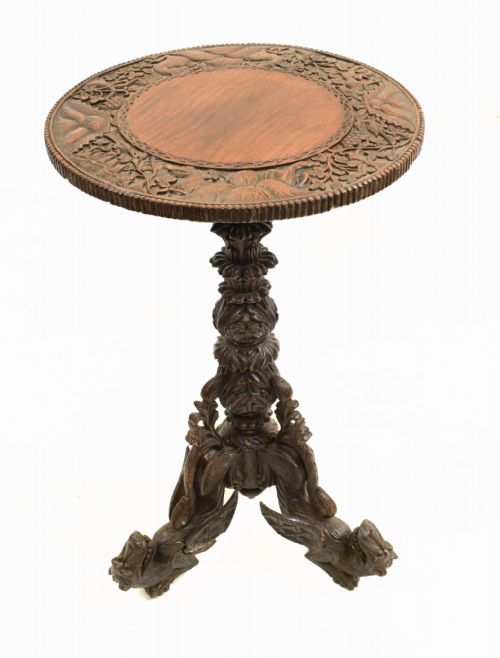


Indian Teak Side Table
An indian teak side table brings heavy colonial character and dense carving into a room, offering a sturdy surface with deep historical roots.
Materials and Construction
Makers built these tables primarily using solid teak, alongside rosewood and padouk, selected for durability and suitability for intricate carving. Timber preparation involved seasoning the wood to withstand shifting climates, ensuring stability in both tropical regions and European homes.
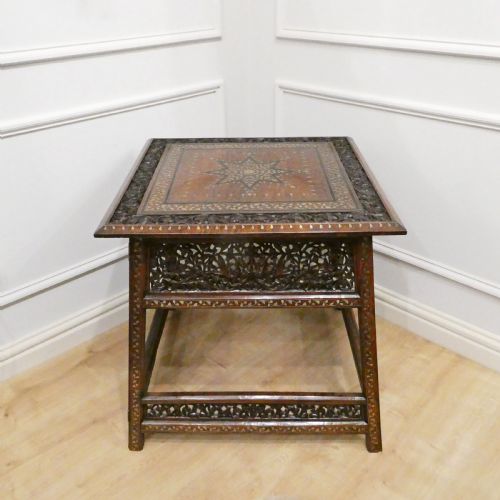
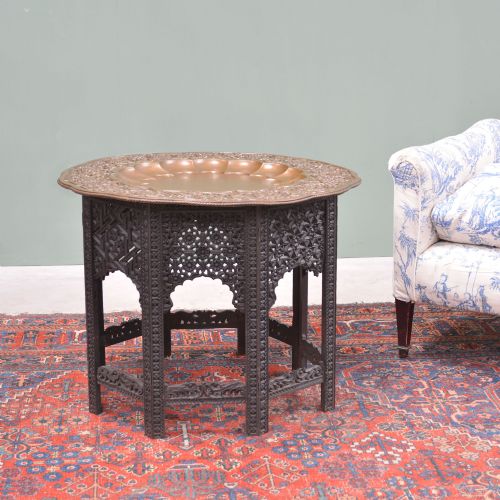
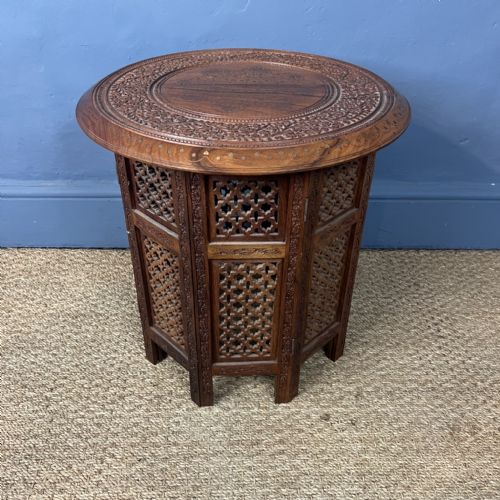
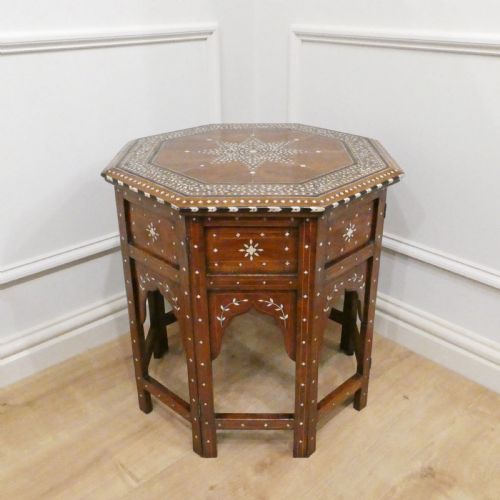
Surface embellishment relied heavily on pierce-carving, fretwork, and inlay techniques utilising brass, copper, and bone. Artisans assembled components using traditional joinery, occasionally incorporating folding frames designed for portability during the colonial period.
Assessing Craftsmanship
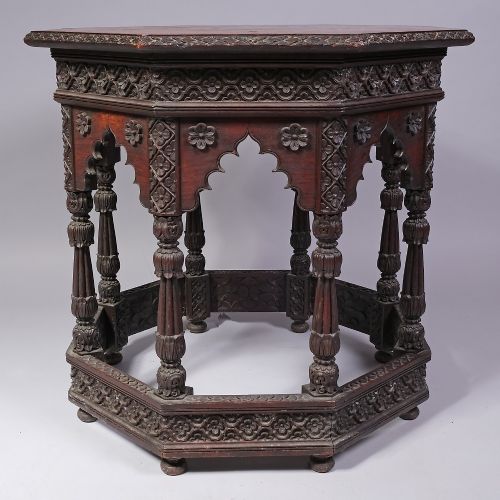
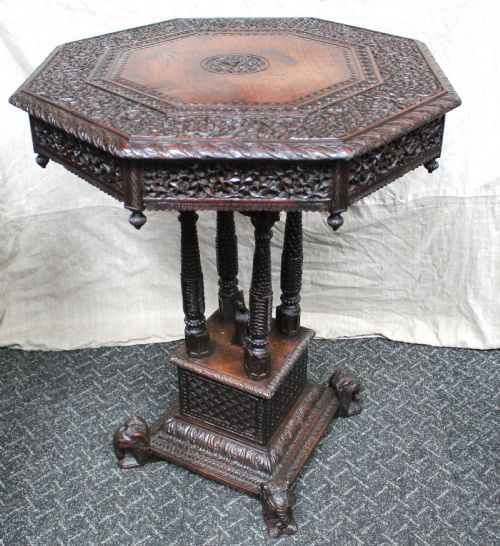
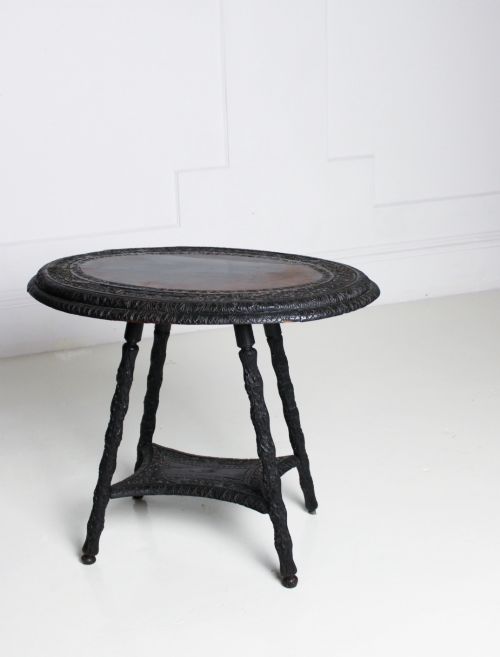
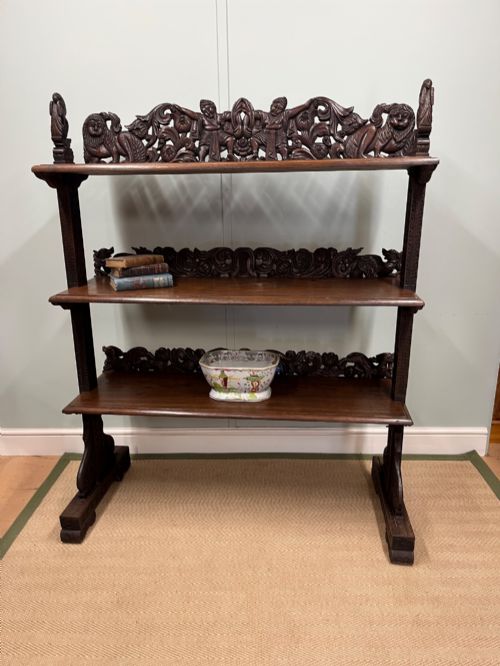
Quality rests in the depth, crispness, and symmetry of the hand-carving across panels and table tops, distinguishing meticulous workshop production from simpler output. The precision of metal and bone inlay work, where materials sit flush within routed channels, marks superior execution.
Structural integrity depends on the tightness of joints and the selection of well-figured timber with minimal warping across wide expanses like octagonal tops. Well-preserved original surfaces retain warm patination without obscuring the intricate detail of the underlying relief work.
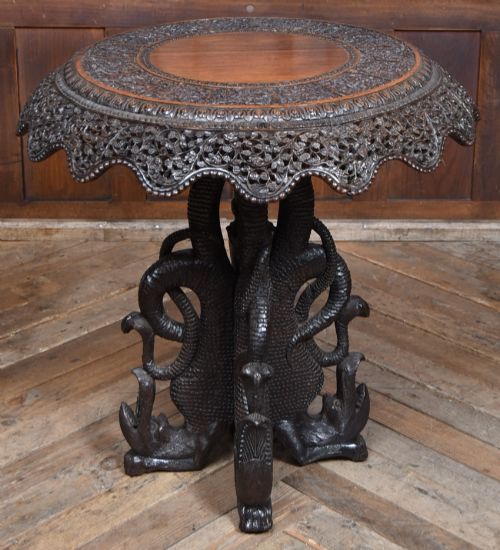
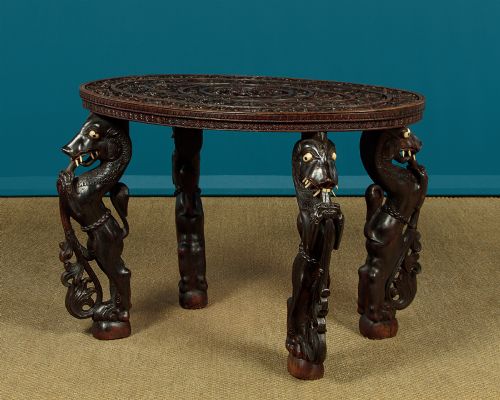
Several tables feature carved elephants supporting the top structure, reflecting distinct regional export preferences of the late nineteenth century.
The Indian Teak Side Table Glossary
- Hoshiarpur
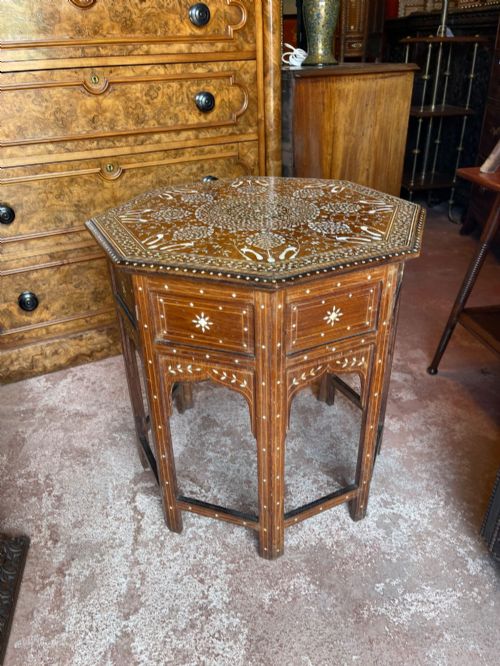
- A city in Punjab known for producing wooden tables and furniture featuring dense inlaid patterns of brass and bone. These pieces often display geometric stars, foliage, and architectural motifs.
- Octagonal
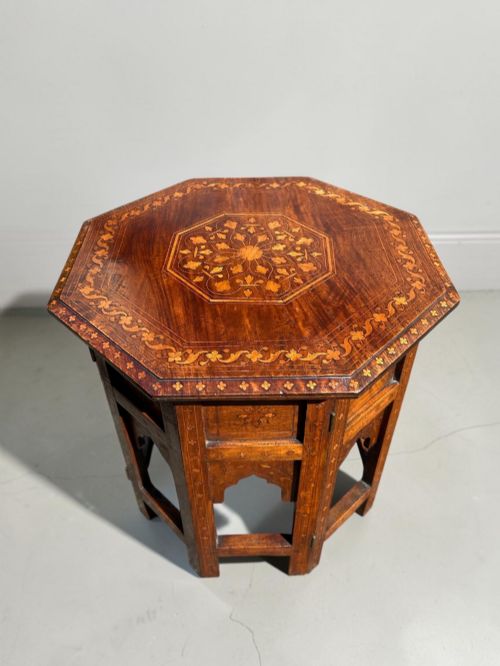
- An eight-sided table top shape frequently found on tables from northern India. This format provides distinct facets that showcase intricate border carvings and central medallions.
- Campaign Table
- Portable furniture designed for British officers on the move, typically featuring folding legs or removable tops. Teak construction ensured durability during transport.
- Pier Table
- A decorative table designed to stand against a wall, often beneath a mirror or window. These examples display formal carving suited to prominent reception rooms.
- Padouk
- A heavy, durable tropical hardwood with reddish tones utilised in fine nineteenth-century cabinet making. It accepts detailed carving and holds a fine natural polish.
Indian Teak Side Table: Frequently Asked Questions
What is an Hoshiarpur table?
An Hoshiarpur table originates from the Punjab region and is distinguished by intricate surface decoration. Artisans inset brass, copper, and bone into carved wooden grounds to create elaborate geometric and floral patterns.
These tables frequently feature octagonal tops and folding bases, making them popular decorative items during the late nineteenth and early twentieth centuries.
How do I care for a teak side table?
Maintain teak and hardwood surfaces by dusting with a dry cloth and avoiding excessive moisture. Occasional application of suitable furniture wax preserves the natural lustre of the timber.
Keep wooden tables away from direct heat sources and strong sunlight to prevent the timber from drying out or splitting over time.
Were these tables made for export?
Many tables produced during the colonial period were manufactured specifically for the European market and British residents abroad. They combined familiar Western forms with traditional Indian and Burmese carving techniques.
Production centres in regions like the Bombay Presidency and Punjab supplied these decorative furnishings to meet growing Victorian and Edwardian demand.
How do I identify the period of a table?
Dating relies on stylistic clues, construction methods, and materials recorded across nineteenth and early twentieth-century examples. Earlier nineteenth-century pieces often feature heavier solid construction and regional timber variations like padouk.
Later pieces from around nineteen hundred frequently incorporate folding mechanisms and complex brass inlay work associated with specific workshops.