

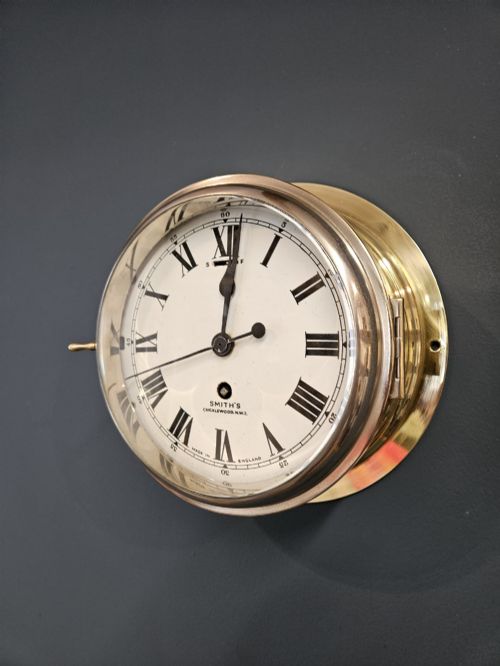
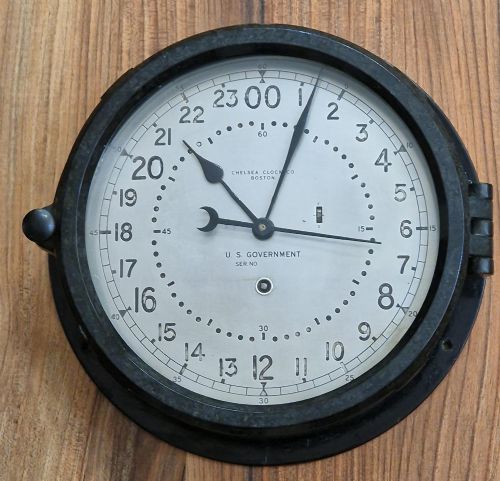
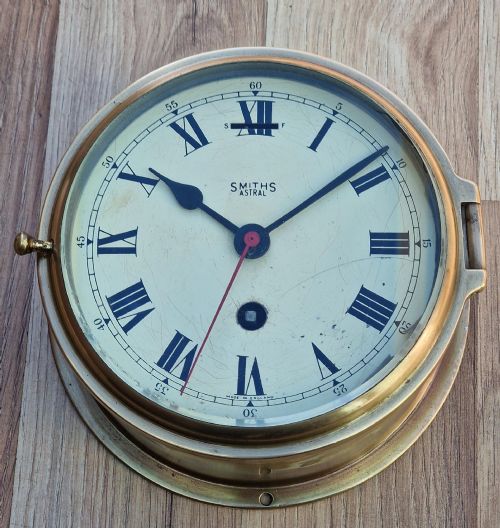
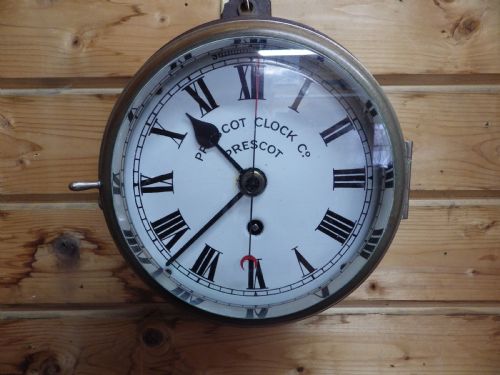


Vintage Bulkhead Clock
A vintage bulkhead clock brings sturdy marine engineering indoors, offering authentic nautical history for the home.
Vintage Bulkhead Clock
When you search for a vintage bulkhead clock, you are looking at robust timepieces originally designed to be mounted directly to the interior walls or bulkheads of ships. These instruments come in various forms, including standard wall clocks, engine room indicators, and radio room dials with specific colour segments.
On this page, the most common versions you will meet span from the mid-nineteenth century through to the mid-twentieth century, often associated with maritime, Victorian maritime, and industrial maritime styles. They range from simple brass-cased models to complex fusee movements housed in heavy metal frames.
The materials and construction reflect their maritime origins, designed to withstand rolling seas and damp conditions while keeping accurate time. Whether you encounter a Smiths Empire model or an Air Ministry piece, each item carries the distinct functional aesthetic of working vessels.
Materials and construction
The construction of these pieces relies heavily on solid brass, nickel-plated brass, and chrome for the heavy bezels and cases, protecting the internal mechanisms from harsh marine environments. Heavy glass covers the dials, secured tightly to withstand vibrations aboard ship.
Vintage Bulkhead Clock Retail Price Guide 2026
Typical asking prices for vintage bulkhead clock among the pieces listed under this phrase on Sellingantiques today, from the lower quarter to the upper quarter. They describe what is for sale here now, not the wider market.
Listings feature items spanning from eighteen-fifty to nineteen-sixty, utilising brass, chrome, glass, and enamel across industrial and Victorian maritime styles.
Judging quality and character
Quality in these maritime timepieces rests in the heft of the metal case, the clarity and preservation of the enamel dial, and the sophistication of the movement within. Examples featuring a chain fusee movement represent a higher tier of clockmaking craftsmanship compared to simpler spring-driven alternatives.
The distinction between standard commercial items and government or military-issued pieces, such as those marked by the Air Ministry, also influences the character of the object. Weight, crispness of the dial markings, and the integrity of the heavy brass or chrome housing separate the finer survivals from ordinary production.
Sestrel·Kelvin White and Hutton London·Smiths Empire·Prescot
The Vintage Bulkhead Clock Glossary
- Bulkhead
- A vertical partition dividing the compartments of a ship. These clocks take their name from being mounted directly onto these structural walls.
- Fusee
- A conical pulley used with a cord or chain to maintain an even pull on the mainspring as it unwinds. This mechanism improves the timekeeping accuracy of the clock.
- Enamel
- A glassy substance fused to metal under high heat to create a durable, smooth dial face. It resists yellowing and provides high contrast for the numbers.
- Bezel
- The metal ring that holds the glass face of the clock in place over the dial. In maritime examples, this is often hinged with a screw or lever latch for easy access.
Vintage Bulkhead Clock: Frequently Asked Questions
Why are they called bulkhead clocks?
These clocks receive their name because they were specifically designed to be bolted securely to the bulkheads, or interior walls, of ships. This mounting method kept the timepiece stable despite the movement of the vessel.
The heavy cases and secure screw bezels ensured the mechanism remained protected from the vibrations of the engine and the damp marine atmosphere.
How do fusee movements work?
A fusee movement uses a conical pulley connected to the mainspring via a fine chain or cord. As the spring loses tension, the chain moves to a wider part of the cone to maintain steady power.
This clever mechanical device ensures the clock exerts an even force throughout its running period, resulting in much more reliable timekeeping.
Where should I hang a heavy brass clock?
Because these instruments feature solid brass or chrome cases and thick glass, they carry considerable weight. You need to mount them directly into wall studs or use appropriate heavy-duty wall anchors.
Placing them at eye level in a study, hallway, or kitchen allows you to appreciate both the dial design and the solid construction properly.
How do I identify a radio room clock?
Radio room clocks feature distinctive coloured segments, typically red and green, painted onto the dial face. These markings indicated specific silent periods when radio operators listened solely for distress signals.
Finding these specific coloured markers adds a layer of operational history to the piece, setting it apart from standard time-only marine clocks.