



Vintage Brass Grinder
These vintage brass grinder pieces are solid metal apothecary and kitchen implements designed to crush and blend ingredients with enduring weight.
Vintage Brass Grinder
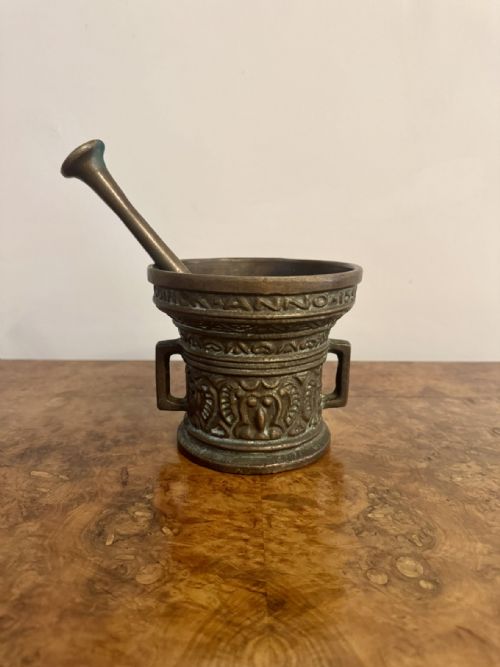
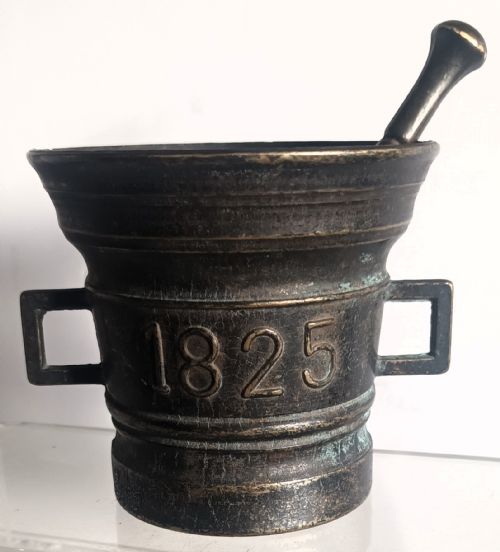
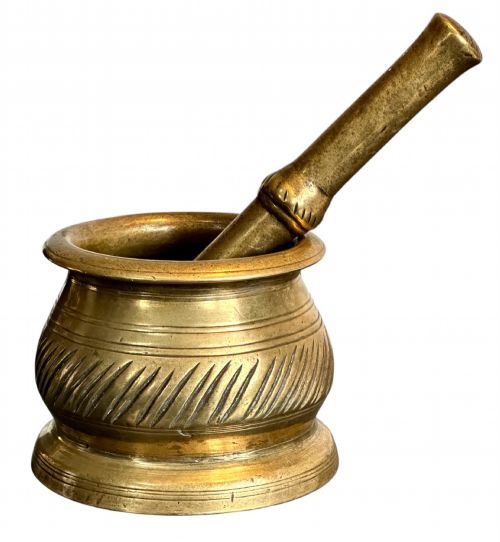
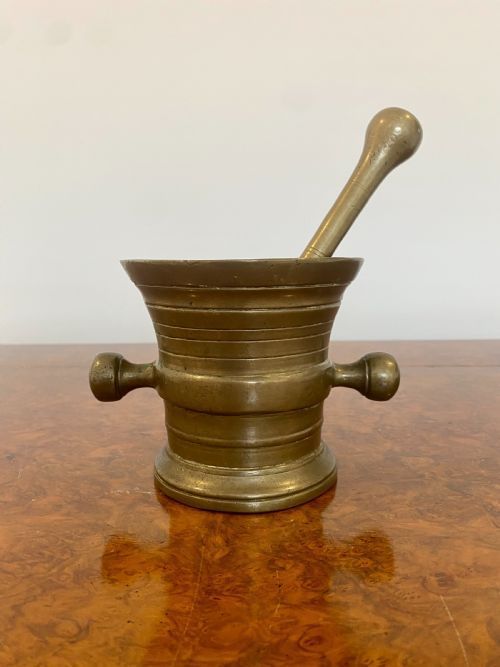
A vintage brass grinder takes the form of a mortar and pestle, appearing primarily across seventeenth-century, Georgian, and Victorian periods. These domestic and apothecary tools served chemists and kitchens for reducing dry substances into powders.
The objects span varied styles including Gothic Revival, Dutch Baroque, and Indo-Persian designs alongside functional English apothecary pieces. Most items on this page comprise heavy cast vessels paired with matching metal pestles.
Formations range from simple utilitarian chemist bowls to heavily decorated vessels adorned with flanges or moulded bands. Each survivor demonstrates the practical demands of historical kitchens and dispensaries.
How They Were Made
Foundries produced these objects primarily through sand casting or lost-wax methods using copper alloy compositions such as brass, bronze, bell metal, and cast bronze. Molten metal poured into moulds created thick walls capable of withstanding heavy impact during grinding.
Makers often finished the cast vessels on lathes or by hand-filing the exterior surfaces to smooth rough seams and sharpen decorative bands. The resulting thick metal bodies provided the mass needed to keep the mortar steady during use.
What Varies in Quality
Thickness and weight distinguish sturdy utility pieces from lighter or more decorative iterations, with heavier examples showing greater resistance to historic wear. The precision of the casting work also dictates the crispness of moulded rims and decorative mouldings.
Surface finish and the preservation of original tool marks or patination separate untouched examples from those altered by aggressive cleaning. The presence of a matching period pestle adds considerable integrity to the set.
The Vintage Brass Grinder Glossary
- Mortar
- The heavy bowl in which substances are placed for crushing. It provides a stable base with thick interior walls designed to resist repetitive impact from a pestle.
- Pestle
- The club-shaped tool used for pounding and grinding materials against the interior of the mortar. It matches the alloy and weight of its corresponding bowl.
- Bell metal
- A hard alloy of copper and tin utilised for its resonant qualities and structural strength. This dense material appears frequently in historic kitchen and apothecary vessels.
- Apothecary
- A historical practitioner who prepared and sold medicines and drugs. Their workspace required durable metal grinders for processing roots, resins, and minerals.
- Patina
- The surface sheen and oxidation developed on metal over centuries of exposure and handling. Collectors value this layer as an indicator of genuine age and unpolished history.
Vintage Brass Grinder: Frequently Asked Questions
What were brass grinders used for?
These implements served kitchens and apothecary shops for pulverising dry herbs, spices, and medical compounds into fine powders.
The heavy pestle crushed materials against the thick walls of the mortar through manual rotation and impact.
How do I clean a brass grinder?
Gentle dusting with a soft dry cloth preserves the historic surface and natural metal patination.
Harsh chemical polishes remove the aged skin that collectors look for on seventeenth and eighteenth-century examples.
Are the pestles original to the mortars?
Many sets survive together because the pestle and mortar were kept as a working pair in kitchens and dispensaries.
Checking the alloy colour and wear patterns helps determine if the two pieces share the same period of origin.
How can I tell the age of a grinder?
Stylistic details such as Gothic Revival mouldings or Dutch Baroque flares offer clear clues to manufacturing periods.
Casting irregularities and surface textures from early foundry work also distinguish seventeenth-century pieces from later Victorian examples.