
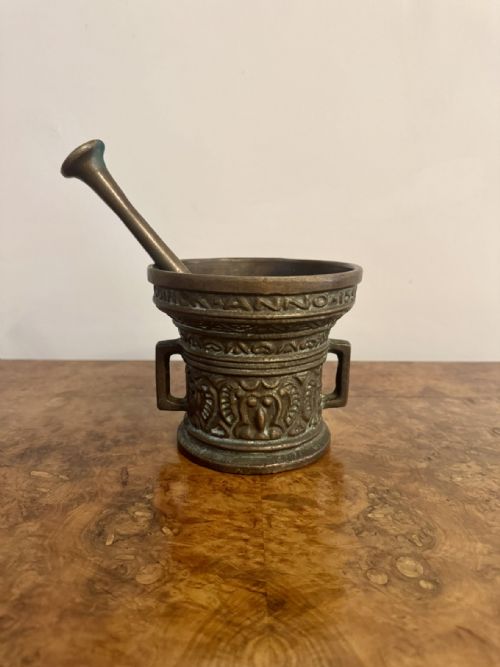
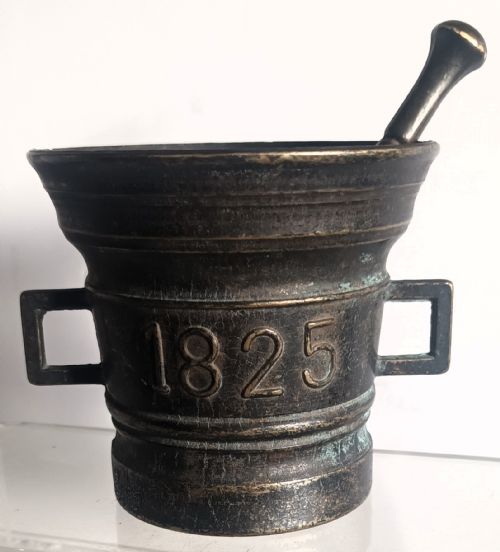


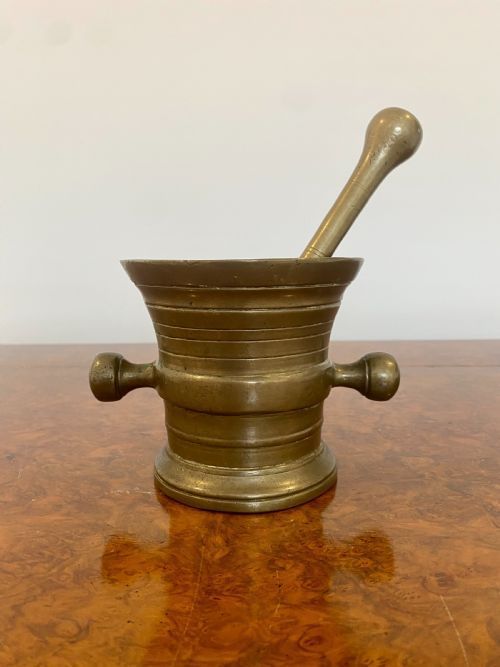


Heavy Bronze Mortar
These heavy bronze mortar implements span centuries of apothecary, kitchen and chemist use, offering robust metalware forms designed for serious grinding.
Heavy Bronze Mortar
A heavy bronze mortar serves as a utilitarian vessel for grinding ingredients in kitchens and apothecary settings. When you search for a heavy bronze mortar, you encounter functional metalware vessels often paired with matching pestles across multiple historical periods.
The selections available here range from early seventeenth-century examples to nineteenth-century interpretations. Common forms include apothecary mortars, chemist grinders and kitchen vessels from Georgian and Victorian eras.
How they were made
These pieces rely primarily on cast bronze, bell metal and brass materials shaped through traditional founding methods. The heavy walls and thick rims provide the structural integrity necessary for daily grinding tasks.
Surface textures often show the marks of early foundry work, while some examples incorporate iron elements or distinct pestle designs tailored to the vessel.
Heavy Bronze Mortar Retail Price Guide 2026
Typical asking prices for heavy bronze mortar among the pieces listed under this phrase on Sellingantiques today, from the lower quarter to the upper quarter. They describe what is for sale here now, not the wider market.
Listings feature materials spanning bronze, brass, bell metal and iron across the seventeenth, eighteenth and nineteenth centuries.
What varies in quality
Quality differences stem from the crispness of the casting and the balance of the metal proportions. Heavier walls and well-proportioned lips distinguish sturdier examples from simpler utility pieces.
The presence of an original matching pestle elevates the integrity of the set, while surface patination reflects the age and handling history of the individual object.
The Heavy Bronze Mortar Glossary
- Mortar
- A heavy bowl or vessel used with a pestle for crushing and grinding substances. It appears in kitchen, apothecary and chemist contexts.
- Pestle
- A heavy tool with a rounded end used for pounding and grinding substances within a mortar. Matching pestles complete the set.
- Bell Metal
- An alloy of copper and tin utilised for its resonant and durable qualities in casting heavy vessels. It provides a distinct metallic composition alongside standard bronze.
- Apothecary
- A historical practitioner who prepared and sold medicines, utilising specialised mortars for compounding remedies. Many surviving pieces originate from this tradition.
Heavy Bronze Mortar: Frequently Asked Questions
What were heavy bronze mortars used for?
These vessels served kitchens, chemists and apothecaries for grinding herbs, spices and medicinal ingredients into powders or pastes.
Their substantial weight and thick metal walls prevented the bowl from moving during heavy pestle work.
How do I date a bronze mortar?
Dating relies on stylistic clues, rim profiles, surface patination and recorded periods ranging from the seventeenth to the nineteenth century.
Earlier examples often display simpler, utilitarian profiles while later revival pieces incorporate Gothic or Victorian decorative elements.
Are pestles always original to the mortars?
Many sets pair mortars with contemporary pestles, though finding matched pairs from the exact same casting period remains a notable benefit.
Checking the wear patterns and metal colour helps determine if the pestle matches the vessel's age.
How should I clean a bronze mortar?
Maintenance typically involves dusting and gentle cleaning with a soft cloth to preserve the historical surface patination.
Harsh metal polishes strip away the aged character accumulated over centuries of use.