



Bronze Mortar Pestle
These heavy bronze mortar pestle sets carry centuries of kitchen, apothecary and domestic work in their metal.
Understanding a bronze mortar pestle
A bronze mortar pestle set is a heavy kitchen or apothecary tool designed for crushing and grinding herbs, seeds, and chemicals. When you search for bronze mortar pestle, you encounter pieces spanning from the sixteenth century through the Georgian era and into the nineteenth century.
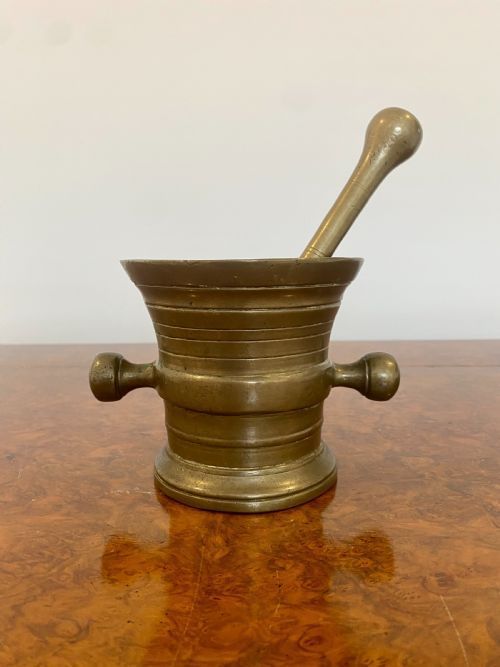
The English examples sit alongside continental pieces from France, the Netherlands, and oriental origins. Forms range from small chemist vessels to large kitchen grinders and heavy apothecary aids.
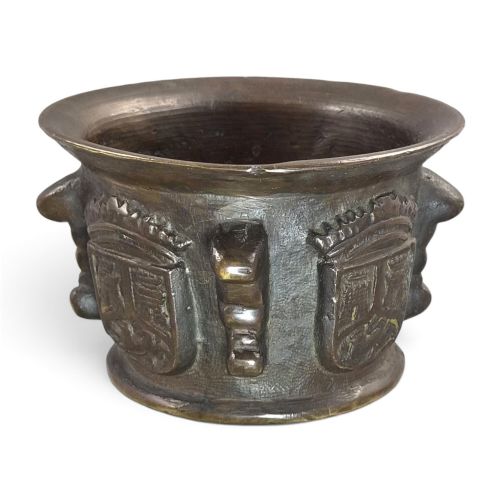
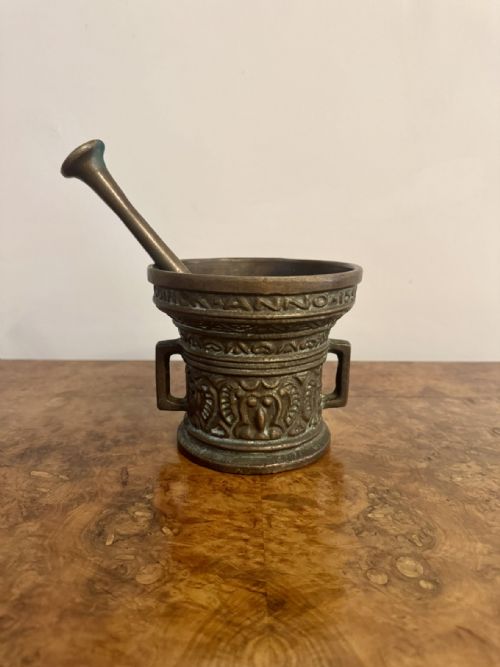
Most pieces combine the bowl-shaped mortar with a matching or associated pestle. Surface details vary from plain utilitarian designs to decorative motifs like coats of arms and fleur-de-lys.
Materials and casting methods
These vessels utilise cast metal, specifically bronze, bell metal, brass, and bronze alloys. The foundry work relies on traditional casting methods that leave characteristic surface textures and weight.
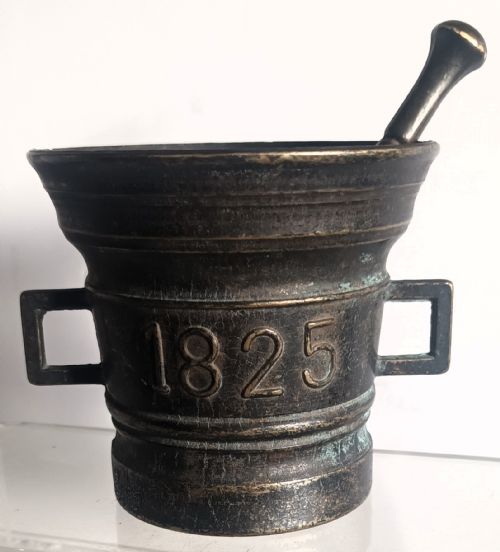
Pestles are shaped to match the interior curve of the mortar for effective grinding. The resulting metalware demonstrates substantial heft and durability across all periods.
Retail Price Guide 2026
Typical UK retail prices for bronze mortar pestle, calculated from the Sellingantiques database of over a million retail prices indexed since 2003. This retail price guide relies exclusively on Sellingantiques data; no external sources or auction records are used, so the figures do not describe the wider market.
Listings feature bronze, brass, bell metal, and metalware spanning from the sixteenth century through the Georgian era to the nineteenth century.
Judging quality and proportion
Quality rests in the weight of the metal and the crispness of the casting. Early examples often display more intricate surface decoration and stronger regional character.
Proportion between the mortar and its pestle alters the overall harmony of the set. Associated pestles added later in a piece's history show different wear patterns compared to original matched pairs.
The Bronze Mortar Pestle Glossary
- Pestle
- The heavy wand or club used with a mortar to grind materials. Its shape is matched to the bowl cavity.
- Bell Metal
- An alloy of copper and tin traditionally used for bells and high-grade mortars. It creates a resonant tone when struck.
- Apothecary
- A historical practitioner who prepared and sold medicines. Many mortars served this professional function in chemist shops.
- Carolean
- The period covering the reign of King Charles II. Pieces from this era date to the later seventeenth century.
Frequently Asked Questions
How do I date an old mortar?
Dating relies on stylistic clues, rim shapes, and surface decoration like coats of arms or cast patterns. Earlier pieces often display more robust seventeenth-century forms.
Documentation or specific stylistic markers help narrow down the century of manufacture from the sixteenth up to the Georgian period.
Were these used for cooking or medicine?
Mortars served both domestic kitchens and apothecary shops. They ground spices and food ingredients alongside chemical compounds and medicines.
Kitchen pieces show heavy utility, while chemist vessels often relate to apothecary and dispensary work.
What is bell metal?
Bell metal is a specific bronze alloy containing higher proportions of tin. This mixture provides extra strength and resonance.
Foundries used it for items needing durability and a clear tone, including high-status mortars.
Are the pestles original to the mortars?
Many sets pair the original mortar with its matching pestle, while others feature associated pestles gathered later. Wear patterns and alloy matching help determine if they started together.
Both original pairs and associated sets appear regularly across different centuries.