


Bronze Spice Grinder
A bronze spice grinder is a heavy, utilitarian vessel for reducing aromatics and herbs, offering tactile connection to centuries of domestic kitchen and apothecary work.
Bronze Spice Grinder
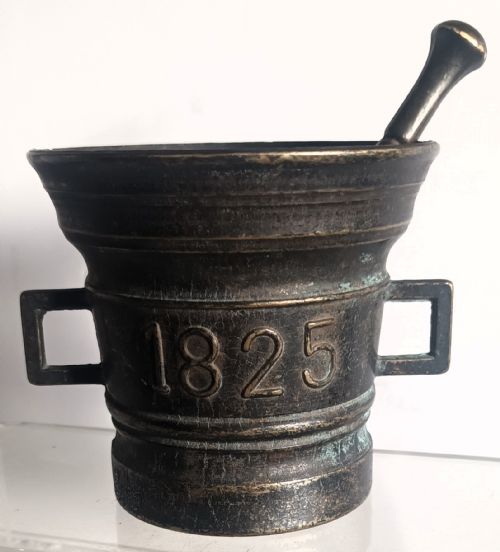
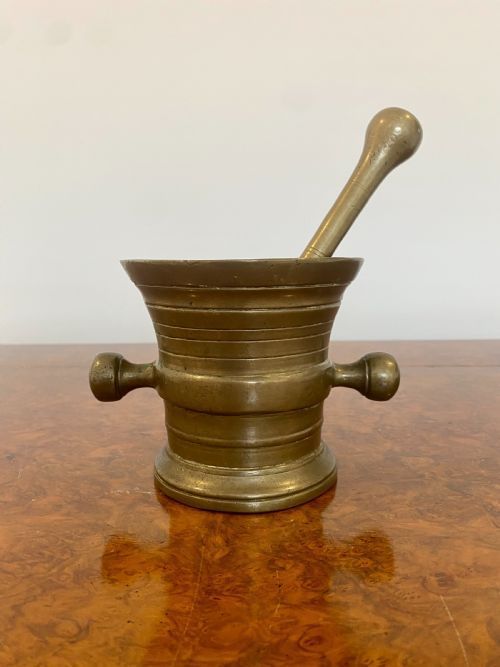
A bronze spice grinder, found here primarily in the form of the mortar and pestle, serves the practical task of breaking down raw seeds, roots, and dried ingredients. These robust implements surface across several distinct eras, spanning the seventeenth, eighteenth, and nineteenth centuries, alongside specific years like seventeen hundred and seventeen fifty.
The versions most commonly met on this page are English and Dutch examples, often associated with domestic kitchens, chemist shops, or apothecary use. Forms vary from simple utilitarian bowls to those decorated with motifs like the Tudor Rose, matched with either standard or unusual pestles.
What varies in quality
Quality rests heavily on the clarity of the casting and the proportional harmony between the mortar and its accompanying pestle. Superior examples display crisp decorative motifs, such as the Tudor Rose, and a balanced wall thickness that shows intentional design rather than crude mass.
The condition of the interior grinding surface also dictates standard, where heavy wear from centuries of use can either enhance the piece's honest utility or diminish its structural integrity. Furthermore, the presence of an original matching pestle elevates the overall cohesion of the set.
Listings feature pieces spanning the seventeenth century through to the nineteenth century, utilising bronze, brass, and bell metal.
The Bronze Spice Grinder Glossary
- Mortar and Pestle
- Mortar and Pestle. The mortar is the heavy bowl used to contain materials, while the pestle is the solid club wielded to crush them.
- Bell Metal
- Bell Metal. An alloy of copper and tin traditionally used for bells, known for its resonant qualities and durability in kitchen and apothecary wares.
- Apothecary
- Apothecary. A historical practitioner who prepared and sold medicines, often utilising sturdy metal grinders for compounding botanical ingredients.
- Tudor Rose
- Tudor Rose. The traditional floral heraldic badge of England, occasionally cast as a decorative motif on seventeenth-century metal vessels.
- Patina
- Patina. A chemical sheen developed on the surface of bronze through age and handling, indicating long exposure to the environment.
Bronze Spice Grinder: Frequently Asked Questions
How do I date an old mortar?
Dating relies on stylistic clues, casting techniques, and specific decorative motifs like the Tudor Rose found on the exterior surface.
Comparing the rim shape and overall proportions against known period examples helps narrow down whether the piece originates from the seventeenth, eighteenth, or nineteenth century.
Were these used for cooking or medicine?
These vessels served a dual purpose in both domestic kitchens for culinary spices and chemist shops for compounding medicinal ingredients.
Their robust metal construction handled the rigorous crushing of tough roots, seeds, and dried herbs with equal ease.
Should I clean the green patina?
The natural patina represents centuries of oxidation and handling, acting as a historical record of the object's age.
Removing this surface layer strips away the character and visual depth that collectors value in antique metalware.
Can I still use it for cooking?
While structurally sound and heavy enough for physical work, antique bronze can contain trace metals that transfer into food.
Most buyers prefer to display them as decorative historical objects rather than active kitchen utensils.