


Georgian Brass Mortar
A georgian brass mortar is a heavy metal vessel for crushing ingredients, prized for its tactile weight and domestic utility.
Georgian Brass Mortar
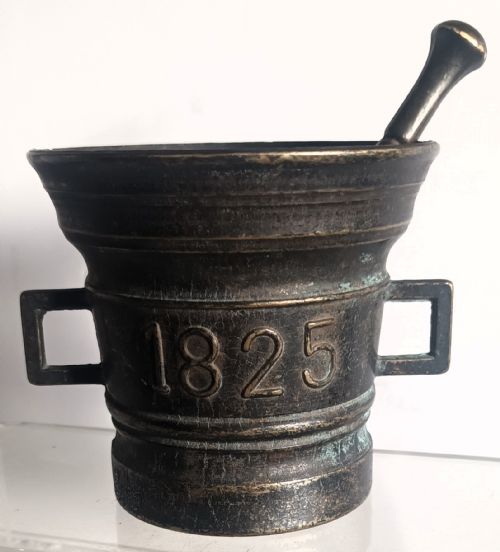
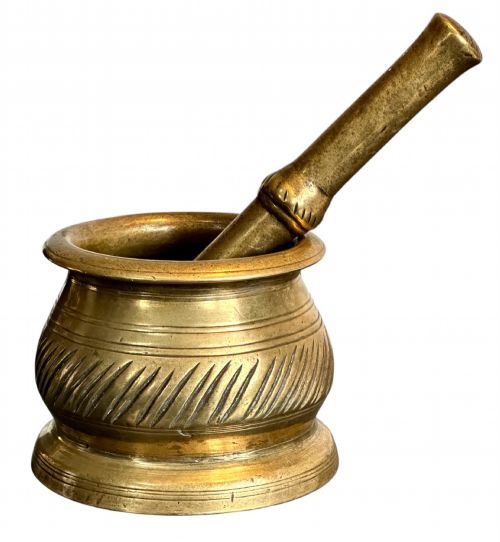
When you search for a georgian brass mortar, you encounter robust kitchen and apothecary implements designed for pounding spices, herbs, and medical ingredients. These pieces span the 17th, 18th, and 19th centuries, appearing alongside related bronze examples.
The objects take the form of heavy metal bowls, often accompanied by their matching pestles, functioning as utilitarian metalware for domestic and chemist use. You will frequently find them listed as mortar and pestle sets or duo pairings.
Examples on this page draw from Georgian and Victorian apothecary traditions, reflecting centuries of household preparation. Their origins remain grounded in English metalware and kitchen utility.
How they were made
The construction relies on durable metal casting using brass, bronze, and bell metal. These materials provide the substantial mass required to withstand repeated impact during grinding.
Foundries shaped the heavy vessels through metalworking techniques that produced thick walls and sturdy bases. Matching pestles were formed to fit the interior contours of each bowl.
Some sturdy mortars found a second life serving as plant holders long after their spice-grinding days ended.
What varies in quality
Quality rests in the proportional balance of the vessel and the integrity of the cast metal. Heavier examples with crisp casting marks and well-matched pestles stand apart from simpler utilitarian pieces.
The presence of a matching pestle alters the completeness of a set, while surface patination resulting from age and use defines the visual character of each piece.
The Georgian Brass Mortar Glossary
- Mortar
- A heavy bowl used with a pestle for crushing and grinding substances. It forms the primary vessel in kitchen and apothecary sets.
- Pestle
- A tool with a rounded end used for pounding and grinding materials inside a mortar. It provides the striking force in food and medicine preparation.
- Bell metal
- A hard alloy of copper and tin traditionally used for bells, noted for its resonant quality and strength. It frequently appears in early metalware vessels.
- Apothecary
- A historical practitioner who prepared and sold medicines and drugs. This context links many surviving metal grinders to medical and chemist use.
Georgian Brass Mortar: Frequently Asked Questions
What is a georgian brass mortar?
A georgian brass mortar is a cast metal grinding bowl used historically in kitchens and apothecaries. These heavy vessels served to crush herbs, spices, and medical ingredients.
They are collected today for their historic utility and tactile presence in domestic interiors.
How were mortars used?
Users placed ingredients into the metal bowl and struck or ground them using a matching pestle. This process broke down dry and wet substances for cooking and remedies.
Their substantial weight prevented the vessel from sliding during heavy manual grinding.
Are pestles always included?
Many listings offer complete sets that pair the original mortar with its matching pestle. Some pieces appear as duos or individual vessels without strikers.
Finding a matched set enhances the historical integrity of the metalware.
How do I date these pieces?
Dating relies on stylistic markers, material composition, and documented periods ranging from the 17th to the 19th century. Brass and bronze casting methods shifted gradually over these centuries.
Comparing the form and surface characteristics helps place each item within its proper era.