


Metal Grinding Bowl
These metal grinding bowl pieces are robust domestic and apothecary tools in bronze, brass, and iron that bring tactile history to a kitchen or study.
Metal Grinding Bowl
When you search for a metal grinding bowl, you are looking at mortars and pestles spanning centuries of kitchen and apothecary use. These pieces take the form of heavy metal vessels designed for crushing and grinding herbs, spices, or pigments.
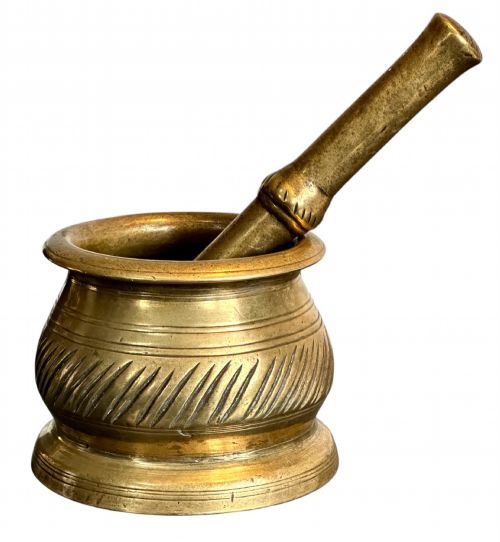
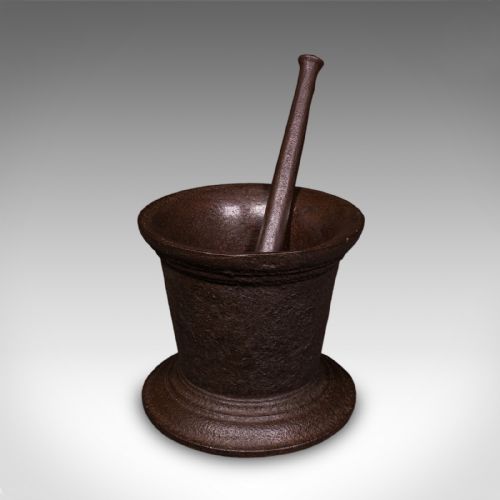
The versions you are most likely to meet on this page range from early seventeenth-century examples to Georgian and nineteenth-century pieces. They appear in materials like cast bronze, brass, and iron, often accompanied by their original pestles.
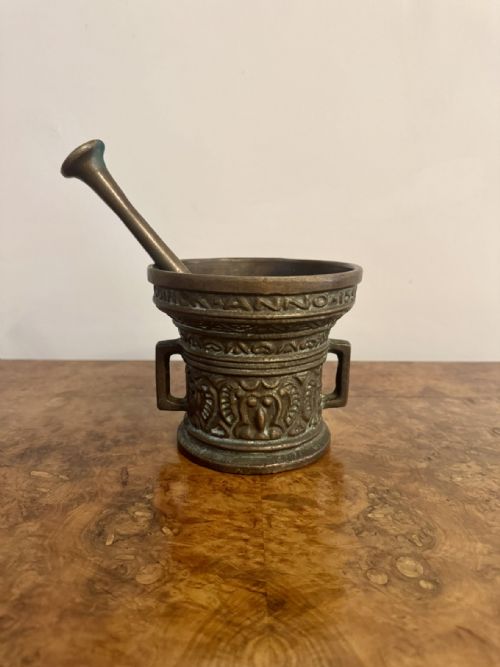
Forms vary from standard apothecary vessels and dye maker mortars to jardiniere adaptations. Many display decorative elements such as Tudor rose motifs or Gothic revival styling.
How they were made
These vessels are produced primarily through casting techniques in bronze, brass, and iron. Metalworkers poured molten alloy into moulds to create thick, heavy walls capable of withstanding heavy impact.
Decoration and surface detail were often built directly into the casting mould, yielding crisp relief work like Tudor roses or ribbed bands. Pestles were shaped to match the interior curvature of the mortar for efficient grinding.
Materials found across the inventory include cast bronze, brass, and iron, reflecting shifts in manufacturing over hundreds of years.
What varies in quality
Quality in these vessels rests on the integrity of the casting and the presence of a matching pestle. Thicker bronze or brass walls and sharp, well-defined surface ornamentation distinguish the finer examples from simpler utilitarianware.
Proportion and scale also define the hierarchy, ranging from standard domestic sizes to exceptional heavy industrial dye maker mortars. A pleasing patination developed through age and use elevates the visual presence of the piece.
The Metal Grinding Bowl Glossary
- Mortar
- A heavy bowl used with a pestle for grinding substances. These vessels are typically cast in bronze, brass, or iron.
- Pestle
- A heavy tool with a rounded end used for crushing and grinding materials inside a mortar. It is usually formed from the same metal as the accompanying bowl.
- Apothecary
- Pertaining to the preparation and sale of medicines. Apothecary mortars often feature sturdy proportions suited to pharmacy use.
- Jardiniere
- An ornamental pot for plants or flowers. Some metal mortars were later adapted to serve this decorative domestic purpose.
- Patina
- The surface sheen and colour acquired by metal through age and handling. This natural layer develops over decades of exposure and use.
Metal Grinding Bowl: Frequently Asked Questions
What were metal grinding bowls used for?
These vessels served in kitchens, apothecaries, and workshops for crushing herbs, spices, and chemical ingredients.
Industrial examples, such as dye maker mortars, handled heavier preparatory tasks on a much larger scale.
How do I date a metal mortar?
Dating relies on stylistic clues like Tudor rose motifs, Gothic revival details, or Georgian proportions recorded in the piece.
Material choices also offer guidance, as seventeenth-century examples frequently utilise cast bronze alongside later brass and iron variants.
Are pestles always original to the mortar?
Many listings include matched sets where the pestle and mortar share identical metal composition and wear characteristics.
Buyers should examine both components to confirm they originate from the same period of manufacture.
How do I clean an antique mortar?
Gentle dusting with a soft cloth preserves the historic surface and the natural patina built up over centuries.
Harsh chemical polishes should be avoided to protect the aged metal finish.