



Cast Bronze Mortar
A cast bronze mortar is a heavy vessel designed for grinding, bearing the unmistakable weight of centuries of apothecary and kitchen use.
Understanding the cast bronze mortar
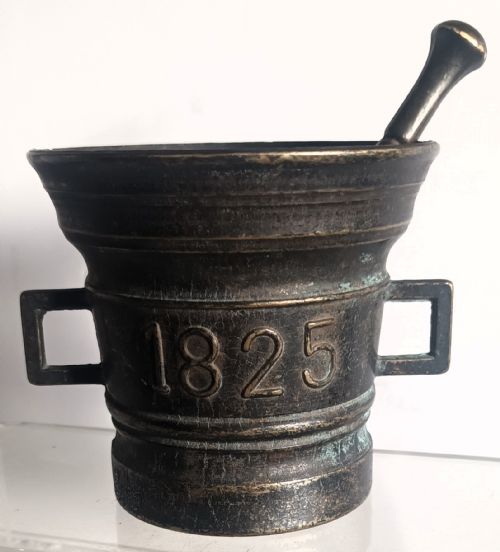
A cast bronze mortar represents a functional tool of the kitchen, apothecary, and dispensary, fashioned from durable metal alloys to withstand heavy pestle impacts. The pieces available here span several centuries, including seventeenth-century examples, eighteenth-century British items, and early Georgian forms.
Most examples function as single vessels or form part of a duo or trio with a matching pestle. Their origins stretch from English workshops to Spanish foundries, showcasing diverse regional decoration.
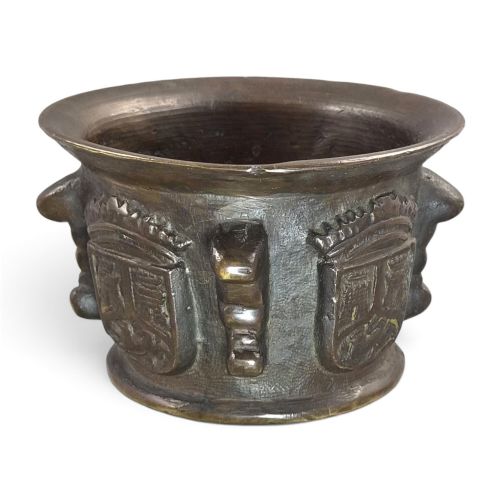
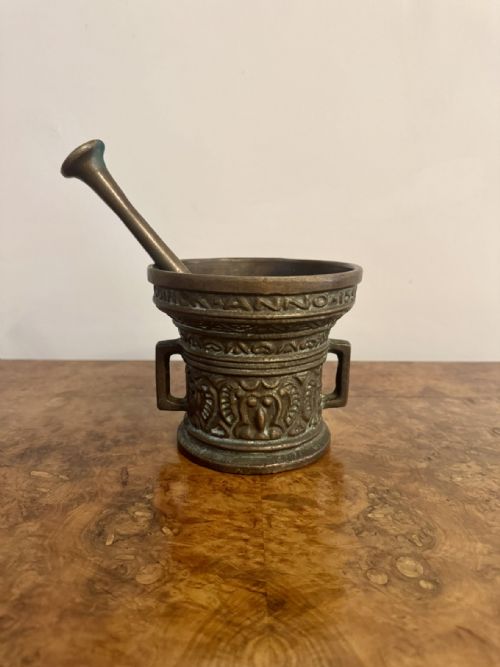
Collectors encounter specific decorative motifs cast directly into the metal walls, such as Tudor roses, the House of Enríquez arms, fleur-de-lis patterns, and acorn designs. These vessels range from utilitarian apothecary jars to elaborate pieces displaying Spanish Baroque influence.
Casting and metalwork
These items are produced through traditional metal casting methods using bronze or brass alloys poured into moulds. The molten metal takes the impression of intricate patterns, creating raised motifs on the exterior surface.
Foundries finished the heavy metal bodies by hand, resulting in thick walls and substantial bases designed to absorb the force of grinding herbs, chemicals, or foodstuffs. Pestles were shaped from matching metals to endure continuous friction inside the well.
Retail Price Guide 2026
Typical UK retail prices for cast bronze mortar, calculated from the Sellingantiques database of over a million retail prices indexed since 2003. This retail price guide relies exclusively on Sellingantiques data; no external sources or auction records are used, so the figures do not describe the wider market.
Some seventeenth-century mortars bear eccentric motifs like the Suffolk X mark paired with cheerful heart and acorn castings.
Evaluating craftsmanship and detail
Quality in a cast bronze mortar rests upon the crispness of the original casting and the complexity of the exterior relief work. Sharply defined coats of arms, bird and key patterns, or floral stamps indicate superior foundry work from skilled metalworkers.
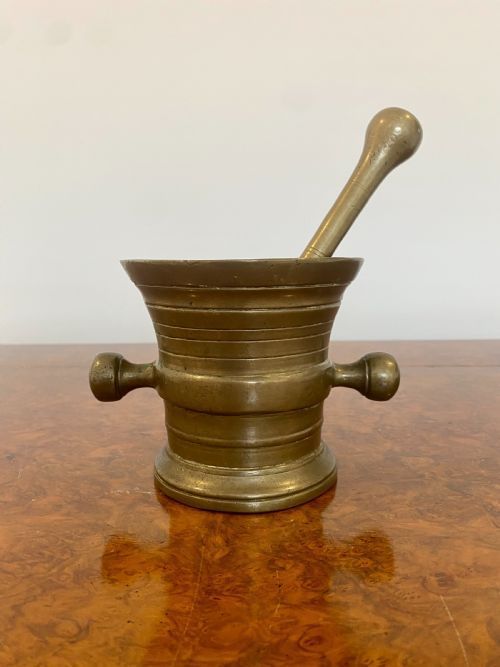
Proportion and metal composition also set finer examples apart from utilitarian ones. Vessels featuring balanced flared rims, thick robust walls, and integrated decorative moulding demonstrate a higher level of historical metalware artistry.
The Cast Bronze Mortar Glossary
- Mortar
- A heavy bowl used with a pestle to crush, grind, and mix substances. These vessels were essential tools in historical kitchens, apothecaries, and laboratories.
- Pestle
- A heavy, club-shaped hand tool used for pounding and grinding materials against the interior floor of a mortar. Surviving matched pairs are particularly valued by collectors.
- Apothecary
- A historical practitioner who prepared and sold medicines to physicians and patients. Apothecary mortars held various medicinal ingredients before the advent of modern pharmaceuticals.
- Foundry
- A workshop or factory where metal is melted and cast into moulds. Regional foundries developed distinct styles and decorative vocabularies.
Frequently Asked Questions
What is a cast bronze mortar?
A cast bronze mortar is a thick-walled grinding vessel made from a copper and tin alloy. These heavy bowls were utilised for centuries in kitchens and apothecary shops.
Craftsmen produced them by pouring molten metal into moulds, often incorporating decorative reliefs and heraldic symbols into the exterior walls.
How were these mortars used?
Historical users relied on these vessels alongside a pestle to grind herbs, spices, medical ingredients, and chemical compounds. The sheer weight of the metal kept the bowl stable during vigorous pounding.
Beyond utilitarian duties, decorative examples often sat on display in professional apothecary shops to signal the practitioner's status.
How do I date a bronze mortar?
Dating relies heavily on style, casting marks, and specific decorative motifs such as Tudor roses or heraldic arms. Seventeenth-century examples often display distinct surface patterns like the fleur-de-lis or bird and key designs.
Later Georgian and eighteenth-century pieces tend to show cleaner lines and different rim profiles compared to earlier Spanish Baroque or English Tudor items.
Are pestles always included?
Many surviving vessels lack their original pestles due to centuries of separate storage or loss. Finding a mortar accompanied by a matching pestle is less common.
Collectors frequently acquire mortars and pestles as duos or trios when historical sets remain intact.