
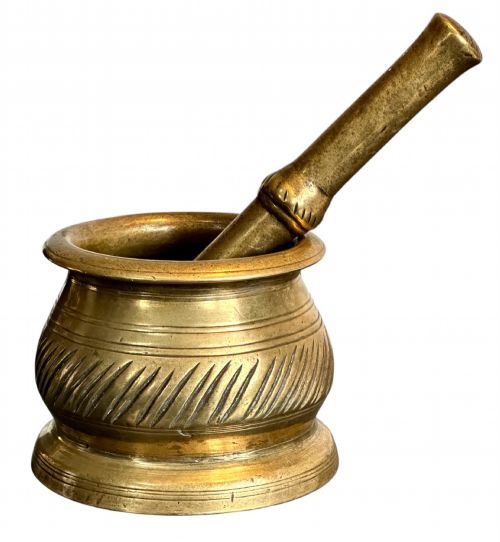
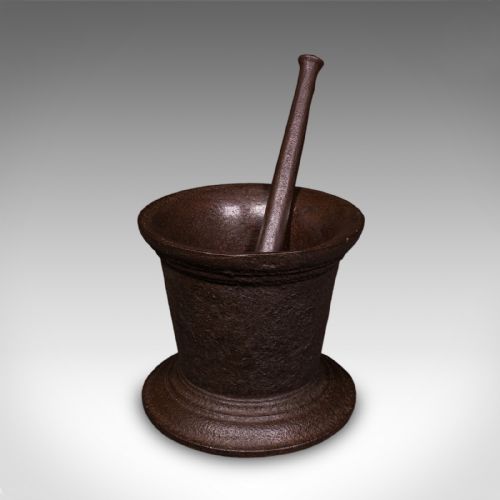


Antique Metal Mortar
An antique metal mortar brings centuries of heavy kitchen and apothecary use straight to a modern table.
What an antique metal mortar is
An antique metal mortar is a heavy vessel designed for grinding and pounding herbs, spices, and medicines, forming a core part of historic kitchen and apothecary equipment. When searching for an antique metal mortar, buyers encounter domestic and professional instruments spanning several centuries of metalworking.
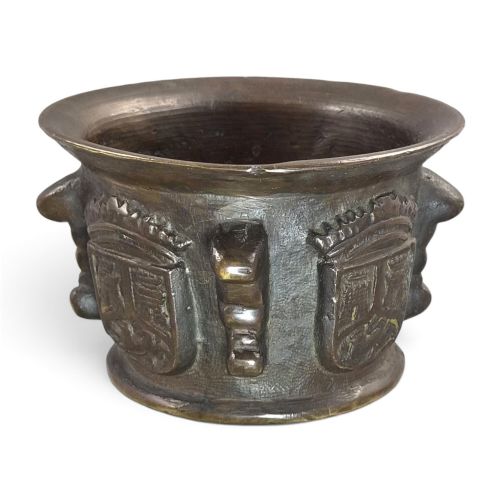
The pieces available include robust examples from French chateaux and English households, alongside Continental pieces. Forms range from simple utilitarian bowls to heavily decorated vessels featuring heraldic motifs and cast patterns.
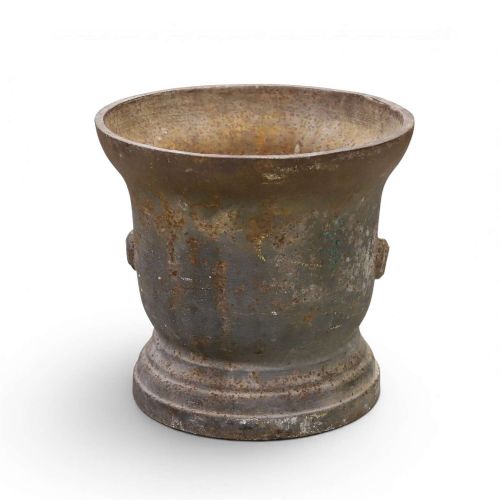
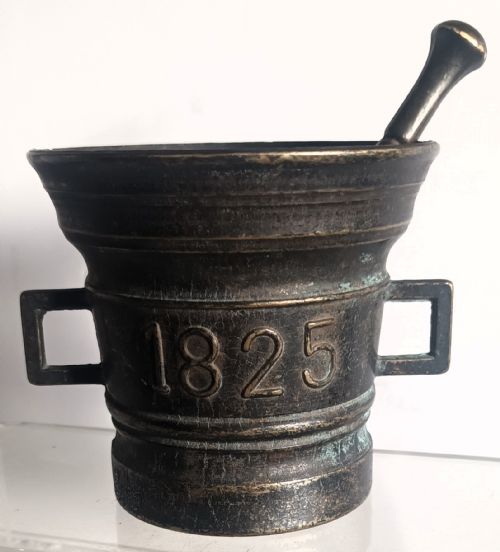
Dated examples stretch from the late sixteenth century through the Georgian era and into the nineteenth century. Most surviving pieces are cast in bronze or iron, reflecting their demanding daily function.
How they were made
Metal mortars were produced using traditional foundry casting techniques, pouring molten bronze or iron into sand or loam moulds. Many early examples display the natural textures and slight surface irregularities left by these historical casting methods.
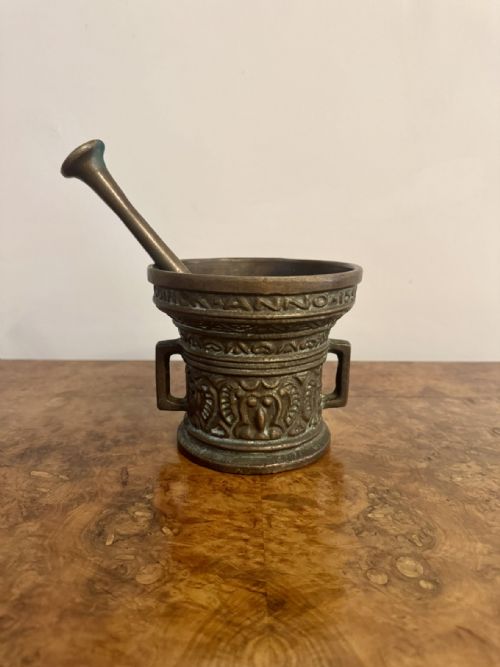
Decoration was applied directly to the mould or chased onto the metal after cooling. Common ornamentation includes decorative bands, heart-shaped cartouches, oak leaves, and cast motifs such as the fleur-de-lis.
Retail Price Guide 2026
Typical UK retail prices for metal mortar, calculated from the Sellingantiques database of over a million retail prices indexed since 2003. This retail price guide relies exclusively on Sellingantiques data; no external sources or auction records are used, so the figures do not describe the wider market.
Several 17th-century English mortars feature cast representations of birds, keys, and endless knots staring up from the foundry floor.
What varies in quality
Quality in these vessels rests on the crispness of the original cast decoration and the balance of the proportions. Finer examples retain sharp detailing on motifs like coats of arms, crowns, or repeating patterns without excessive wear from heavy use.
The survival of an original matching pestle elevates a piece, as many mortars were separated from their striking tools over centuries of service. The weight and metal composition also define the standard, with denser bronze vessels commanding greater interest.
Somerset Foundry
The Antique Metal Mortar Glossary
- Mortar
- A heavy bowl used with a pestle for grinding substances. They were essential tools in kitchens, apothecaries, and laboratories.
- Pestle
- A heavy tool with a rounded end used for pounding and grinding materials inside a mortar. Finding a matched set is uncommon.
- Cartouche
- An oval or heart-shaped frame enclosing an emblem, date, or monogram on the exterior wall of a casting. They often help identify the period or origin.
- Fleur-de-lis
- A stylized lily design frequently cast into the exterior of seventeenth-century English and French vessels. This motif appears regularly on metalware from the period.
- Apothecary
- A practitioner who prepared and sold medicines and drugs. Many surviving vessels served in these medical shops rather than domestic kitchens.
Frequently Asked Questions
What were antique metal mortars used for?
These heavy vessels served kitchens and apothecaries for crushing dry spices, grinding medicinal herbs, and preparing raw ingredients.
Their robust construction allowed users to apply substantial downward force with a pestle without cracking the bowl.
How do I date an antique metal mortar?
Dating relies on matching the casting style, decorative motifs, and rim profiles to established historical periods like the seventeenth century or the Georgian era.
Some pieces feature cast dates or specific maker marks that narrow down the decade of production.
Are bronze and iron mortars cleaned?
Most collectors prefer to leave historical metal surfaces undisturbed with a natural, aged patina accumulated over centuries of existence.
Aggressive polishing removes the dark oxidation and historic wear marks that confirm the age of the piece.
Did mortars always come with pestles?
While manufactured as matching sets, mortars and pestles frequently became separated during centuries of practical kitchen or apothecary use.
Surviving examples that retain their original matching pestles are particularly valued by collectors.