


Bronze Apothecary Vessel
These heavy bronze apothecary vessel examples are robust medicinal grinders built to endure centuries of pharmacy work.
Bronze Apothecary Vessel
A bronze apothecary vessel takes the form of a sturdy mortar paired with a heavy pestle, designed for crushing and mixing medicinal ingredients. When buyers search for a bronze apothecary vessel, they encounter traditional kitchen and dispensary tools spanning several centuries.
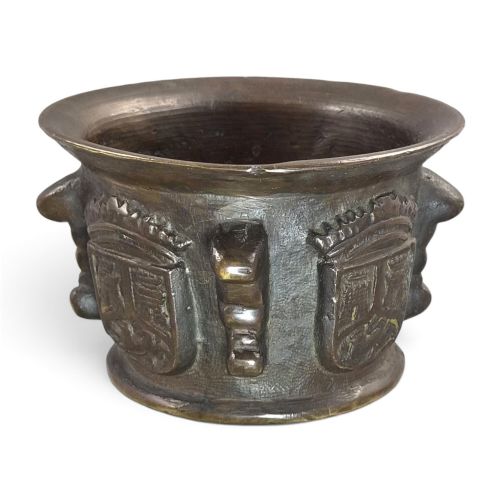
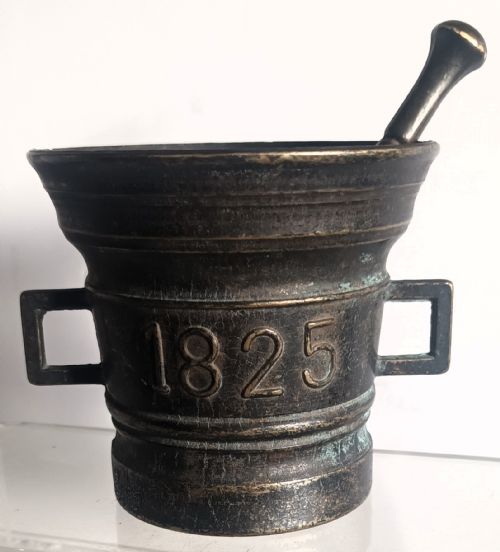
The selections here showcase distinct forms from seventeenth-century Spanish and English workshops alongside Dutch and Georgian examples. Most pieces arrive as matched or assembled sets of mortars and pestles cast in solid metal.
Regional variations appear across the inventory, ranging from English Tudor rose motifs to Spanish armorial crests cast directly onto the exterior surface. These domestic and clinical implements served generations of practitioners before entering the collector market.
Assessing quality in early metalwork
Quality in a bronze apothecary vessel rests upon the crispness of the cast decoration and the integrity of the heavy metal walls. Superior examples display sharp relief on motifs like the House of Enríquez arms or Tudor roses, whereas weaker pieces show worn or muddy details from tired foundry moulds.
The balance and proportion of the mortar dictate its sculptural presence, with the best specimens possessing a satisfying heft and confident flared rim. Surface patination also plays a role, as undisturbed age and natural oxidation distinguish honest historical examples from over-polished pieces.
English, Dutch, and Spanish regional styles appear across the selection, including distinct Georgian and William III forms.
The Bronze Apothecary Vessel Glossary
- Pestle
- The heavy handheld club or rod used with a mortar to crush, mill and mix dry herbs or medicinal compounds. Surviving period pestles often match the alloy and wear pattern of their partner bowl.
- Spanish Baroque
- An ornate artistic style prevalent during the seventeenth century, characterised in these metalwares by bold cast heraldic shields and dynamic surface relief. Pieces from this tradition often display the arms of noble houses.
- Tudor Rose
- The traditional floral heraldic badge of England, frequently utilised as a decorative raised motif on the exterior walls of seventeenth-century English mortars.
Bronze Apothecary Vessel: Frequently Asked Questions
What were bronze mortars used for?
Apothecaries and physicians utilised these heavy vessels to crush, grind and blend dried herbs, roots and chemical compounds into medicinal powders and ointments. The thick bronze walls prevented the ingredients from absorbing into the container during the vigorous pounding required.
Domestic households also kept smaller versions for culinary spice preparation and pigment mixing. The enduring nature of the metal meant a single vessel served multiple generations of practitioners.
How do I date a bronze mortar?
Datation relies upon stylistic clues such as rim profiles, rib placement, and cast decorative motifs like Tudor roses or specific armorial bearings. Seventeenth-century examples often feature distinct flared lips and simpler banded mouldings compared to later Georgian iterations.
Foundry marks and regional casting characteristics also help narrow the decade of production. Comparing the wear patterns on the interior base provides further context regarding the intensity of its working life.
Are pestles original to the mortars?
Many surviving sets are assembled over time because pestles frequently separated from their matching bowls during centuries of use. Collectors look for consistent alloy composition, matching patination, and proportional scale between the two pieces to judge whether they belong together.
An unusual pestle shape sometimes indicates a replacement fashioned during a later period of the vessel's working life. Both matched sets and historically associated pairs remain standard within the antique market.
How should I display an apothecary mortar?
The substantial weight and dark metallic patination make these vessels well-suited for display on plain wooden surfaces, open shelving or mantels. Placing the pestle resting inside or beside the bowl highlights the functional purpose of the set.
Keep the metal away from damp environments and avoid aggressive chemical cleaning to preserve the historic surface oxidation. Occasional dusting with a soft cloth maintains the natural appearance of the bronze.