
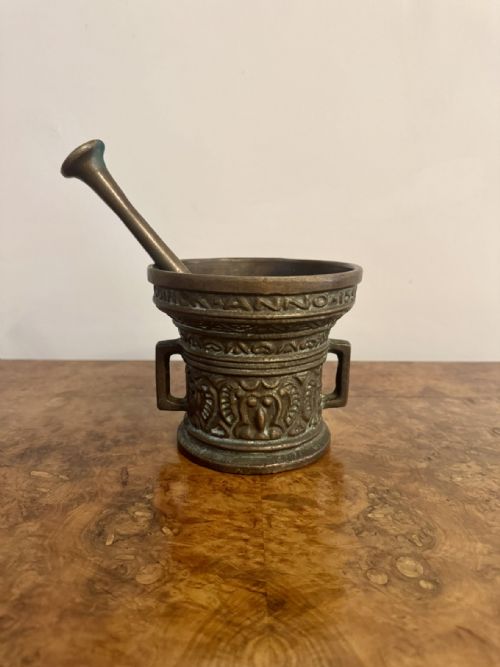
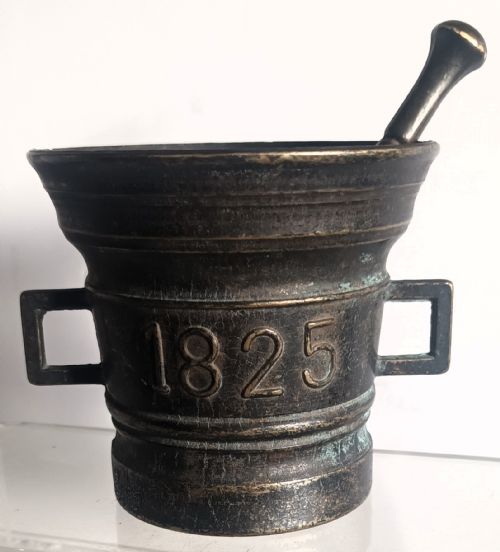
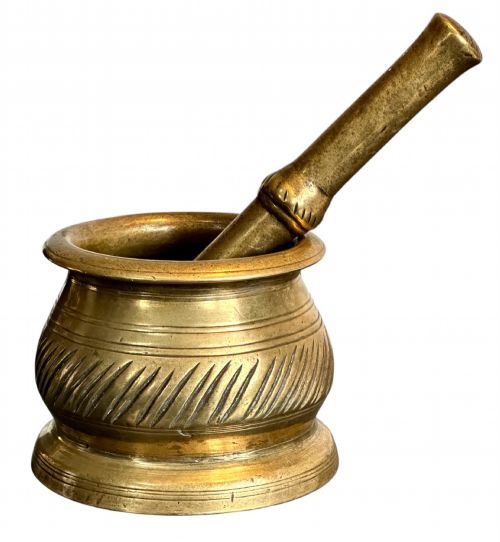


Heavy Brass Pestle
A heavy brass pestle brings tactile weight and centuries of apothecary utility straight to your kitchen counter.
Heavy Brass Pestle
When you search for a heavy brass pestle, you encounter robust kitchen, apothecary and chemist implements designed for grinding and pounding herbs, spices and medicinal compounds. These functional metalware tools survive primarily as paired sets alongside matching mortars, representing centuries of domestic and professional preparation.
The pieces available on this page span several distinct periods, most frequently appearing in 18th century, Georgian and Victorian incarnations alongside earlier 17th century examples. You are most likely to meet substantial bronze or brass iterations displaying the functional wear of centuries past.
Originating largely from English workshops, these items incorporate diverse stylistic influences ranging from Gothic Revival and Renaissance Revival to Indo-Persian designs. Each heavy brass pestle serves as both a tangible link to historical apothecary practices and a durable sculptural object for modern interiors.
Quality and proportion in metalware
Quality rests primarily in the harmony of proportion between the pestle and its corresponding mortar, alongside the crispness of any cast decorative mouldings or turned bands. Superior examples display balanced weight, uniform alloy composition and an absence of structural casting flaws.
The degree of historical wear and the survival of the original matching pestle heavily influence desirability. Pieces retaining their synchronised companion grinder, deep original metal colour and clear period characteristics stand apart from mismatched or over-polished examples.
Current listings feature heavy brass pestles alongside bronze and bell metal variants spanning from the 17th century through the Victorian era.
The Heavy Brass Pestle Glossary
- Bell metal
- A hard alloy of copper and tin traditionally used for casting bells, offering superior resonance and durability. This dense material frequently appears in early apothecary mortars and pestles.
- Apothecary
- A historical practitioner who prepared and sold medicines and drugs. Equipment from their shops forms the backbone of surviving heavy brass pestle and mortar listings.
- Mortar
- A heavy bowl-shaped vessel in which substances are ground or crushed with a pestle. These range from utilitarian kitchen vessels to heavily decorated chemist instruments.
- Patina
- The surface sheen and colour acquired by metal through age, handling and environmental exposure. A rich, undisturbed patina indicates genuine antiquity and minimal modern intervention.
- Georgian
- Pertaining to the reigns of the British monarchs George I through George IV, spanning the 18th and early 19th centuries. Pieces from this era often feature classical turned mouldings and balanced proportions.
Heavy Brass Pestle: Frequently Asked Questions
What were heavy brass pestles used for?
These implements served practitioners in kitchens and apothecary shops for crushing herbs, grinding spices and pulverising medicinal compounds into fine powders. The substantial weight of the metal did the hard work, breaking down tough ingredients through sheer downward force.
Over time, they transitioned from working dispensary tools into decorative items displaying the functional heritage of historic domestic life.
Are the pestle and mortar always original pairs?
Many surviving sets have been reunited over the centuries due to the practical challenge of keeping two separate heavy components together. Examining the wear patterns, metal alloy colour and proportional scale helps determine whether a pestle and mortar began their working lives side by side.
Mismatched pairs remain common in the antiques trade, yet well-matched sets command greater interest from collectors.
How can I tell the age of a bronze pestle?
Dating relies on observing the casting style, surface finish, tool marks left by early manufacturing techniques and stylistic clues such as Tudor or Georgian mouldings. Earlier pieces often display rougher sand-casting textures and heavier bell metal alloy compositions.
Comparing the form against dated benchmark examples in museum collections or reliable historical records clarifies the likely era of manufacture.