


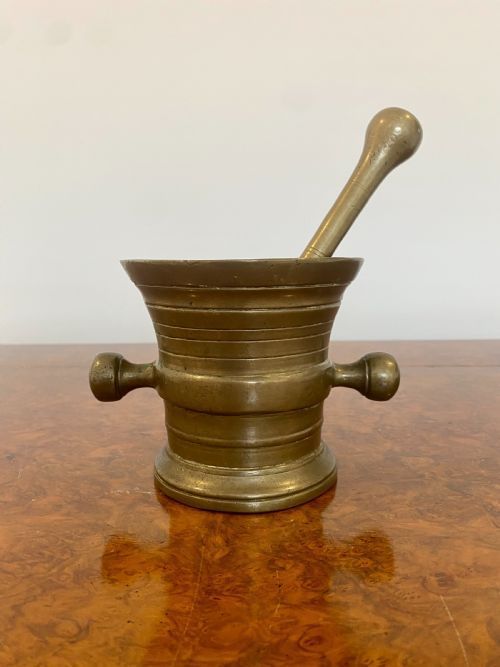
Cast Brass Mortar
These cast brass mortar and pestle sets are heavy kitchen and apothecary vessels built to grind and crush, prized for their solid metal weight and centuries of utilitarian history.
Cast Brass Mortar
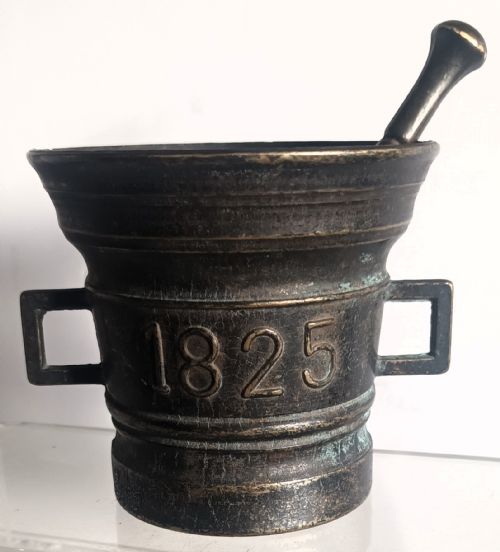
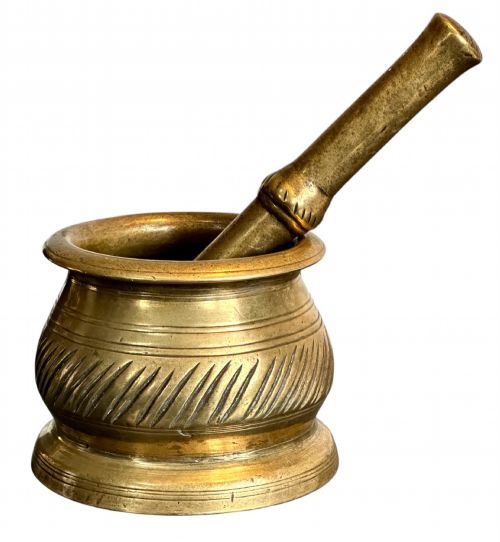
A cast brass mortar is a traditional kitchen and apothecary vessel designed for crushing and grinding herbs, spices, and medical compounds with a matching pestle. When you search for a cast brass mortar, you encounter heavy metal bowls dating from the seventeenth century through to the Victorian era.
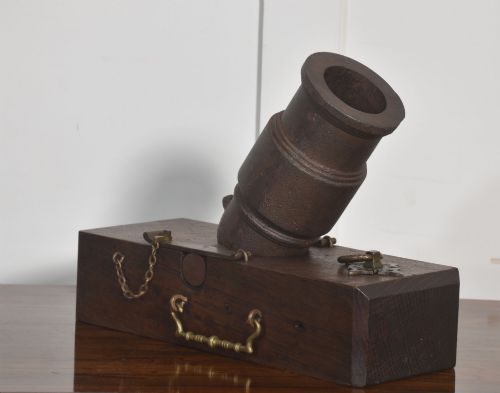
The versions most commonly met on this page span Georgian and Victorian periods, alongside earlier seventeenth-century examples. Alongside standard kitchen and chemist implements, you will also find specialised items like signal mortars mounted on oak carriages and Dutch Baroque forms.
How they were made
These vessels are produced through traditional metal casting techniques, utilising alloys such as bronze, brass, and bell metal poured into moulds. The resulting heavy metal walls provide the necessary mass to withstand vigorous pestle impacts during daily kitchen or apothecary use.
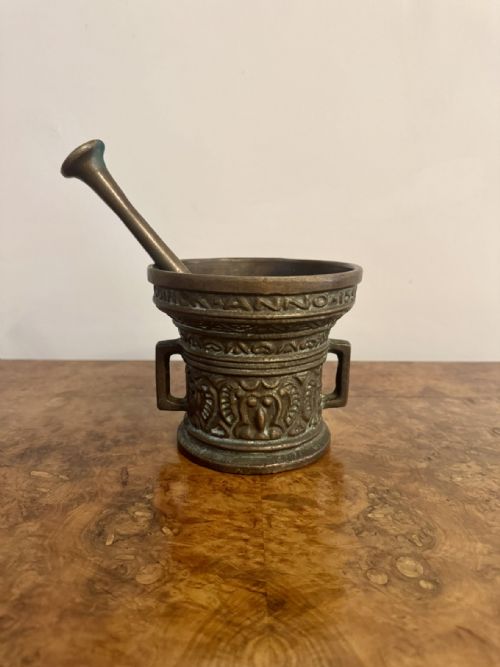
Decorative details such as Tudor rose motifs, Gothic Revival arches, and Renaissance Revival styling are cast directly into the metal body or later turned on a lathe. Pestles are shaped to match the interior curvature of each specific mortar for efficient grinding.
Listings on this site include seventeenth-century examples alongside Victorian apothecary items and signal mortars mounted on oak carriages.
What varies in quality
Quality in these pieces depends upon the crispness of the cast decoration and the preservation of the original surface metal. Finer examples display sharp relief work on motifs like the Tudor rose and maintain a heavy, balanced proportion between the mortar bowl and its pestle.
The integrity of the metal alloy and the survival of a matching period pestle elevate a piece above standard utilitarian items. Evidence of early manufacturing marks and clean casting lines distinguish superior examples from simpler utilitarian vessels.
The Cast Brass Mortar Glossary
- Mortar and Pestle
- A heavy bowl paired with a club-shaped tool used for grinding and crushing substances. This combination forms the primary object type found across all periods on this page.
- Bell Metal
- A hard alloy used for casting bells and certain high-grade mortars, composed primarily of copper and tin. This material produces a resonant tone when struck.
- Apothecary
- A practitioner who prepared and sold medicines and drugs before the advent of modern pharmacies. Apothecary mortars were essential tools in these historical dispensaries.
- Georgian
- A design period spanning the reigns of the first four Georges, characterised by classical symmetry and restrained ornamentation. Pieces from this era often show refined turning and proportion.
Cast Brass Mortar: Frequently Asked Questions
What were cast brass mortars used for?
These vessels served primarily in kitchens and apothecaries for crushing dried herbs, grinding spices, and compounding medicines.
The heavy weight of the metal allowed users to pulverize tough roots and seeds into fine powders with minimal effort.
How do I date a cast brass mortar?
Dating relies upon stylistic clues such as Tudor rose motifs, Gothic Revival arches, or Dutch Baroque forms cast into the metal.
General manufacturing techniques and proportions also point toward specific eras like the seventeenth century or the Victorian period.
Did mortars always come with pestles?
Original sets include both the mortar bowl and its matching pestle, though many surviving pieces are separated over centuries of use.
Finding a mortar paired with its original pestle significantly enhances the historical completeness of the set.
How should I clean an antique mortar?
Maintenance generally involves dusting with a dry cloth to preserve the natural aged patina accumulated over hundreds of years.
Avoid aggressive metal polishes that strip away historical character and dull the surface of the bronze or brass.