
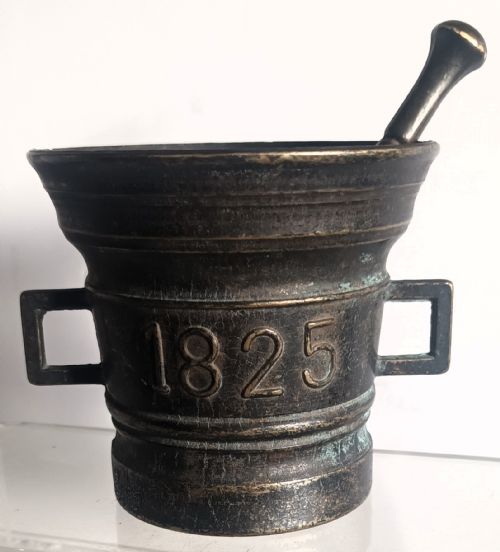


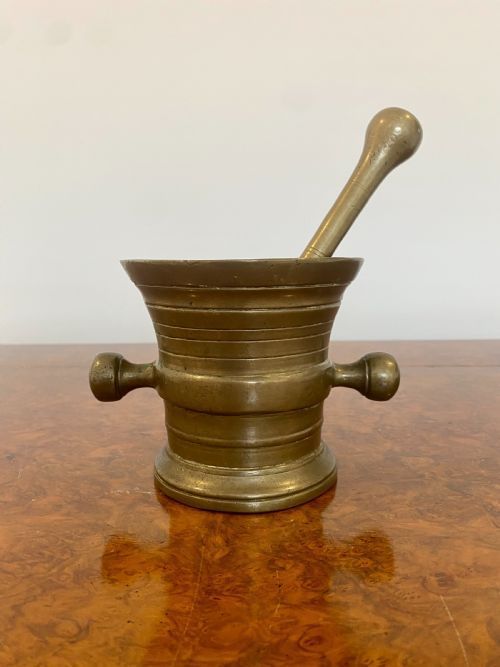
Brass Spice Grinder
These brass spice grinder pieces are heavy metal vessels designed for culinary or apothecary crushing, offering tactile history and working utility.
Brass Spice Grinder
A brass spice grinder typically takes the form of a heavy mortar and pestle used for pounding and grinding kitchen ingredients or apothecary compounds. When exploring brass spice grinder options, you encounter substantial metalware shaped by centuries of domestic and medicinal practice.
The pieces appearing here span multiple eras, notably the seventeenth, eighteenth, and nineteenth centuries, including Georgian and Victorian designs alongside Dutch Baroque and Indo-Persian examples. Most examples on this page are fashioned from bronze and brass, reflecting utilitarian and decorative domestic roles.
How they were made
These items rely primarily on cast brass and bronze techniques, resulting in thick, heavy walls capable of withstanding heavy impact. Metal founders poured molten alloy into moulds, leaving characteristic surface textures and structural heft.
Makers often embellished vessels with decorative motifs such as Tudor rose designs or geometric patterns during the casting process. Accompanying pestles were shaped to fit the interior contours of the matching mortar for efficient grinding.
Listings feature metalware from the seventeenth, eighteenth, and nineteenth centuries, spanning Georgian, Victorian, and Dutch Baroque styles.
What varies in quality
Quality rests in the crispness of the original cast detail and the balanced weight of the mortar and pestle set. Superior items display purposeful proportions and harmonious decorative flourishes rather than crude, hasty casting work.
The integrity of the metal surface and the survival of an original matching pestle elevate an example. Wear patterns earned through genuine historical use add character without compromising the structural substance of the bronze or brass.
The Brass Spice Grinder Glossary
- Mortar and pestle
- A heavy bowl and club-shaped tool used together for crushing and grinding substances.
- Bell metal
- A hard alloy containing copper and tin, frequently utilised for historical mortars due to its resonant properties.
- Apothecary
- Pertaining to the preparation and sale of medicines, a common historical context for surviving metal mortars.
- Dutch Baroque
- An ornate artistic style prevalent in seventeenth-century Netherlands, occasionally reflected in imported metalware forms.
Brass Spice Grinder: Frequently Asked Questions
What were these vessels originally used for?
These vessels served kitchens and apothecary shops for grinding dry spices, herbs, and medicinal ingredients into powders.
The heavy pestle crushed materials against the thick interior walls of the mortar through manual rotation and impact.
How do I care for antique brass?
Keep the metal dry and dust it gently with a soft cloth to preserve the natural historical surface.
Avoid harsh chemical polishes that strip away the patination accumulated over centuries of existence.
Can I still use a vintage mortar?
Many solid bronze and brass examples remain structurally robust enough for light culinary tasks today.
Check the interior surface for cleanliness and suitability before grinding any food ingredients for consumption.
How are different periods identified?
Period attribution relies on stylistic decorative details, such as Tudor rose motifs or regional casting characteristics.
Form variations between seventeenth-century items and later Victorian pieces also help distinguish their eras.