



Heavy Bronze Pestle
A heavy bronze pestle is a tool for grinding, and buyers find them paired with mortars in Georgian, 17th-century, and 19th-century styles.
Heavy Bronze Pestle
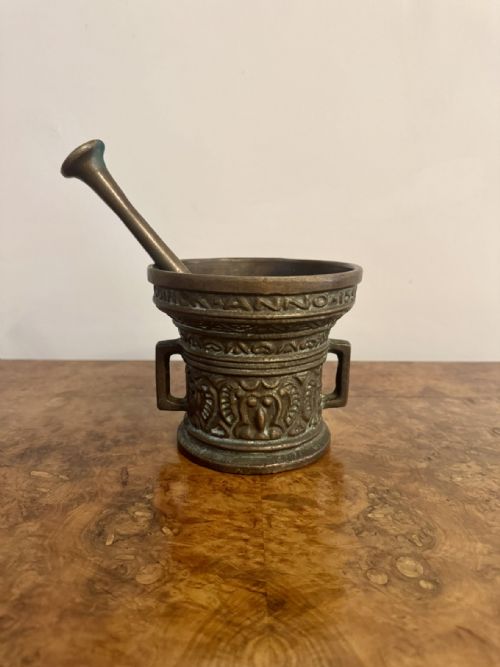
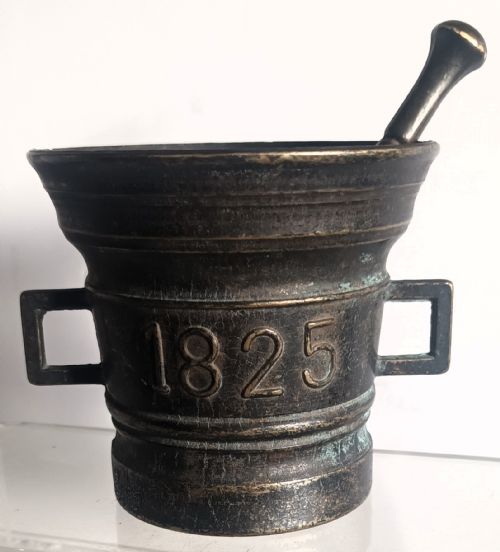
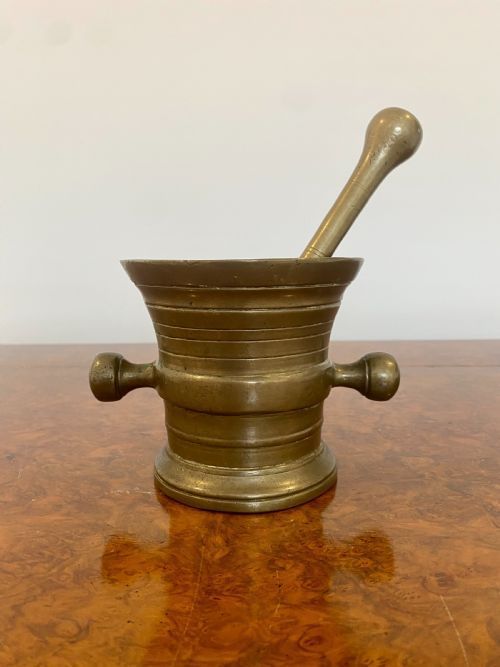
A heavy bronze pestle is typically encountered as part of a mortar and pestle set originating from periods such as the 17th century, Georgian era, and the 19th century. These metalware implements served practical roles in kitchens, apothecary shops, and chemist practices for crushing ingredients.
The most common version met on this page is the English bronze mortar and pestle set, often associated with apothecary or kitchen use. Pieces range from large 18th-century examples to specific designs like the Gothic Revival or Renaissance Revival styles.
How they were made
These items were produced using durable metal materials, predominantly cast bronze, bell metal, and occasionally iron or brass. Metal casting techniques allowed makers to create the solid, weighty forms necessary for manual grinding.
Surfaces often show the textural evidence of early casting methods, creating the tactile quality expected in utilitarian metalware from the 17th and 18th centuries.
Some pestles arrive with an unusual shape, reminding us that early kitchens relied on whatever worked best for the herbs.
What varies in quality
Quality in a heavy bronze pestle and its matching mortar depends on the crispness of the cast detailing and the integrity of the metal. Proportion and balance between the striking implement and the grinding bowl also separate standard workshop output from finer examples.
The presence of distinct period characteristics, such as specific Georgian moulding or 17th-century form, influences how closely a piece represents its era of origin.
The Heavy Bronze Pestle Glossary
- Bronze
- An alloy consisting primarily of copper, traditionally used for durability in heavy grinding vessels. It develops a rich surface tone over centuries of handling.
- Bell metal
- A hard alloy of copper and tin utilised for its resonant properties and strength in cast implements. This material frequently appears in historical mortar and pestle sets.
- Apothecary
- A historical practitioner who prepared and sold medicines, utilising metal mortars and pestles for compounding remedies. Many surviving sets originate from this medical context.
- Mortar and pestle
- A pair of tools comprising a bowl and a heavy club used for crushing and grinding substances. The combination is a staple of early domestic and commercial metalware.
Heavy Bronze Pestle: Frequently Asked Questions
What were these pestles used for?
These pestles were used alongside matching bowls to crush herbs, spices, and medical ingredients in kitchens and apothecary shops.
The heavy metal construction provided the necessary force for grinding stubborn substances down to powders or pastes.
How do I date a bronze pestle?
Dating relies on comparing the profile, casting texture, and stylistic markers against known examples from the 17th, 18th, and 19th centuries.
Changes in form from early Renaissance Revival shapes to later Victorian styles help narrow down the period of manufacture.
Are pestles and mortars sold together?
Many listings offer the striking implement paired directly with its matching bowl, reflecting their original functional relationship.
Some examples survive as complete sets from the Georgian and earlier periods, while others are assembled pairs.
How do I clean a bronze pestle?
Maintenance typically involves dusting with a soft cloth to preserve the historical surface and natural metal tone.
Harsh chemical polishes are generally avoided by collectors who prefer to keep the aged character of the metal intact.