



Cast Bronze Pestle
A cast bronze pestle is a heavy, tactile implement designed to grind herbs and chemicals, prized for its enduring weight and age.
Cast Bronze Pestle
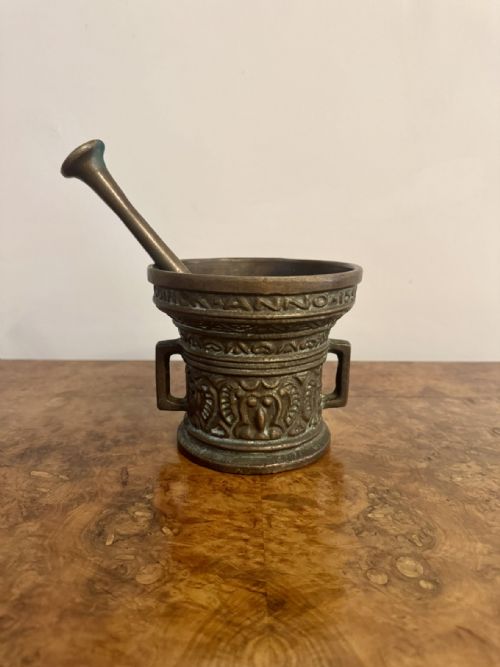
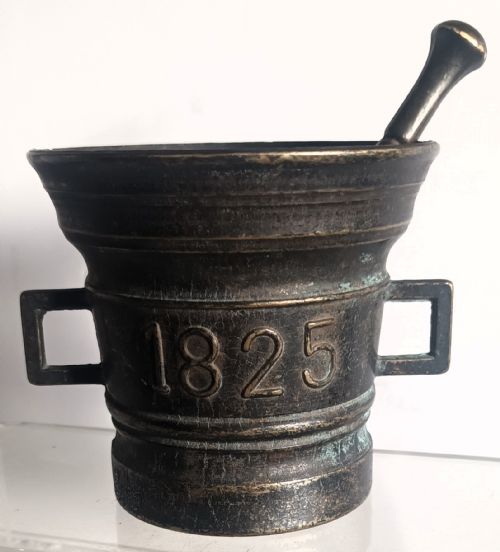
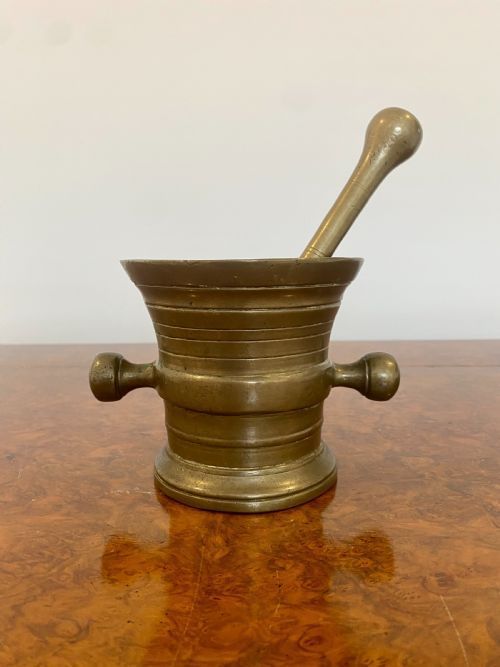
A cast bronze pestle arrives as part of a set paired with a matching mortar, spanning centuries of kitchen, apothecary, and chemist use. When searching for a cast bronze pestle, a buyer encounters domestic and utilitarian objects forged in heavy metal.
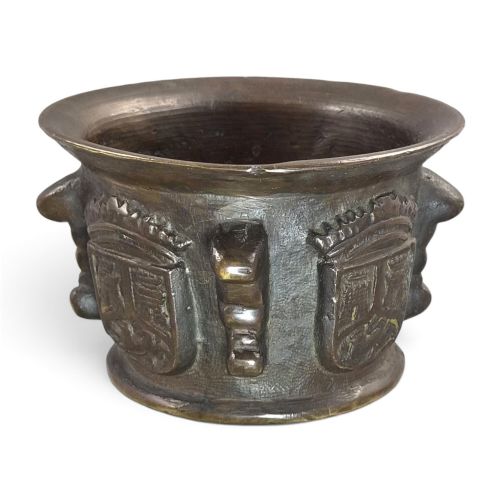
The versions most commonly met on this page date from the seventeenth century through the nineteenth century, including Georgian and Victorian apothecary examples. These pieces originate primarily from English and Spanish workshops, sometimes featuring distinct coats of arms or Tudor rose motifs.
Forms range from simple utilitarian instruments to Spanish Baroque and Gothic Revival iterations. Each cast bronze pestle carries the marks of its production, serving historically as a vital tool for preparation in apothecary shops and kitchens alike.
Materials and construction
These pieces are produced through metal casting, utilising durable copper alloys such as bronze, bell metal, and occasionally brass to withstand repetitive grinding. The molten metal is poured into moulds, yielding thick walls and substantial weight.
Surface textures and decorative elements like heraldic arms or Tudor roses are often cast directly into the body or applied during finishing. Iron components occasionally appear alongside the primary bronze and brass construction.
House of Enríquez arms occasionally appear on seventeenth-century Spanish metalwork, adding aristocratic flair to medicinal grinding.
Assessing quality and character
Quality in these implements rests upon the crispness of the cast detail, particularly on pieces bearing heraldic arms or Tudor roses, where sharp lines indicate a superior mould. Heavier metal content and a well-balanced form elevate an example above simpler utilitarian wares.
The depth and uniformity of the surface patina also define the character of an individual piece, showing how it aged through centuries of handling. Surviving as a complete matching set rather than a mismatched pairing adds significantly to the integrity of the object.
The Cast Bronze Pestle Glossary
- Cast bronze
- An alloy of copper and tin shaped by pouring molten metal into a mould. This material provides the dense weight necessary for crushing hard substances.
- Bell metal
- A hard alloy used for bells that also forms high-quality mortars and pestles. It rings with a clear tone when struck.
- Apothecary mortar
- A heavy vessel used by chemists and pharmacists for grinding medicinal ingredients. These often display decorative moulding or civic marks.
- Tudor rose
- A traditional floral heraldic emblem of England frequently cast onto the exterior of seventeenth-century pieces. It serves as a decorative marker of English origin.
- Spanish Baroque
- An ornate artistic style originating in seventeenth-century Spain. Pieces from this tradition exhibit dramatic surface decoration and heraldic detail like the House of Enríquez arms.
Cast Bronze Pestle: Frequently Asked Questions
What were cast bronze pestles used for?
These implements were utilised in kitchens, apothecaries, and chemist shops to grind herbs, spices, and medical ingredients into powders or pastes. Their heavy metal construction provided the necessary force for pharmaceutical and culinary preparation.
Over centuries, they became essential tools for practitioners who required durable equipment that could withstand daily crushing and pounding without wearing down.
How do I date a cast bronze pestle?
Dating relies on stylistic clues such as Gothic Revival motifs, Georgian proportions, or specific heraldic devices like the Tudor rose and House of Enríquez arms. Seventeenth-century examples often feature distinct architectural moulding compared to later nineteenth-century pieces.
Examining the casting technique and the wear patterns on the metal also helps establish the approximate age of the piece.
Are pestles and mortars always sold together?
While many listings offer the pestle and mortar as a complete duo, some historic pieces survive separated from their original partners. Finding a matched set from the same period is particularly satisfying for collectors.
When buying, it is important to check whether the pestle is the original match for the mortar based on metal composition and wear.
How do I care for antique bronze?
Antique bronze requires minimal intervention to preserve its historic surface and natural patina accumulated over centuries. Dusting with a dry cloth is generally sufficient for regular maintenance.
Avoid using harsh chemical polishes or abrasive cleaners, as these strip away the aged skin that collectors value.