


Vintage Brass Mortar
These heavy vintage brass mortar and pestle sets carry centuries of kitchen, apothecary and domestic work in their polished metal.
Vintage Brass Mortar
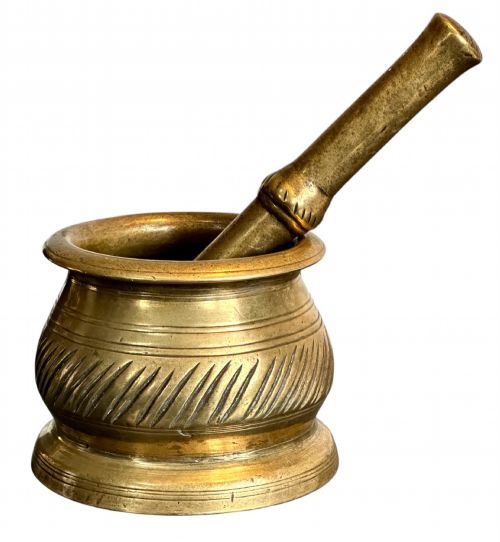
A vintage brass mortar is a traditional grinding vessel designed for culinary, apothecary or trade use, accompanied by a matching pestle. When you search for a vintage brass mortar, you encounter pieces spanning from the seventeenth century through to the Victorian era.
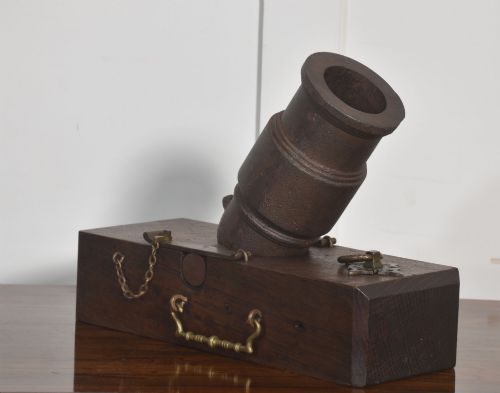
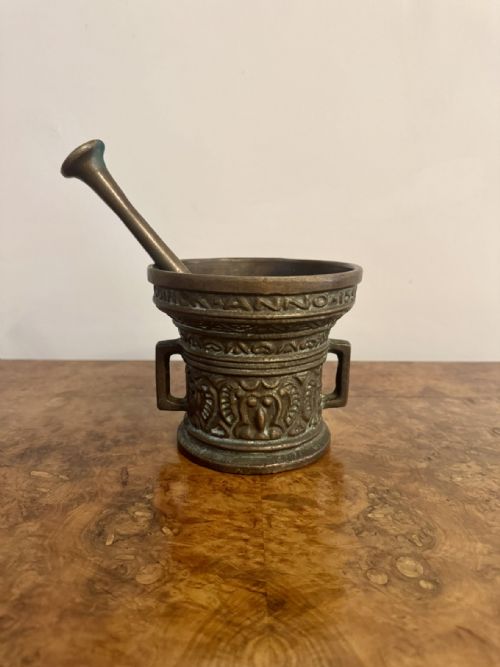
The selection includes examples in cast brass, bronze, bell metal and cast iron, often mounted on wooden carriages or styled with Gothic and Renaissance revival motifs. Most pieces originate from English domestic and commercial settings, alongside Dutch and Indo-Persian examples.
How they were made
These vessels are produced primarily through metal casting, utilising durable copper alloys such as brass, bronze and bell metal to withstand the heavy impact of grinding. Molten metal is poured into moulds to create thick, rigid walls, followed by surface finishing and turning on a lathe.
Some domestic and military variants incorporate other materials, pairing cast iron signal mortars with robust oak carriages or utilising wrought iron components to provide structural support for larger apothecary and trade pieces.
What varies in quality
The standard of a vintage brass mortar depends on the weight and thickness of the metal cast, with heavier examples demonstrating superior substance and durability. Finer pieces display crisp casting detail and well-balanced proportions between the vessel and its pestle.
Subtleties in surface finish and decorative detailing, such as moulded ribs or revival motifs, distinguish standard kitchenware from more ambitious apothecary and trade pieces designed for visual prominence.
The Vintage Brass Mortar Glossary
- Bell metal
- A hard alloy used for casting bells and high-quality mortars, typically comprising copper and tin to produce a resonant tone and strong durability.
- Apothecary
- A historical practitioner who prepared and sold medicines and drugs, utilising heavy metal mortars for crushing medicinal roots and powders.
- Signal mortar
- A short, heavy cannon used to fire blank charges for signaling or celebration, often mounted on a dedicated wooden carriage.
- Trade sign
- A large-scale replica of an object, such as a pestle and mortar, hung outside a shop to advertise the trade conducted within.
- Pestle
- A heavy tool with a rounded end used for grinding and crushing substances against the inner surface of a mortar.
Vintage Brass Mortar: Frequently Asked Questions
What were brass mortars used for?
These vessels were employed primarily for crushing, grinding and mixing dry ingredients, medicinal herbs, spices and chemicals in domestic kitchens, apothecaries and chemists' shops.
The heavy pestle allowed the user to reduce tough substances into fine powders or pastes with sustained physical effort.
How do I date a mortar?
Dating relies on stylistic clues, metal composition and casting characteristics, ranging from plain seventeenth-century forms to decorative Victorian and Georgian pieces.
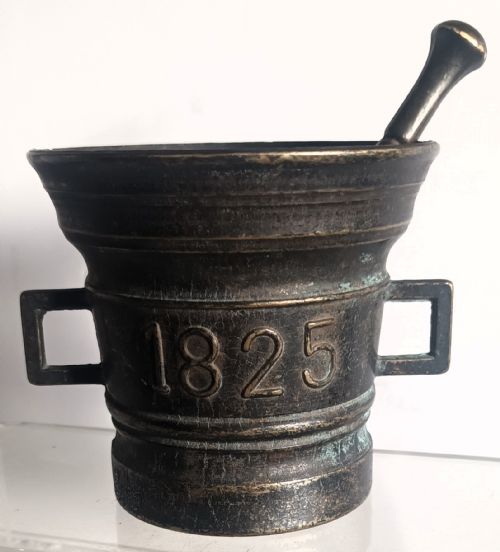
Evidentiary markers such as inscribed dates, distinct rim profiles and specific alloy choices help establish the period of manufacture.
Are pestles always original to the mortar?
Many examples survive as complete sets with their original pestles, though replacements occur frequently due to the practical nature of these grinding tools.
Matching the wear patterns, metal alloy and colour helps determine if the pestle and mortar have remained together over the centuries.
How should I clean a brass mortar?
Gentle dusting and occasional wiping with a soft cloth preserve the natural aged patina accumulated over decades or centuries of handling.
Aggressive polishing removes historical character and dulls the distinct surface textures characteristic of early metalwork.