


Cast Bronze Apothecary Bowl
A cast bronze apothecary bowl brings weight and centuries of chemical history to a desk, usually found paired with its heavy pestle.
Cast Bronze Apothecary Bowl
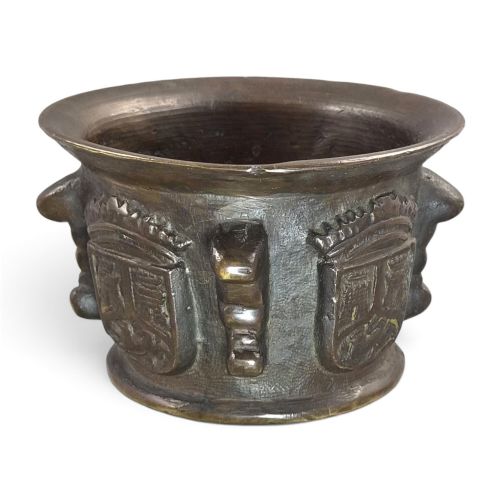
When you search for a cast bronze apothecary bowl, you are looking at heavy vessels used for crushing and grinding ingredients, appearing on this page as mortar and pestle sets from the seventeenth century through to the nineteenth century. These items include English Georgian pieces and Spanish Baroque examples bearing heraldic arms.
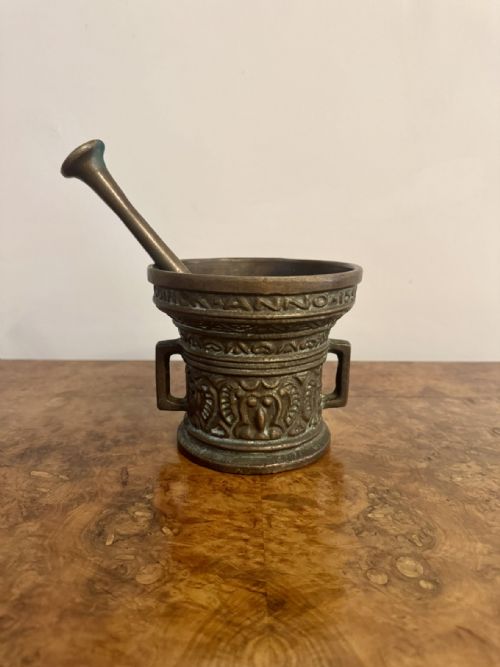
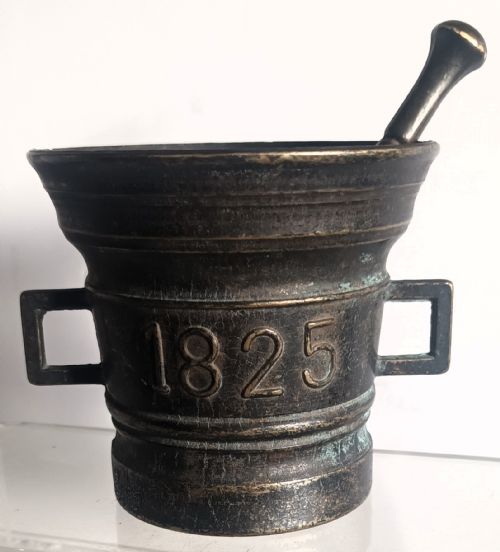
The version you are most likely to meet on this page is an English bronze mortar from the seventeenth century or the nineteenth century, often decorated with motifs like the Tudor rose. They also appear in forms influenced by Gothic Revival and Renaissance Revival styles.
How they were made
These vessels are produced using metalcasting techniques, resulting in thick walls designed to withstand the heavy impact of grinding medicinal and kitchen ingredients. The primary material is bronze, alongside related metal alloys such as bell metal and brass.
Makers utilised sand casting or lost-wax methods to shape the heavy bodies, frequently incorporating raised ribs, flared rims, and cast heraldic markers or Tudor rose emblems directly into the exterior surface.
Several heavy bronze mortars quietly bear the Tudor rose, ready to continue grinding after four hundred years of loyal service.
What varies in quality
Quality in these pieces is dictated by the crispness of the cast decoration and the presence of significant heraldic detail, such as the House of Enríquez arms seen on Spanish examples. Pieces with sharp Tudor rose motifs or well-defined ribbed bodies sit higher in the range than plain, unmarked vessels.
The survival of the matching pestle significantly alters the desirability of the set, particularly when the pestle shares the heavy cast construction and period characteristics of the mortar itself.
The Cast Bronze Apothecary Bowl Glossary
- Mortar and pestle
- The mortar is the heavy bowl used to hold materials, and the pestle is the solid club used for pounding and grinding them. Both are traditionally cast in metal.
- Bell metal
- An alloy of copper and tin traditionally used for bells, sometimes utilised for these heavy apothecary bowls to achieve a resonant tone and high durability.
- Tudor rose
- A traditional floral heraldic badge of England, frequently found cast in relief on the exterior surface of seventeenth-century English mortars.
- Spanish Baroque
- An ornate artistic style originating in Spain during the seventeenth century, reflected in pieces bearing specific noble arms such as those of the House of Enríquez.
Cast Bronze Apothecary Bowl: Frequently Asked Questions
What were cast bronze apothecary bowls used for?
These heavy bowls served as mortars for pounding medicinal ingredients, herbs, and kitchen preparations. Apothecaries and chemists utilised them alongside matching pestles to grind dry and wet substances into fine powders or pastes.
Over centuries, their robust construction allowed them to endure heavy daily use in both apothecary shops and domestic kitchens without cracking or wearing thin.
How do I date a bronze mortar?
Dating relies on examining the stylistic details, such as Gothic Revival elements, Tudor rose motifs, or Spanish Baroque heraldic arms. Seventeenth-century examples often display distinct surface casting marks and specific regional decoration compared to later nineteenth-century pieces.
Matching pestles and recorded provenance also help narrow down the manufacturing period, though many surviving examples span a broad window from sixteen-fifty to eighteen-sixty.
Are pestles always original to the mortars?
Many listings present a mortar and pestle together as a set, though pairing older bowls with replacement pestles happens frequently in the antiques trade. Examining the alloy colour, wear patterns, and cast style helps determine if the two pieces share the same origin.
Finding a set where both components display identical metal patination and matching weight provides the strongest indication of original pairing.
How should I clean an antique bronze bowl?
Maintenance generally involves gentle dusting and leaving the aged metallic patination untouched, as harsh polishing can strip away centuries of historical character. Museums and collectors prefer to preserve the dark, stable oxidation that develops naturally on antique bronze over long periods.
If cleaning is necessary for hygiene, warm water and a soft cloth are sufficient, avoiding abrasive chemicals that might damage the cast surface or heraldic details.