
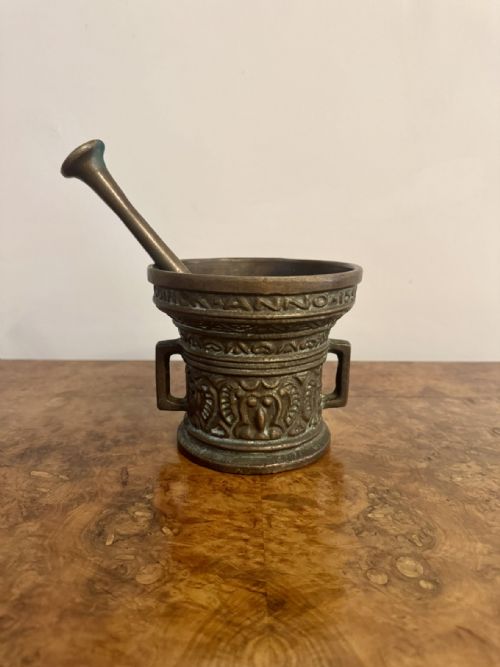
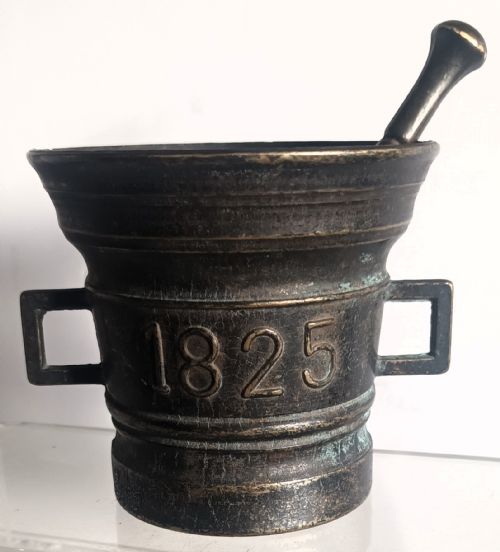


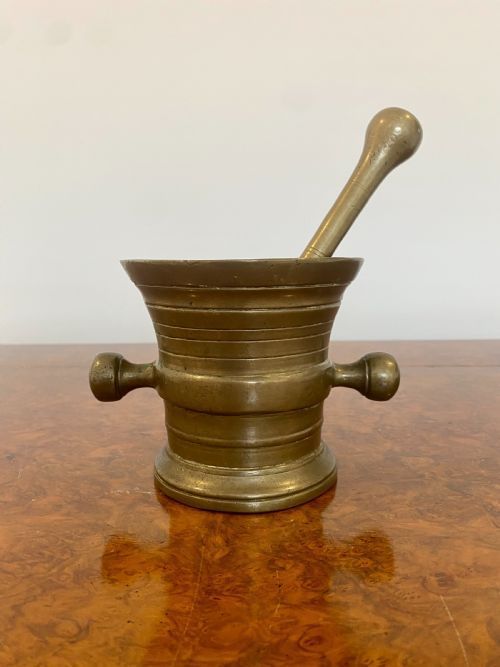

Heavy Bronze Mortar Pestle
These heavy bronze mortar pestle sets are substantial metalware tools for grinding and compounding, prized for their deep patination and historic utility in kitchen or apothecary.
Heavy Bronze Mortar Pestle
A heavy bronze mortar pestle is a utilitarian grinding vessel accompanied by its matching striking bar, designed for domestic kitchens, apothecary shops, and chemists. The objects listed here span several centuries, reaching back to the seventeenth century alongside later nineteenth-century interpretations.
Most examples you encounter on this page belong to the Georgian and nineteenth-century periods, often rendered in bronze, brass, or bell metal. You will find items identified with specific stylistic revivals such as Gothic and Renaissance, as well as functional apothecary sets from English workshops.
How they were made
These vessels are typically cast from bronze, bell metal, or brass, utilising traditional foundry methods that leave distinct surface textures and tool marks. Iron also appears occasionally among the striking bars or companion pieces.
The walls are cast thick to withstand the heavy impact of grinding, resulting in considerable weight for their physical size. Finish and patination develop naturally through age and handling rather than applied surface treatments.
One persistent survivor arrives with an unusual pestle recorded all the way back around seventeen hundred.
What varies in quality
Quality rests in the crispness of the cast decorative mouldings and the harmonious pairing of the mortar with its original pestle. Earlier examples from the seventeenth and eighteenth centuries often display bolder proportions and deeper tactile relief.
Surface patination and the integrity of the metal walls separate standard utilitarian kitchen pieces from finer apothecary and revival items. A well-balanced weight and an absence of modern repairs mark the more desirable survivals.
The Heavy Bronze Mortar Pestle Glossary
- Mortar and Pestle
- A bowl-shaped vessel paired with a heavy club, used for crushing and grinding substances. They are fundamental tools found in historical kitchens and dispensaries.
- Bell Metal
- An alloy of copper and tin utilised for its resonant acoustic properties and strength. It forms many of the durable vessels seen in earlier centuries.
- Apothecary
- A historical practitioner who prepared and sold medicines and drugs. Their workspace generated the majority of surviving heavy metal grinding vessels.
- Renaissance Revival
- A nineteenth-century design movement borrowing motifs from the fifteenth and sixteenth centuries. Pieces in this style incorporate classical ornament onto functional forms.
Heavy Bronze Mortar Pestle: Frequently Asked Questions
What were heavy bronze mortars used for?
These vessels served to crush herbs, spices, and medical ingredients in domestic kitchens and chemist shops. Their thick metal walls provided the necessary resistance for heavy pounding.
The matching pestle delivered the striking force required to reduce hard substances into powders or pastes before modern pharmaceutical manufacturing.
How do I date an antique mortar?
Dating relies on stylistic clues, such as moulded ribbing, flared rims, and the presence of Gothic or Renaissance revival details. Earlier pieces often feature simpler, heavier utilitarian profiles.
Material composition also assists, as seventeenth-century examples frequently employ distinct bell metal alloys compared to later nineteenth-century equivalents.
Are the pestles always original to the mortars?
Finding a mortar and pestle retaining its original matching striking bar is common but not guaranteed across all historic examples. Collectors look for consistent wear patterns and matching metal composition between both items.
Even when assembled later, a harmonious pairing still functions correctly and reflects the historical utility of the set.
How heavy are these metal vessels?
These pieces possess substantial physical weight due to their thick cast bronze, brass, or bell metal construction. This mass kept the bowl stable during vigorous grinding.
Smaller domestic examples weigh a few pounds, while larger apothecary and seventeenth-century vessels require careful handling when lifted.