



Cast Bronze Pestle Mortar
These cast bronze pestle mortar sets are heavy utilitarian vessels of apothecary and kitchen use, desired for their tactile presence and centuries of manual service.
Cast Bronze Pestle Mortar
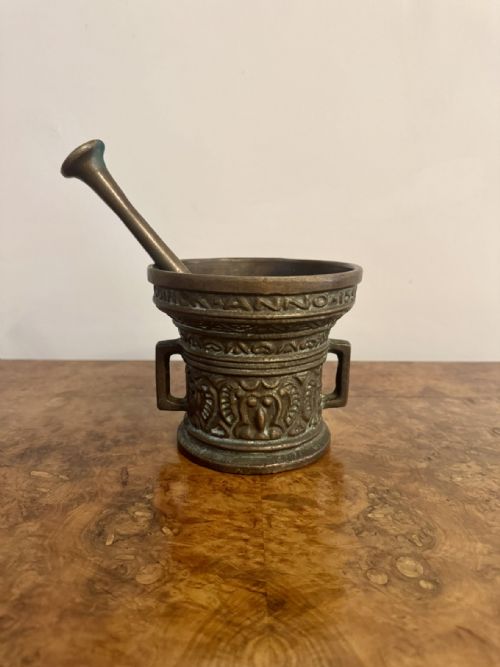
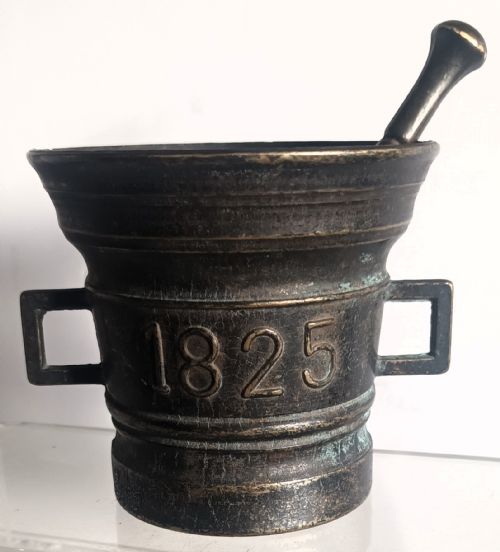
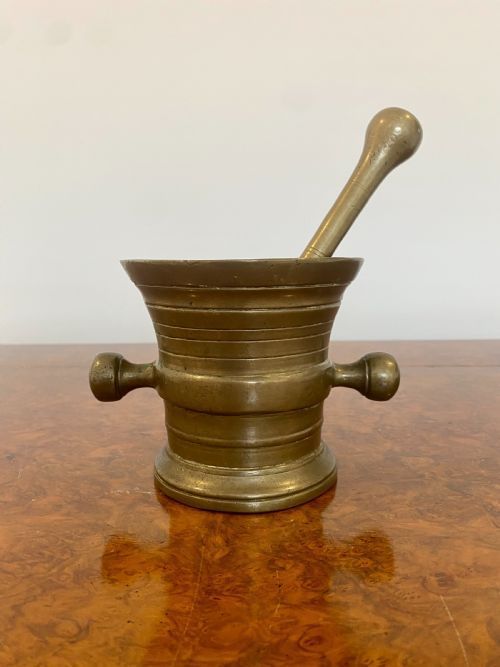
A cast bronze pestle mortar combines a sturdy bowl with a matching striking rod designed for grinding herbs, spices, and medical compounds. The pieces found here span from the seventeenth century through the nineteenth century, encompassing English, Spanish, and Georgian examples.
Buyers frequently encounter English apothecary and kitchen models alongside continental European pieces displaying distinct regional decoration. Forms range from simple utilitarian shapes to heavily ornamented vessels featuring coats of arms or historic motifs.
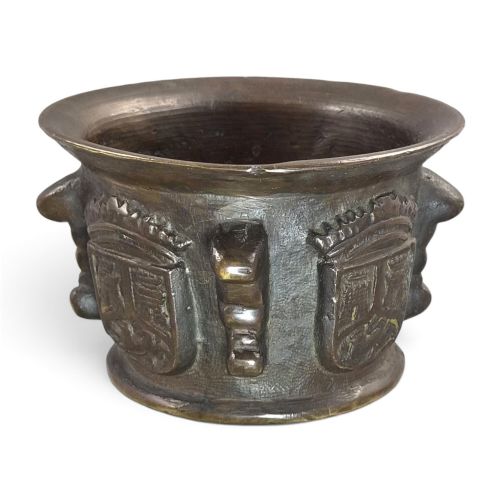
The selection includes seventeenth-century pieces with Tudor rose or House of Enríquez armorial details, as well as later Georgian and Victorian apothecary instruments. Each specimen bears the marks of early foundry work and prolonged domestic handling.
How they were made
Foundries produced these objects by pouring molten bronze, brass, or bell metal into sand or loam moulds. The metal alloys provided the density and strength required to withstand repeated impact without cracking.
Makers finished the rough castings by hand, using turning lathes or abrasive stones to smooth the exterior and interior surfaces. Pestles were shaped from matching metal stock to fit the interior profile of the corresponding bowl.
Some seventeenth-century mortars double as early advertising, casting noble family coats of arms directly into the heavy metal walls.
What varies in quality
The distinction between ordinary and superior pieces lies in the crispness of the casting and the presence of intentional decorative elements. Sharply defined armorials, ribbing, and heraldic stamps indicate a higher level of workshop skill.
Proportion and metal composition also dictate quality, with heavier bell metal alloys producing a more resonant tone when struck. Complete sets that retain their original matched pestle achieve greater desirability among collectors.
The Cast Bronze Pestle Mortar Glossary
- Bell metal
- A hard alloy of copper and tin traditionally used for casting bells, known for its high resonance and durability. It frequently forms the composition of early mortars.
- Apothecary
- A historical practitioner who prepared and sold medicines and drugs. Their tools included bronze mortars utilised for pulverising medical ingredients.
- Armorial
- A design consisting of heraldic coats of arms or insignia. Certain Spanish and English mortars display these cast emblems to denote ownership or origin.
- Tudor rose
- The traditional floral heraldic badge of England, frequently utilised as a decorative motif on seventeenth-century English bronze work.
Cast Bronze Pestle Mortar: Frequently Asked Questions
How were bronze mortars used historically?
These vessels served as essential kitchen and apothecary implements for crushing dried herbs, seeds, resins, and medicinal compounds into fine powders.
The heavy pestle provided the necessary downward force while the thick bronze walls contained the ingredients during vigorous grinding.
How do I date a cast bronze mortar?
Dating relies on identifying stylistic markers such as flared rims, ribbing patterns, cast heraldry, and specific regional forms typical of seventeenth or eighteenth-century foundries.
Material composition also offers clues, as early bell metal and bronze differ in colour and density from later nineteenth-century brass castings.
Should the pestle match the mortar?
Original matched pestles show commensurate wear, alloy composition, and patina consistent with the mortar bowl they accompany.
While many surviving pieces were separated over centuries, finding a period-appropriate pestle completes the historical utility of the set.
How should I clean antique bronze?
Maintenance requires minimal intervention to preserve the dark historic oxidation and handling patina accumulated over hundreds of years.
A gentle dusting with a dry cloth is sufficient, avoiding harsh metal polishes that strip away the authentic surface character.