



Vintage Metal Herb Grinder
These vintage metal herb grinders are heavy cast bronze and brass mortars and pestles built to crush and blend.
Vintage Metal Herb Grinder
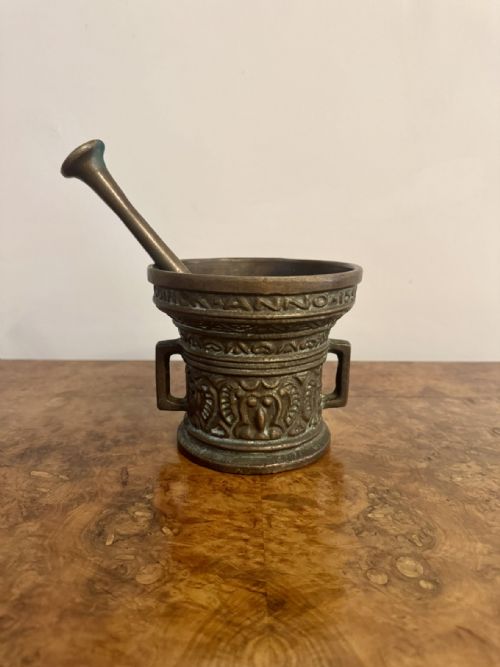
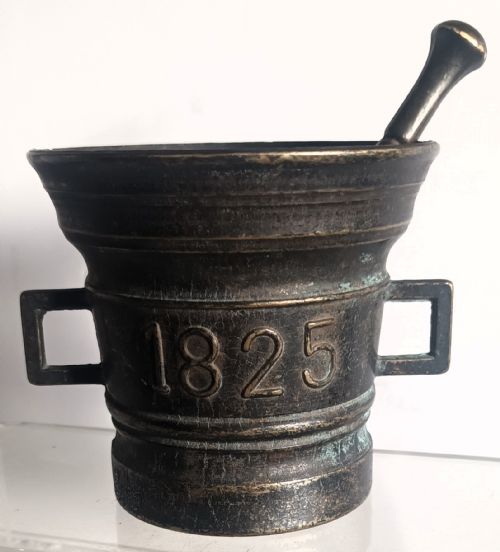
When you search for a vintage metal herb grinder, you are looking at heavy domestic and apothecary vessels designed to reduce dry materials into powders. The examples on this page span the seventeenth, eighteenth, and nineteenth centuries, taking the form of cast bronze and brass mortars paired with matching pestles.
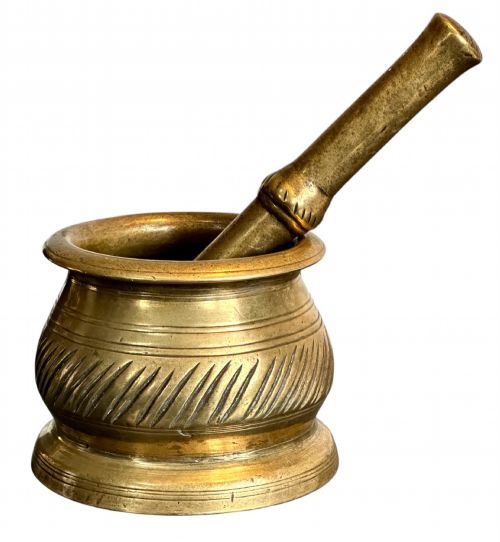
Most items you will meet here originate from English domestic kitchens and chemist shops, alongside continental pieces like Dutch Baroque and Indo-Persian designs. These kitchen and apothecary tools served generations of cooks and chemists before finding a place in modern interiors.
How they were made
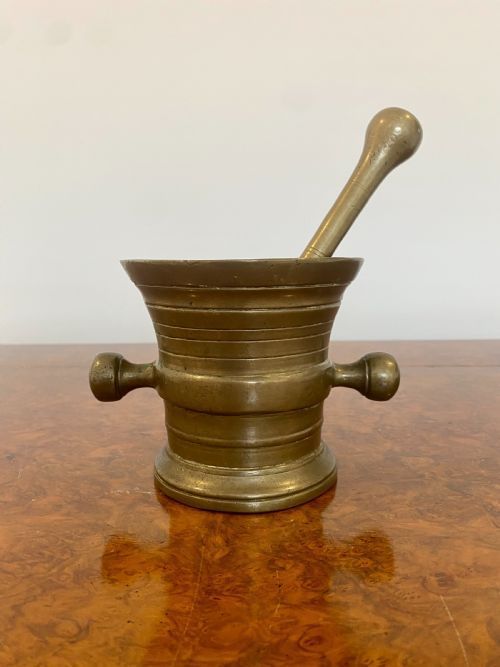
Every piece is produced from cast bronze or cast brass, poured into moulds to create thick walls capable of withstanding heavy impact. Makers shaped these vessels with flared rims and stable bases to prevent tipping during vigorous grinding.
Surface details on these grinders range from plain utilitarian finishes to decorated bands, moulded handles, and Renaissance Revival motifs. The accompanying pestles are forged or cast to fit the interior curve of the mortar.
What varies in quality
The distinction between ordinary and exceptional pieces lies in the crispness of the casting and the presence of decorative moulding. Simpler kitchen utility pieces contrast with finely detailed apothecary and Dutch Baroque examples that show deeper relief work.
Weight and balance dictate the utility of a mortar and pestle set, with heavier bronze vessels representing a more substantial build. The survival of an original matching pestle elevates the integrity of the piece.
The Vintage Metal Herb Grinder Glossary
- Mortar
- The heavy bowl in which substances are crushed or ground with a pestle. These vessels are typically cast from bronze or brass.
- Pestle
- The heavy, club-shaped tool used to grind materials against the interior walls of a mortar. Original matching pestles complete the set.
- Apothecary
- A historical practitioner who prepared and sold medicines, using mortars for compounding remedies. Many surviving brass and bronze grinders originate from these chemist shops.
- Dutch Baroque
- A seventeenth-century European decorative style known for robust forms and ornate detailing. Pieces from this tradition often feature distinct architectural moulding.
Vintage Metal Herb Grinder: Frequently Asked Questions
What were these grinders used for?
These bronze and brass vessels served households and apothecary shops for crushing herbs, spices, and medical ingredients. Cooks and chemists used them daily to prepare fine powders and mixtures.
Today, they function as decorative objects or practical kitchen tools for grinding dry seasonings.
How old are these metal grinders?
The pieces available range from the seventeenth century through the Victorian era and the nineteenth century. Earlier examples often date back to the seventeen-hundreds or sixteen-hundreds.
Stylistic details and construction methods help distinguish seventeenth-century pieces from later nineteenth-century items.
Are bronze and brass the only materials?
The evidence shows exclusively bronze and brass construction across all listed items. Cast bronze and cast brass provided the necessary weight and durability.
These metal alloys developed distinct patinas over centuries of handling and use.
How do I care for a metal mortar?
Keep the metal clean and dry to preserve the natural patina built up over centuries. Avoid harsh chemical cleaners that strip the historic surface.
Occasional dusting maintains the appearance of these heavy cast vessels in a modern home.