
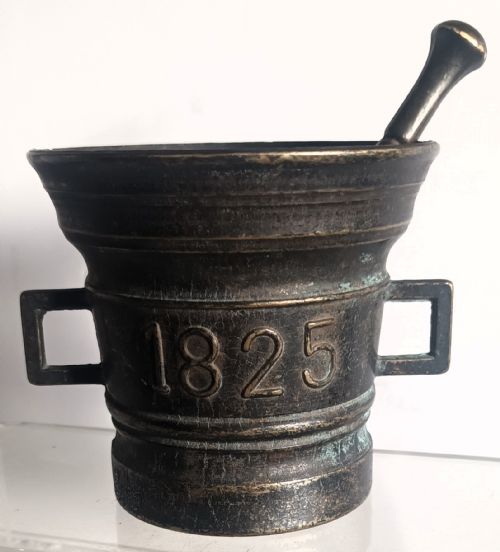
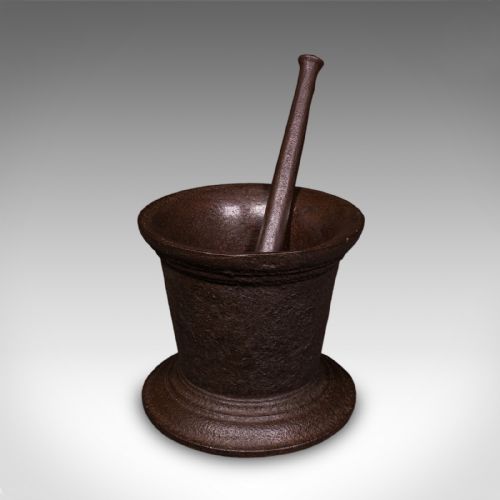


English Metal Mortar
An English antique metal mortar serves as a heavy utilitarian vessel for grinding materials, prized by collectors for its robust cast form and age.
English Metal Mortar
An English antique metal mortar is a heavy bowl shaped vessel traditionally paired with a pestle for crushing and grinding substances. When searching for an English antique metal mortar, buyers encounter domestic kitchen implements alongside apothecary and chemist tools.
The selections span multiple eras, with seventeenth century and Georgian examples appearing most frequently. Pieces range from small domestic grinders to large industrial dye maker vessels.
Forms include single vessels as well as duos and trios of mortars. Many items serve secondary decorative purposes today, such as jardiniere use.
How they were made
Metalworkers cast these vessels using bronze, brass, iron, and cast iron. Bronze and brass predominate in the surviving examples, offering the necessary density and durability for pounding ingredients.
Foundries utilised sand casting and related techniques to shape the metal. Surface decoration often includes cast motifs such as the Tudor rose, oak leaves, fleurs-de-lis, hearts, and crowned eagles.
Listings span four distinct centuries, featuring Georgian, Victorian, and seventeenth century periods alongside specific reigns like William III and Charles II.
What varies in quality
Quality rests upon the crispness of the original casting and the complexity of decorative motifs. Vessels featuring detailed motifs like the endless knot, birds, or specific heraldic stamps stand apart from plain utility pieces.
Proportion and metal weight define the better examples. Substantial bronze walls with clean lines and uniform patination demonstrate superior foundry work.
Somerset Foundry
The English Metal Mortar Glossary
- Mortar
- A heavy bowl used with a pestle for grinding substances. These metal vessels formed staples in early kitchens and apothecaries.
- Pestle
- A heavy tool with a rounded end used for pounding and grinding materials inside a mortar. Surviving sets keep the matching pestle with the bowl.
- Apothecary
- A historical practitioner who prepared and sold medicines. Many surviving metal mortars served chemists and apothecaries for compounding remedies.
- Cartouche
- An ornamented frame or tablet enclosing a design or inscription. Some seventeenth century bronze mortars feature heart shaped cartouches.
- Patina
- The surface sheen and coloration developed through age and handling. Bronze and brass mortars show varying depths of patination depending on their environment.
English Metal Mortar: Frequently Asked Questions
What were antique metal mortars used for?
These vessels functioned primarily in kitchens and apothecary shops for grinding dry goods, herbs, chemicals, and industrial dyes. The heavy metal construction allowed users to pound stubborn ingredients into powders or pastes.
Over time, many retired from active work to become decorative objects in homes and collections.
How do I tell seventeenth century mortars apart from Georgian ones?
Seventeenth century examples often display distinct decorative casting motifs such as oak leaves, fleurs-de-lis, or crowned eagles. They tend to have robust, heavily textured walls produced by early foundry methods.
Georgian pieces generally reflect more refined proportions and cleaner exterior surfaces while maintaining heavy bronze or brass construction.
Did mortars always come with pestles?
Many surviving sets include the original matching pestle, though pieces frequently became separated over centuries of use. Finding a mortar paired with its original pestle remains desirable for collectors.
Replacement pestles sometimes appear with older bowls due to centuries of utility.
How can I live with an antique metal mortar at home?
These pieces require minimal maintenance and suit various rooms due to their compact, heavy footprint. Larger examples function effectively as plant holders or architectural ornaments.
Their substantial metal forms sit securely on tables, shelves, or kitchen worktops without special mounting.