


English Apothecary Mortar Pestle
These english apothecary mortar pestle pieces are heavy utility vessels forged for grinding medicines and spices, prized for their dense metalwork and tactile heft.
English Apothecary Mortar Pestle
When you search for english apothecary mortar pestle items, you encounter heavy functional bowls paired with striking pestles designed for compounding medicines and culinary ingredients. These objects originate from several periods, spanning seventeenth-century examples through to Victorian and Edwardian iterations.
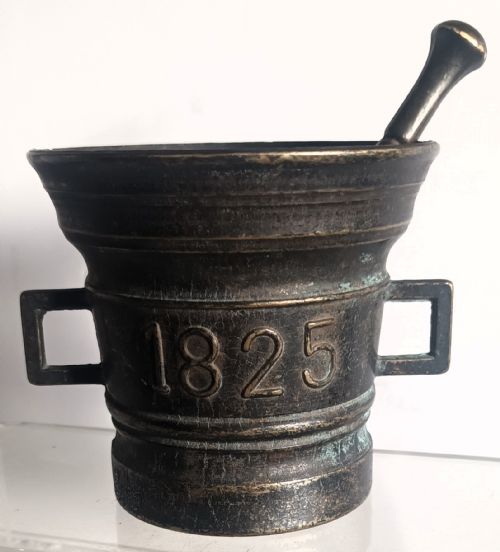
The most frequent form on this page is the cast bronze or brass mortar, often accompanied by its matching pestle. Alongside metal versions, wood and ceramic pieces appear, offering alternative textures utilised in domestic and apothecary contexts.
Materials and construction
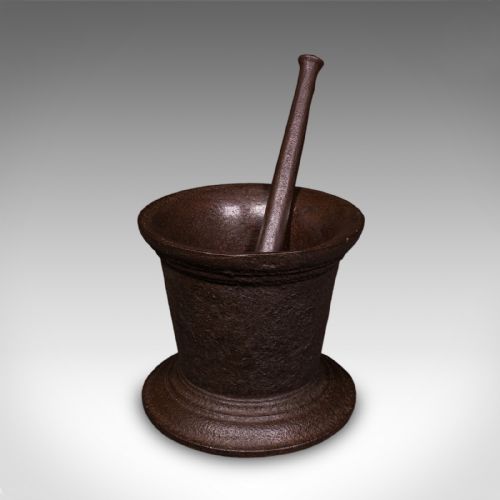
The primary metals utilised across these pieces are bronze and brass, shaped through foundry casting to create thick walls capable of withstanding heavy impact. Iron and bell metal also feature in the archive, bringing distinct tonal qualities and heavy densities to the vessels.
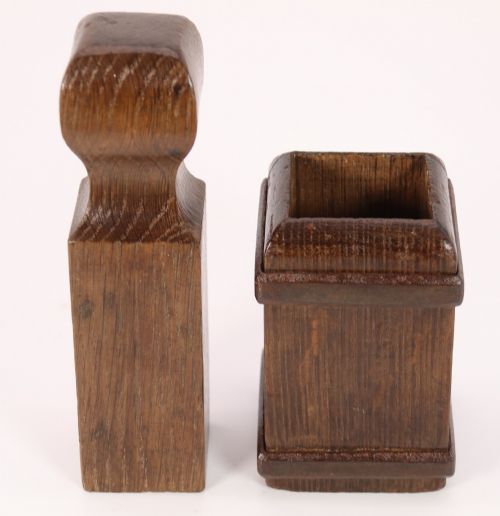
Wooden examples rely on dense timbers such as oak, beech, walnut, and fruitwood, sometimes reinforced with wrought iron mounts. Ceramic compositions complete the material range, providing smooth surfaces for fine chemical preparation.
One massive first-stage dye maker's mortar weighs an impressive one hundred and forty pounds, dwarfing standard apothecary vessels.
Markers of quality
Quality rests upon the crispness of cast detail, such as armorial cartouches or Tudor rose motifs, and the integrity of the metal surface. Early seventeenth-century examples display robust foundry work with thick rims and pronounced ribs.
The presence of a matching original pestle elevates an object significantly, particularly when the wear on the striking end corresponds directly to the interior wear of the bowl.
The English Apothecary Mortar Pestle Glossary
- Bell metal
- An alloy of copper and tin specifically formulated to produce a resonant tone when struck. It is frequently found in seventeenth-century apothecary vessels.
- Treen
- Small handmade wooden household objects and utensils. Fruitwood and oak examples demonstrate traditional turning techniques.
- Armorial cartouche
- An ornamental frame enclosing a coat of arms. These decorative elements appear cast onto the exterior of select early metal mortars.
- Wrought iron
- Iron that is heated and hammered into shape by hand. It provides sturdy reinforcement for wooden crusher bodies.
English Apothecary Mortar Pestle: Frequently Asked Questions
How were these mortars used?
Apothecaries and chemists utilised these vessels to grind, crush, and mix roots, barks, and minerals into medicinal powders and ointments. The heavy pestle provided the necessary force to break down stubborn ingredients against the thick interior base.
Kitchen cooks also employed them for pulverising spices and herbs, bridging the gap between domestic food preparation and apothecary science.
How do I date a bronze mortar?
Dating relies heavily on stylistic markers, rim profiles, and surface patination rather than explicit stamps. Seventeenth-century pieces often feature flared rims and cast decorative bands, whereas Georgian and Victorian iterations exhibit simpler, cleaner lines.
Comparing the metal composition and the wear patterns helps distinguish earlier cast pieces from later nineteenth-century reproductions or variants.
Can I still use an antique mortar?
Metal and ceramic examples remain structurally robust enough for light culinary tasks like grinding dry spices. However, unsealed wooden pieces can absorb oils and moisture, making them less suitable for modern food preparation.
Most collectors prefer to display these heavy vessels as sculptural objects rather than putting them back into active daily service.
Why do some mortars feature crests?
Cast armorial cartouches and royal emblems like the Tudor rose denote civic commissioning, wealthy apothecary guilds, or high-status ownership. These decorative flourishes elevate utilitarian laboratory tools into statements of prestige and craftsmanship.
Plain vessels served standard apothecary and household functions, while decorated pieces reflected the pride of the trade.