



Vintage Brass Face Clock
A vintage brass face clock brings tactile weight and the quiet rhythm of mechanical timekeeping into a room.
Vintage Brass Face Clock
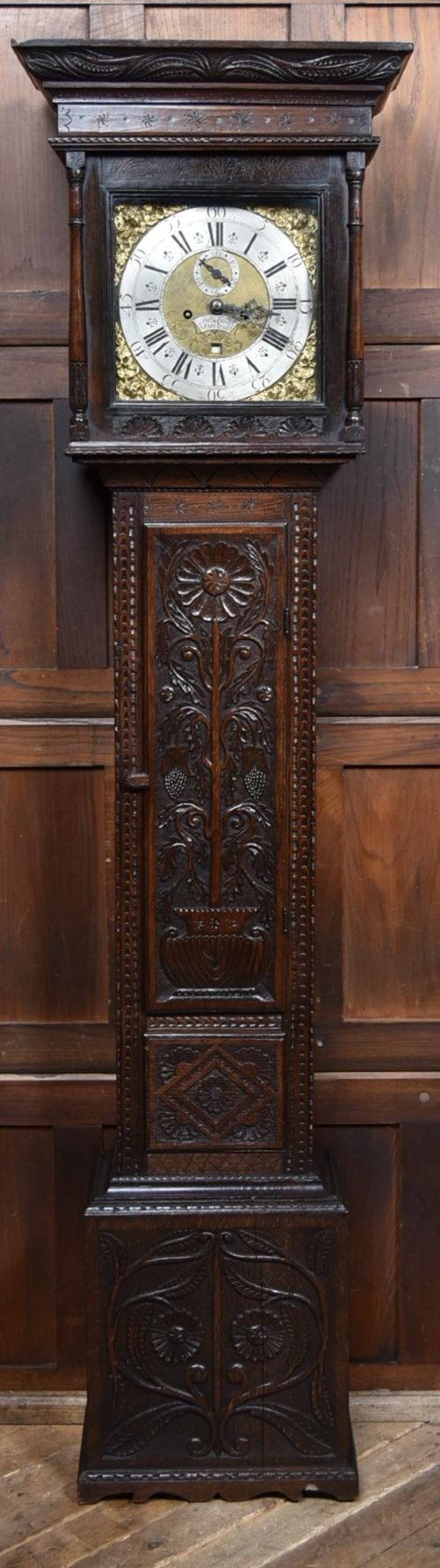
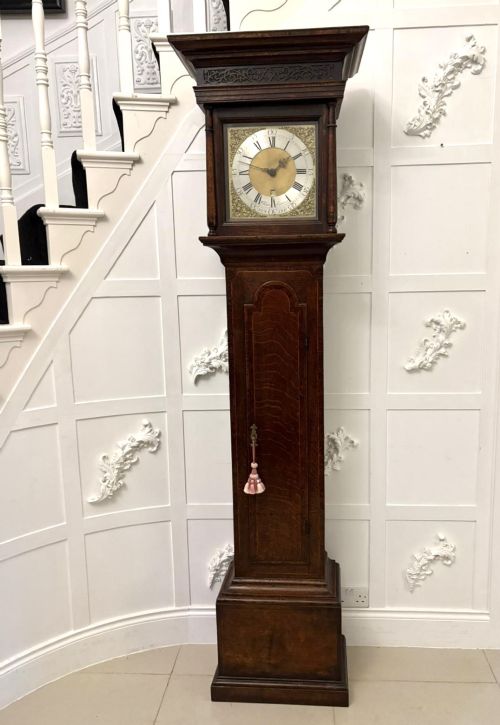
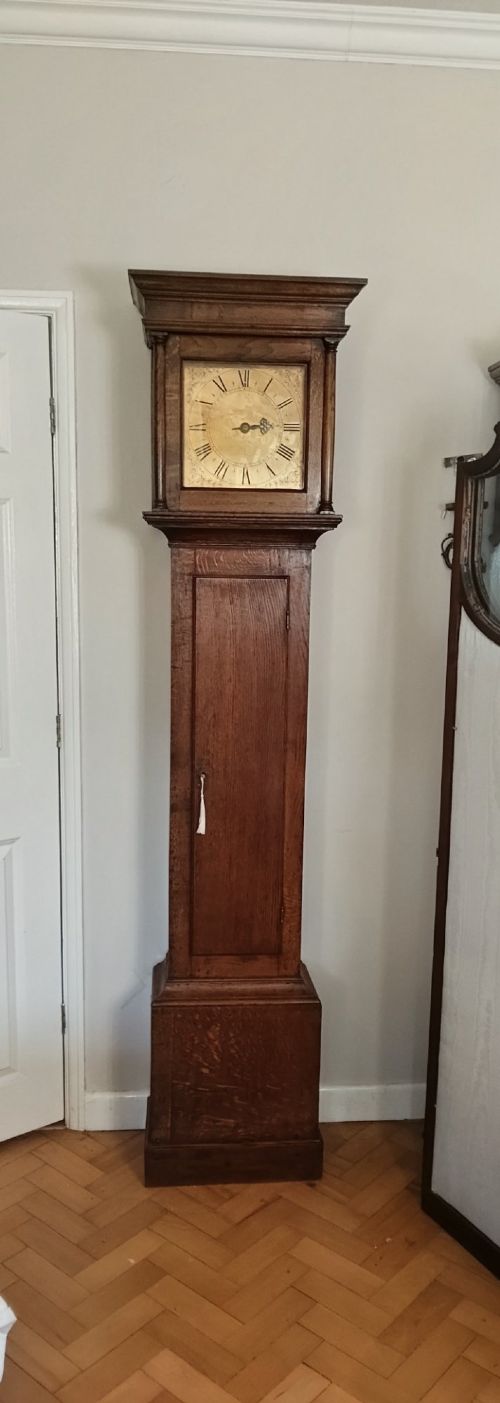
A vintage brass face clock encompasses tall floor-standing timepieces, smaller wall dials, and desk models united by metallic dials. The selection spans robust oak and mahogany longcase clocks alongside compact mantel and granddaughter versions.
Makers from the eighteenth century onward inscribed their brass dials with regional details, pairing metal work with timber cases. Buyers encounter George III floor models alongside Edwardian smaller variants and Victorian wall pieces.
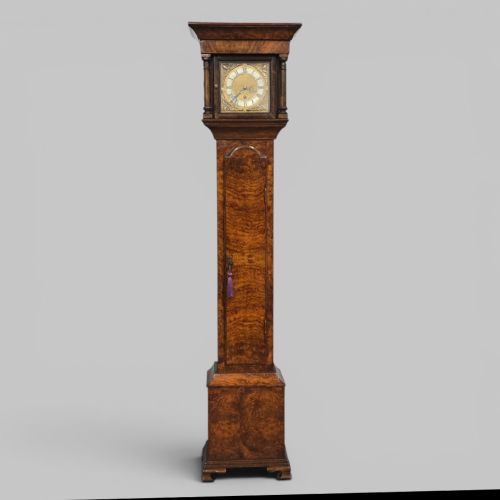
The dominant forms are tall grandfather and grandmother clocks housed in burr walnut, oak, or flame mahogany. These tallcase pieces anchor a room with traditional proportions and engraved metal chapter rings.
Materials and construction
Cased structures rely on solid timbers like oak, mahogany, and walnut, frequently enhanced by burr veneers and ebonised detailing. Dial construction combines cast and engraved brass with applied spandrels and silvered chapter rings.
Movements span eight-day mechanisms, spring-driven mantel designs, and skeletonised barometer configurations. Cabinet makers used dovetail joinery and applied mouldings to house these intricate brass-geared trains.
Pocket watches make surprise appearances among the towering oak longcase clocks.
Evaluating quality and execution
Quality rests in the crispness of the brass engraving on the dial and the depth of figure in the timber case. Superior examples display finely cast corner spandrels and harmonious proportions between dial size and trunk width.
The integration of the movement into the cabinet dictates execution standards, where original brass faces match the age and style of the surrounding wood. Finer instances show deliberate timber selection, such as flame mahogany or burr walnut.
Jn° Smith Macclesfd·Samuel Young Nantwich & Bunbury·Richard Northen·John Taylor London·Thomas Baker of Malling·Baldwin of Loughborough·C Coleman London·Richard Watkin
The Vintage Brass Face Clock Glossary
- Longcase clock
- A tall, weight-driven pendulum timekeeper standing directly on the floor, commonly called a grandfather clock. These instruments feature protective wooden hoods enclosing the brass dial.
- Spandrel
- The decorative metal corner ornament placed outside the circular chapter ring on a brass clock face. These cast brass flourishes evolved in style across different decades.
- Chapter ring
- The circular metal ring on a dial bearing the hour and minute numerals. It is often silvered to contrast with the polished brass background.
- Grandmother clock
- A smaller version of the traditional longcase clock, typically manufactured during the twentieth century. They offer the presence of a tallcase timekeeper in a more compact footprint.
- Fusee
- A conical pulley used in spring-driven clocks to equalise the torque of the mainspring as it unwinds. This mechanical addition ensures steady timekeeping accuracy.
Vintage Brass Face Clock: Frequently Asked Questions
What is a grandmother clock?
A grandmother clock is a slender, scaled-down version of the traditional tallcase longcase clock. They generally measure shorter than standard grandfather clocks while retaining mechanical brass dial movements.
These pieces emerged to fit smaller domestic spaces during the early twentieth century without sacrificing traditional cabinet-making materials like oak and walnut.
How do I wind a brass face clock?
Winding requires using a matching key to lift weights or tension springs inside the wooden case. Care must be taken not to overwind the mechanism.
Consulting the specific movement type, whether an eight-day weight-driven train or a spring-driven fusee, ensures the mechanical integrity remains undisturbed.
Where should I place a longcase clock?
Longcase clocks need stable, dry locations away from direct sunlight and temperature fluctuations that affect wood and metal. Placing them against an interior wall prevents vibrations from disturbing the pendulum.
Level flooring is essential so the anchor escapement maintains an even tick and accurate time.
How do I date a brass dial clock?
Dating relies on the style of the brass spandrels, the shape of the dial arch, and the timber used in the case. Earlier eighteenth-century models feature square brass dials before arched formats became common.
Inscribed signatures on the dial plate often point to recorded working dates of individual clockmakers.