
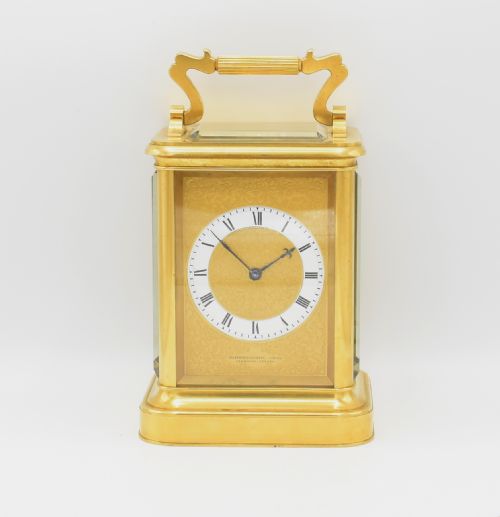
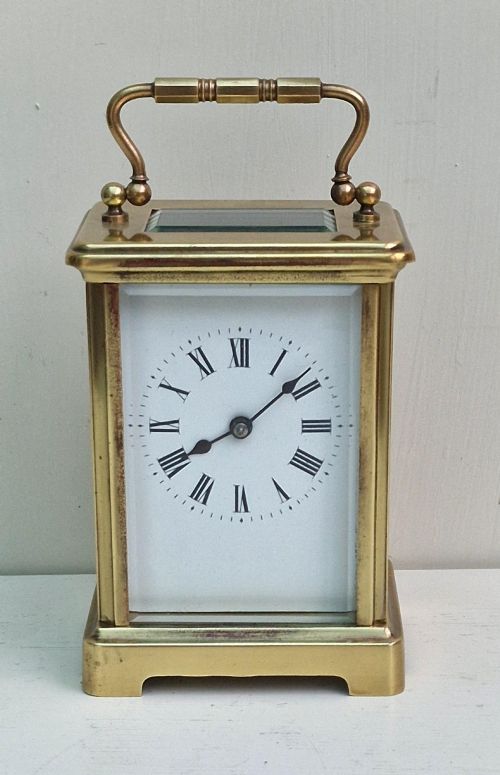
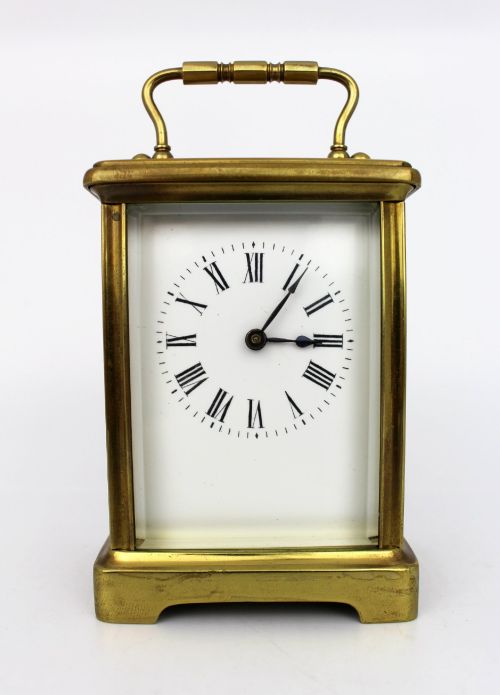
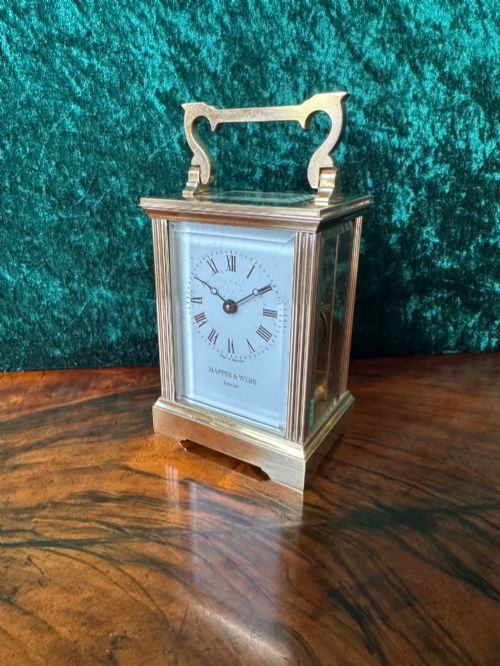
Vintage Brass Carriage Clock
A vintage brass carriage clock is a portable mechanical timekeeper that brings nineteenth century craftsmanship and functional elegance to a desk or mantelpiece.
Vintage Brass Carriage Clock
When searching for a vintage brass carriage clock, you encounter portable timepieces originally built for travel by nineteenth century and early twentieth century makers. The pieces available span periods from eighteen sixty through to nineteen ten, with heavy representation from Victorian and Edwardian decades.
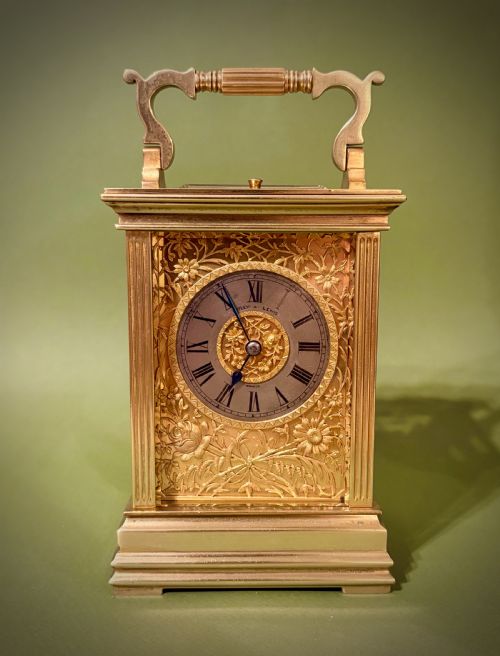
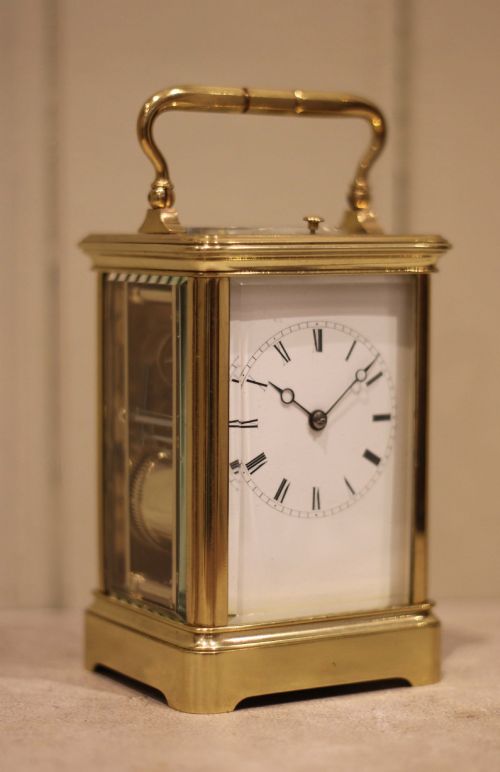
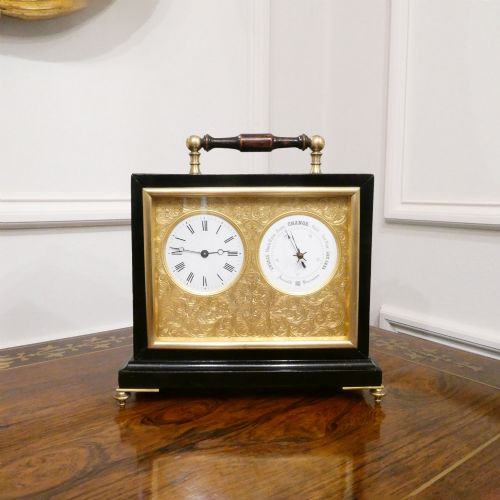
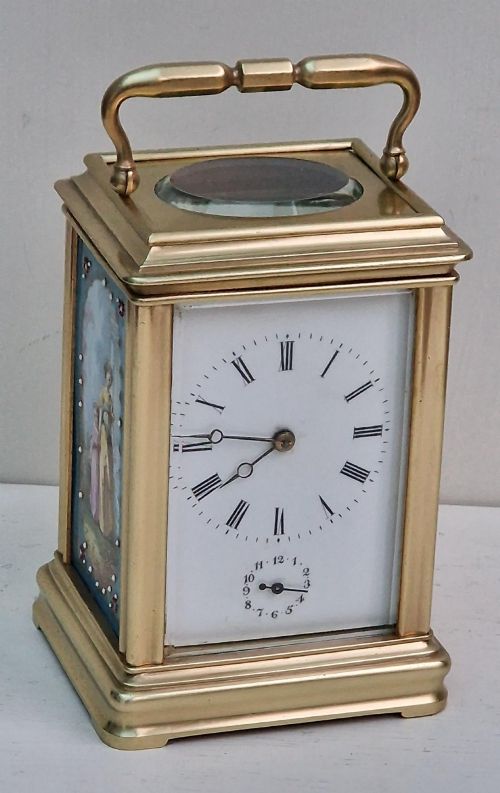
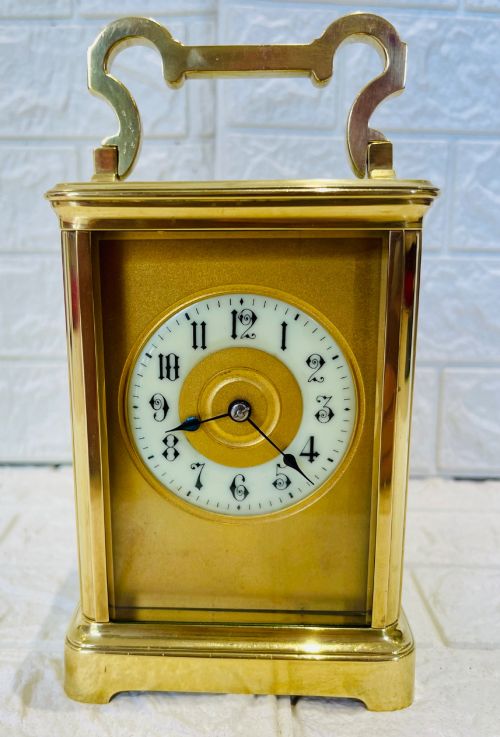
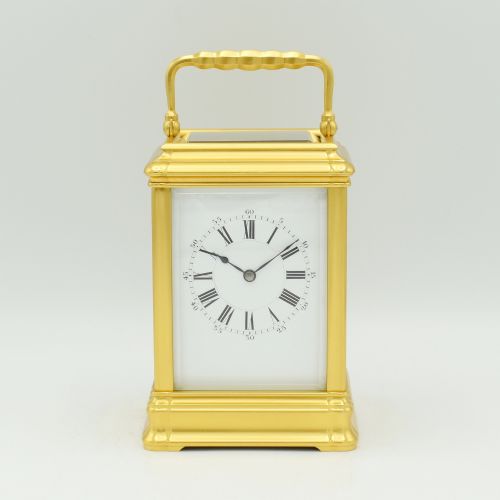
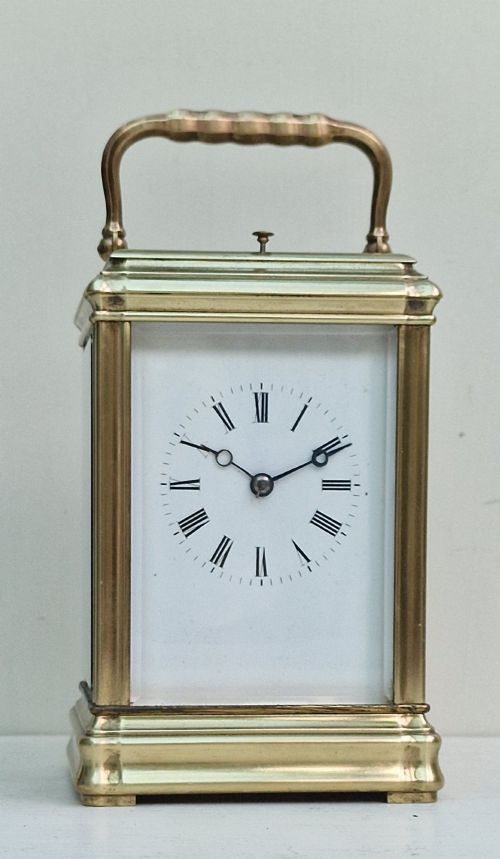
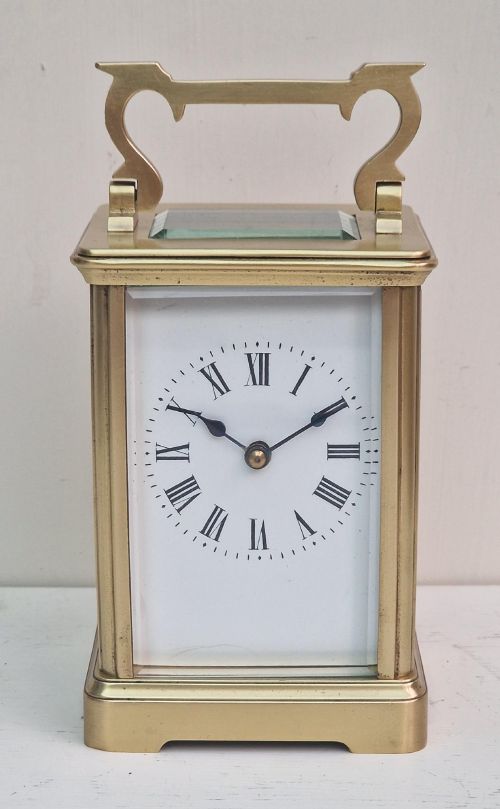
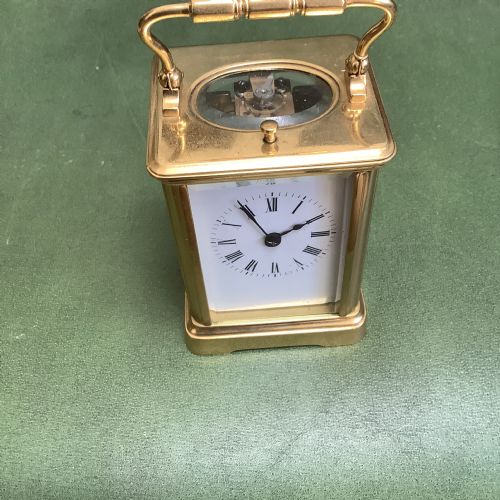
The most common form you will meet on this page is the French carriage clock, housed in a rectangular brass or gilt brass frame inset with glass panels to reveal the movement. These range from simple timepieces to more complex repeating and striking models featuring enamel dials or porcelain panels.
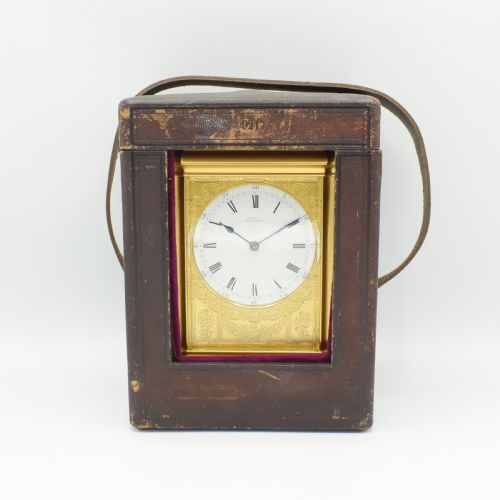
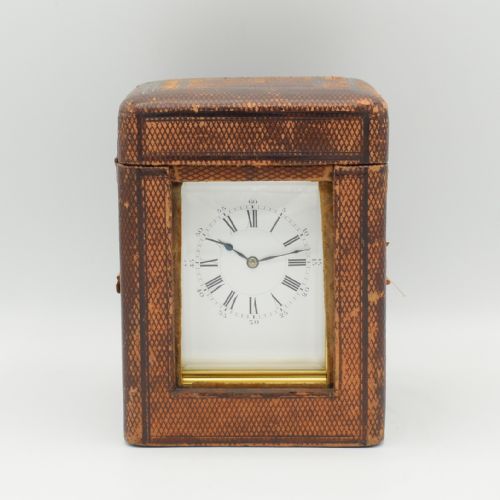
British makers also contribute to the selection, alongside Swiss movements and pieces complete with their original leather travel cases. You will find variations in scale, from miniature carriage clocks up to large examples with extensive engraving or ormolu mounts.
How they were made
Makers constructed these clocks using heavy brass or gilt brass frames to house intricate steel gear trains and escapements. Glass panels on all four sides and the top allowed light to reach the movement and let owners view the ticking mechanism from any angle.
The selection includes both simple timepieces and complex quarter striking movements housed in gorge and doucine style cases.
What varies in quality
Quality in a vintage brass carriage clock rests on the complexity of the movement and the finish of the case. Simpler timepieces sit at one end, while striking, chiming, and repeating mechanisms that sound the hours and quarters represent a higher tier of horological skill.
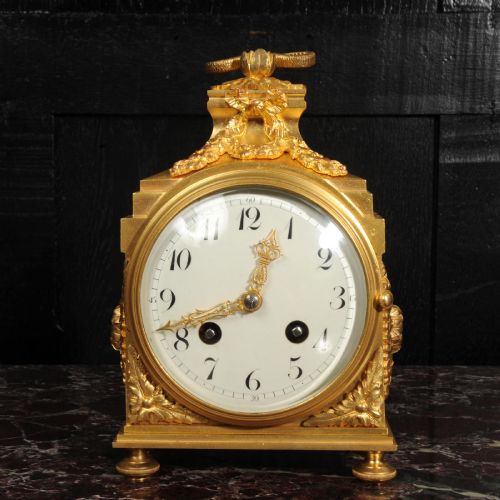
The casing itself dictates much of the distinction, moving from plain polished brass to heavily engraved gilt frames, ormolu mounts, and specialised doucine profiles. The inclusion of matching travel cases and signed plates from known makers further separates standard examples from the finest productions.
Henri Jacot·Goldsmiths Alliance Ltd·Mappin and Web·Pickford of London·T. Martin & Co·John Morley
The Vintage Brass Carriage Clock Glossary
- Carriage clock
- A small, spring driven portable clock designed for travellers in the nineteenth century. These pieces feature a handle on top and glazed panels.
- Repeating mechanism
- A complication that allows the clock to repeat the last hour or quarter hour struck when a button or lever is pressed. This mechanical feature required precise engineering.
- Gorge case
- A distinct rectangular brass case style characterised by stepped mouldings at the top and base. It is frequently seen on nineteenth century French examples.
- Ormolu
- Gilt bronze or brass applied to decorative elements of the clock case. This technique creates a rich, gold coloured finish.
- Pendule d'Officier
- A military style travelling clock from the French tradition. These often feature robust cases and distinct dial layouts.
Vintage Brass Carriage Clock: Frequently Asked Questions
How do carriage clocks work?
These timepieces rely on a spring barrel movement controlled by a platform escapement rather than a swinging pendulum. This allows the clock to keep time while moving or sitting flat on a surface.
Most examples run for eight days on a single wind using a dedicated key fitted to the rear backplate. Striking and repeating models utilise additional gear trains to sound bells or gongs.
Why do some clocks strike the hours?
Striking mechanisms were built into better quality pieces to announce the passage of time audibly without requiring the owner to look at the dial. A bell or gong inside the case rings automatically on the hour and half hour.
Repeating functions take this further by allowing the owner to press a button on top of the case in the dark to hear the last hour struck again.
How do I date a carriage clock?
Dating relies on stylistic shifts in the brass case, the design of the escape platform, and signatures stamped on the movement backplate. Victorian and Edwardian examples often display registration marks or maker serial numbers.
Plain cases tend to appear across the middle of the nineteenth century, while heavily engraved gilt frames and porcelain panels become more pronounced toward nineteen hundred.
Where should I place a carriage clock?
A carriage clock suits small surfaces where its portable scale and glass panels can catch the light. Desks, mantelpieces, and bookshelves provide stable environments away from excessive moisture.
Because the mechanism is visible from all sides, placing the piece where light passes through the glass panels enhances the visual display of the moving gears.