

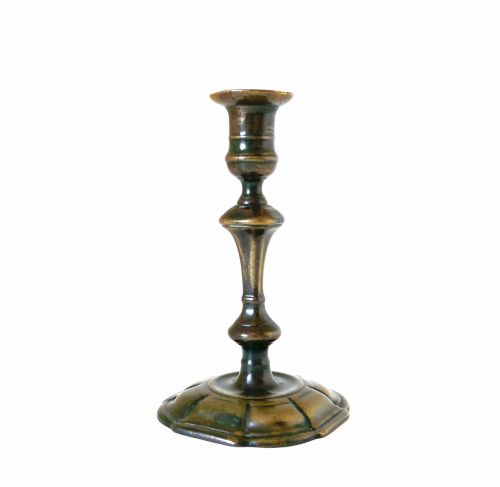
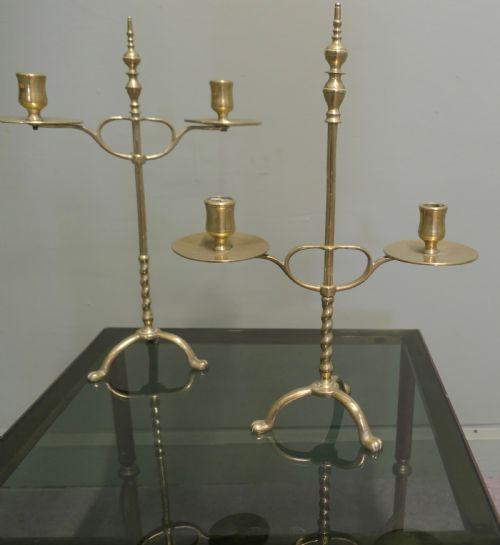

Vintage Brass Candle Stands
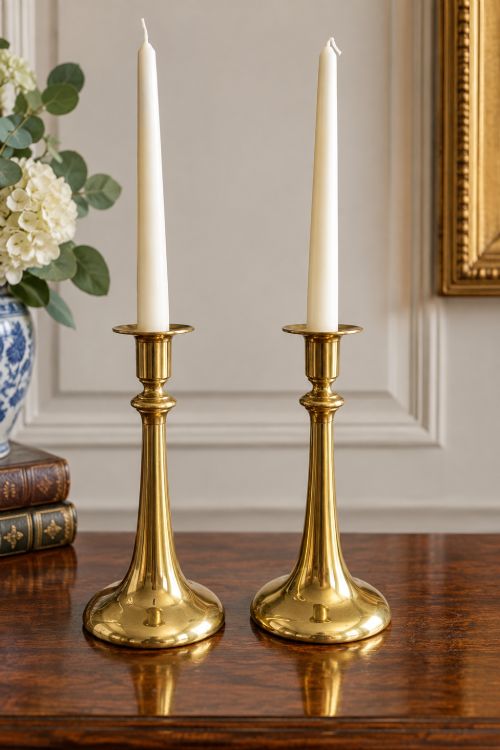
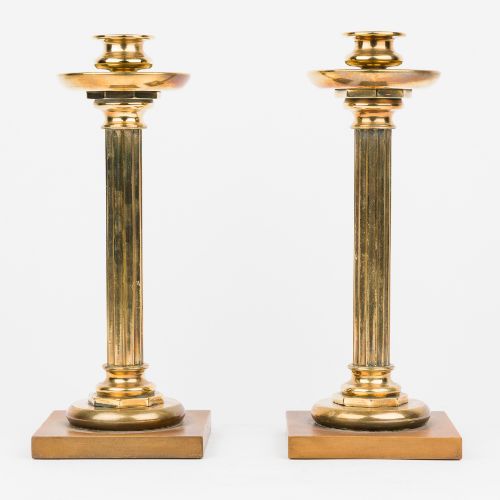
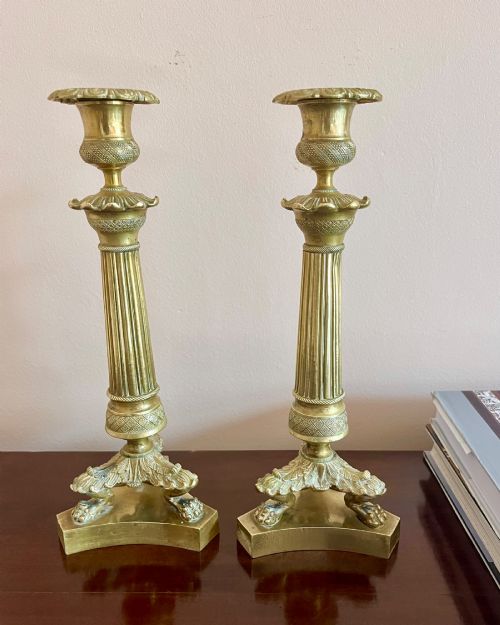
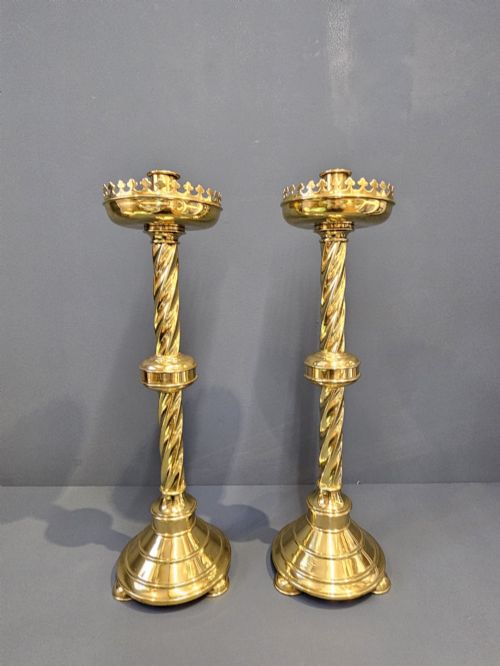
These vintage brass candle stands bring weight, domestic illumination and varied period style to a room.
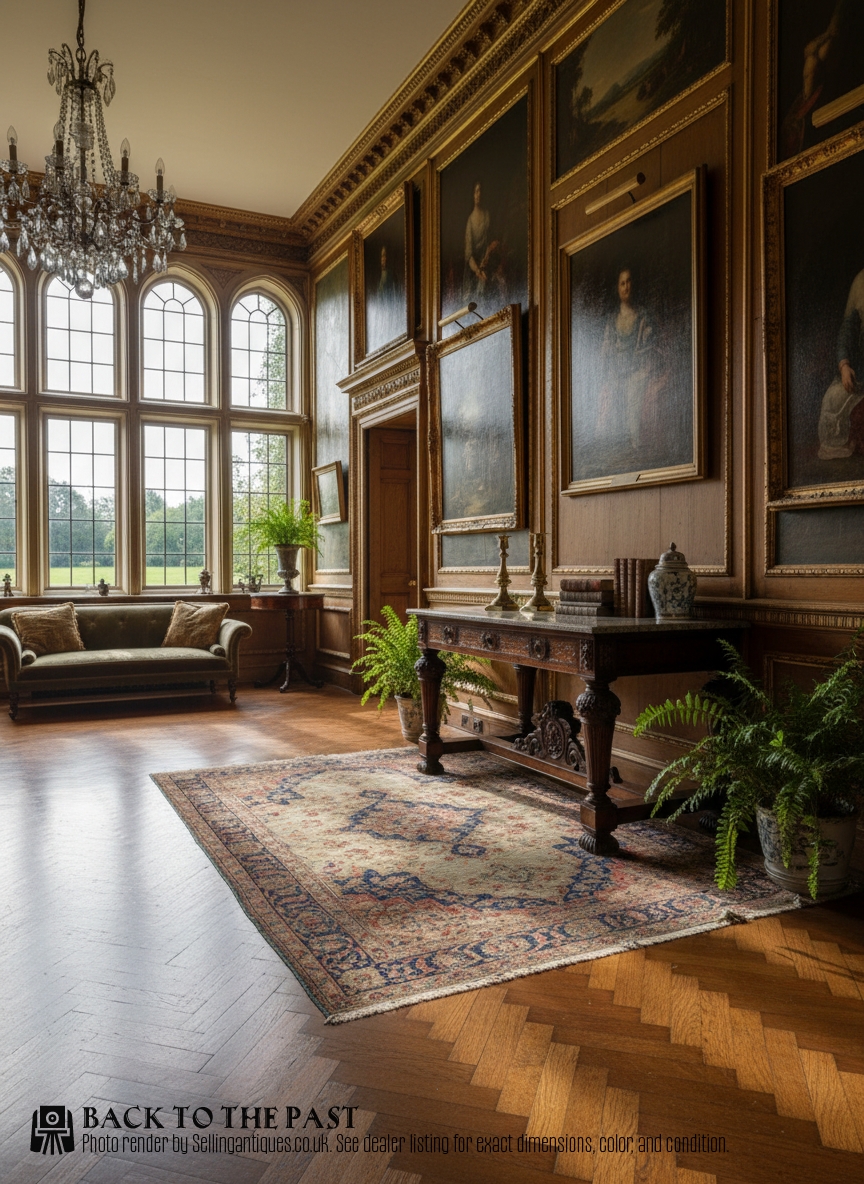
Vintage Brass Candle Stands
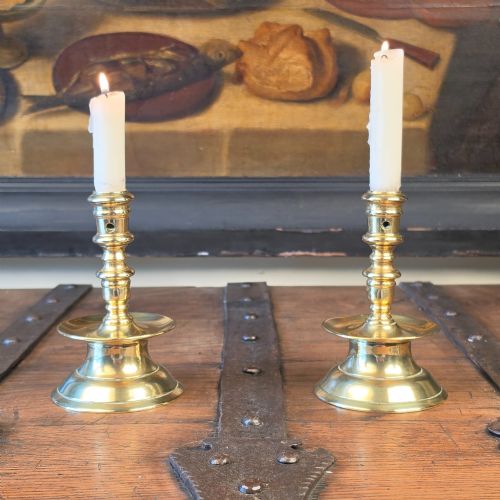
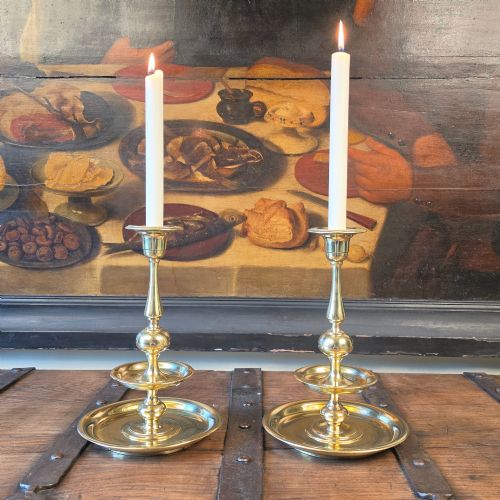
Vintage brass candle stands encompass candlesticks, candelabra, floor lamps and torchere stands primarily cast from brass, bronze and gilt metal. A buyer exploring these pieces will encounter domestic table lights alongside taller church and floor formats.
The selection ranges from Georgian and Victorian designs to Arts and Crafts, Art Nouveau and 17th century revival styles. Pairs dominate the selection, offering symmetry for mantelpieces, side tables and desks.
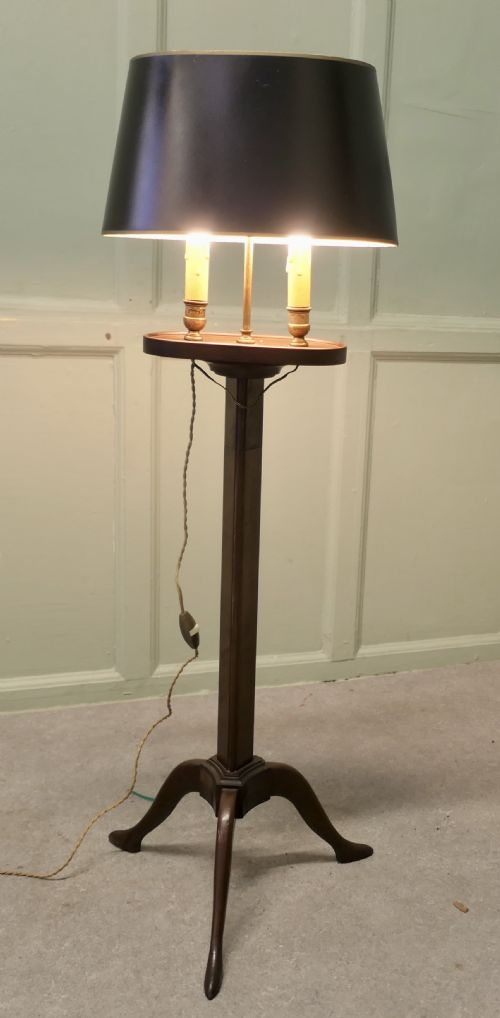
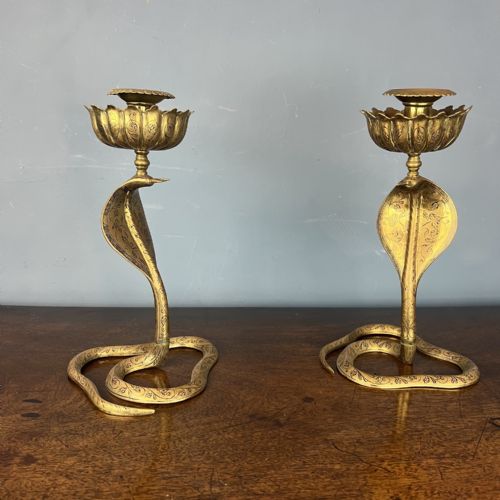
Specific regional and functional variations appear, including Indian Bidri ware serpent motifs, bouillotte lamps with adjustable shades, and ejector mechanisms designed to lift spent wax.
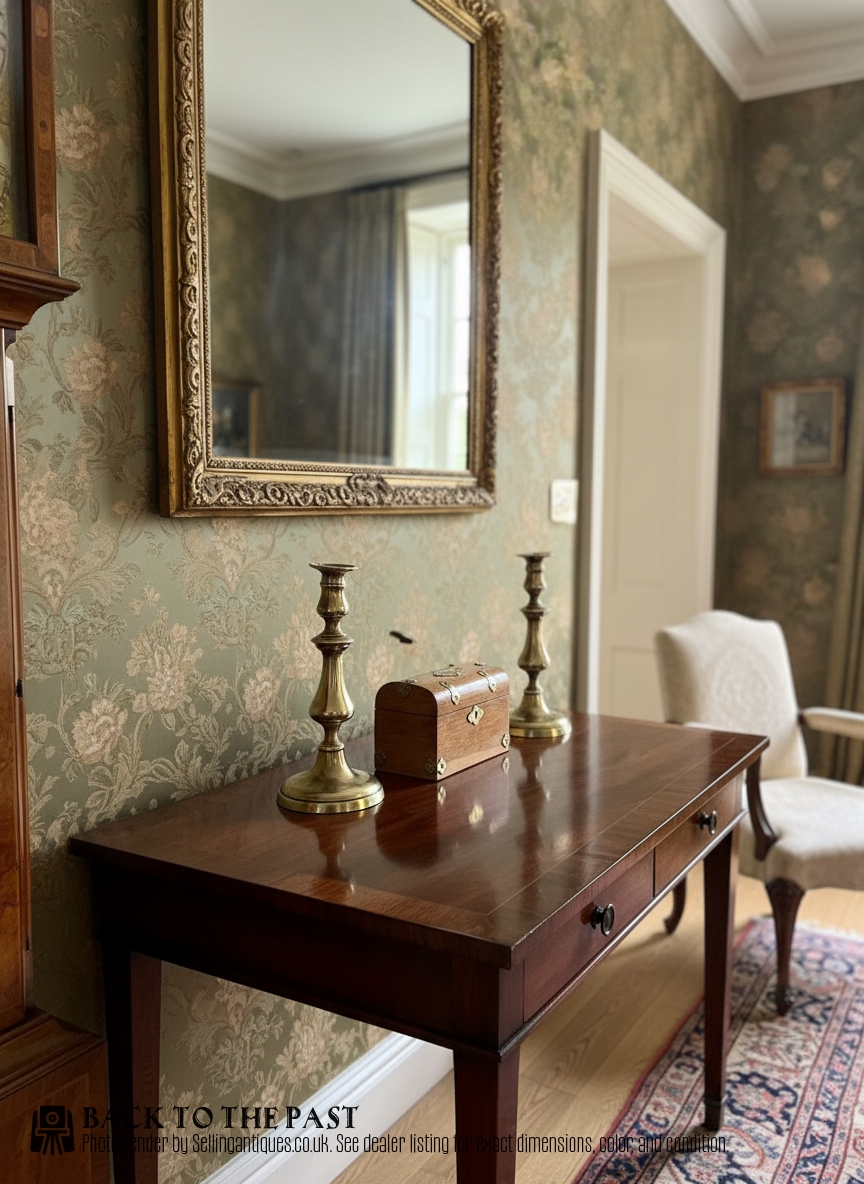
Materials and construction
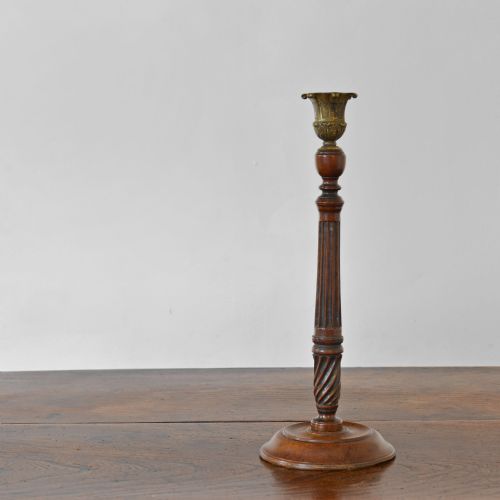
Makers utilised casting techniques to shape brass, bronze and gilt metal into structural forms, often joining components through seaming or threading. Heavier pieces rely on solid metal casting, while others incorporate materials such as copper, mahogany, onyx and champleve enamel for decorative contrast.
Surface finishes vary from polished brass and patinated metal to gilt bronze or ormolu. Certain examples integrate functional mechanics such as adjustable heights, articulated arms and sliding ejector plates within the stem.
Vintage Brass Candle Stands Retail Price Guide 2026
Typical asking prices for vintage brass candle stands among the pieces listed under this phrase on Sellingantiques today, from the lower quarter to the upper quarter. They describe what is for sale here now, not the wider market.
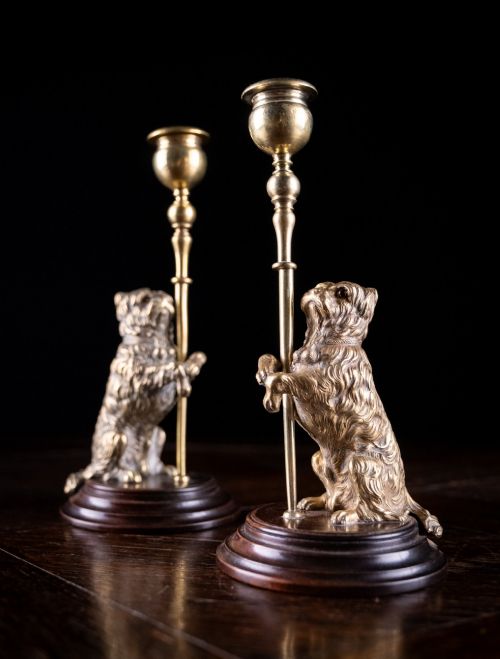
A pair of standing terrier dogs holds the candles on one whimsical Edwardian stand.
Assessing quality and finish
Quality rests on the crispness of casting detail and the heft of the metalwork, distinguishing heavy, well-balanced items from lighter production. Ornate chasing, delicate champleve enamel work and integrated mechanical adjustments elevate a piece.
Condition and originality dictate standing, particularly where patination, surface gilding or mixed materials like wood and stone remain intact without heavy restoration.
J.T. & Co·AFC
The Vintage Brass Candle Stands Glossary
- Candlestick
- A portable holder with a single socket designed to support one candle. Most examples include a drip pan and a stepped or weighted base.
- Candelabra
- A branched lighting fixture holding multiple candles on separate arms. These often present ornate cast ornamentation and greater height.
- Pricket
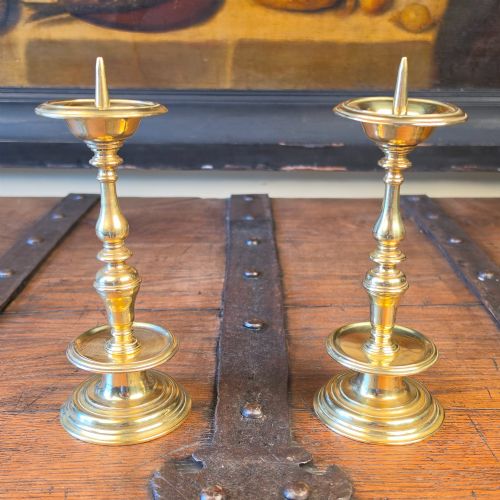
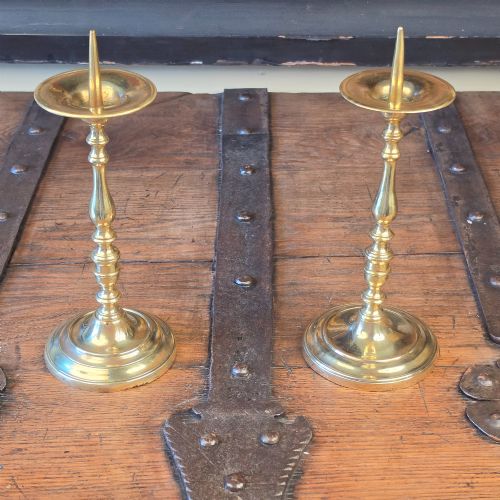
- A pointed metal spike designed to secure a candle rather than a socket. This format frequently appears on church or altar candlesticks.
- Ejector
- A concealed internal mechanism operated by a thumbpiece to push a stub of candle out of the socket. Seamed examples often incorporate this functional device.
- Champleve
- An enamelling technique where troughs are dug into the metal surface and filled with vitreous enamel before firing. It frequently appears on ornate late 19th-century pieces.
Vintage Brass Candle Stands: Frequently Asked Questions
How do I date an old brass candlestick?
Dating relies on manufacturing techniques, base construction and stylistic markers associated with periods like the Georgian or Victorian eras. Seamed construction, casting weight and wear patterns offer further clues to age.
Examining the socket formation and screw threads helps separate 18th-century forms from later revival pieces produced in the 19th or early 20th centuries.
How were ejector candlesticks used?
Ejector candlesticks include a small sliding lever on the stem connected to an internal platform. Pushing this lever upward lifts the remaining wax stub out of the socket for easy removal.
This practical innovation became widespread during the 18th and 19th centuries to simplify cleaning.
Can I polish antique brass stands?
Cleaning depends on whether a piece retains its original historic patina or has been previously polished. Many collectors prefer to leave undisturbed oxidation and dark patination intact.
Gentle dusting is usually sufficient, avoiding harsh abrasive chemicals that strip the aged surface character.