
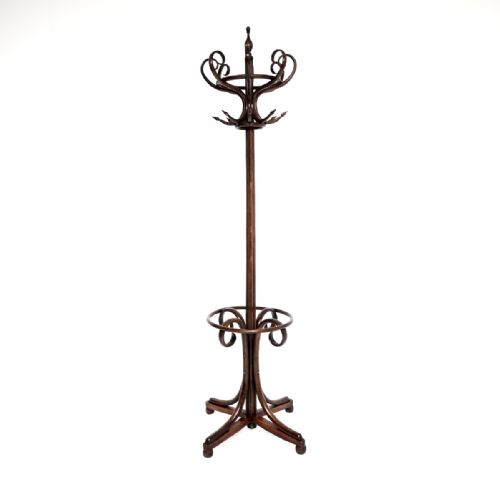
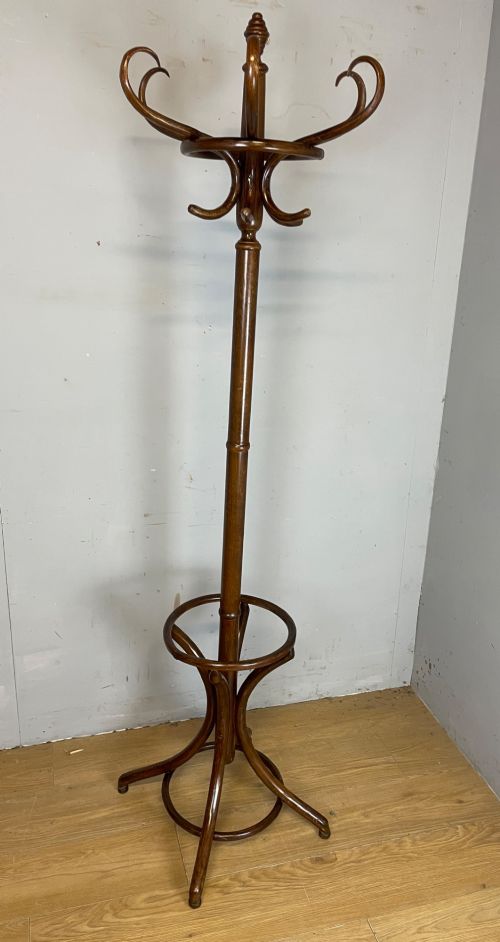
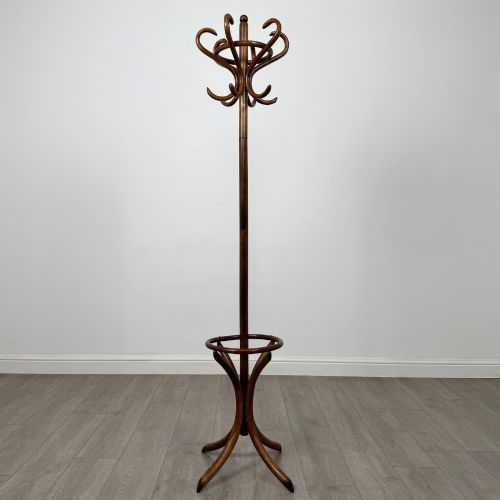
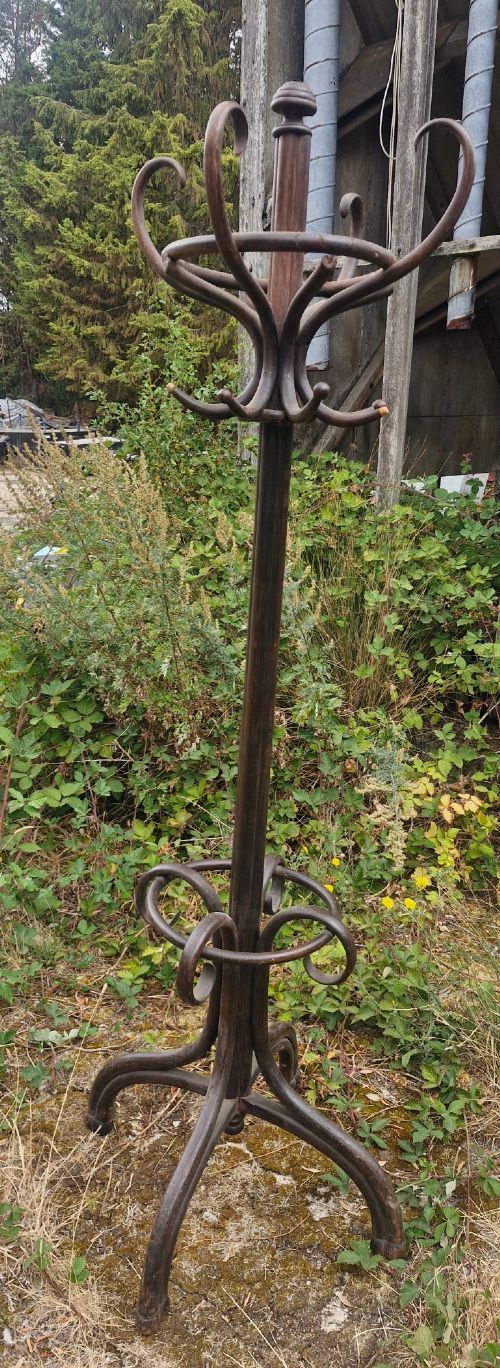
Vintage Bentwood Hat Stand
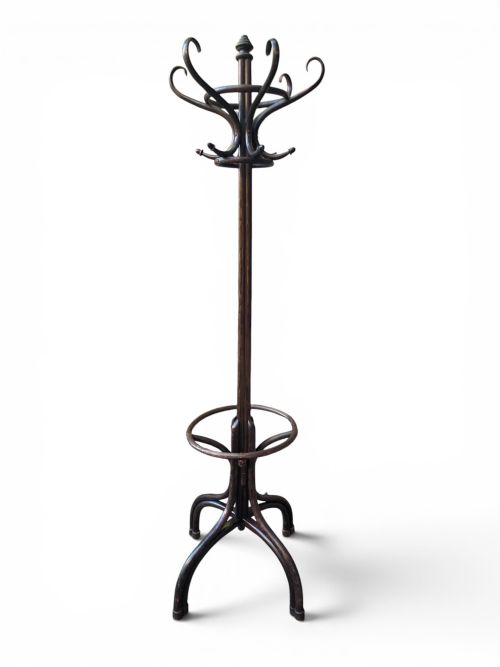
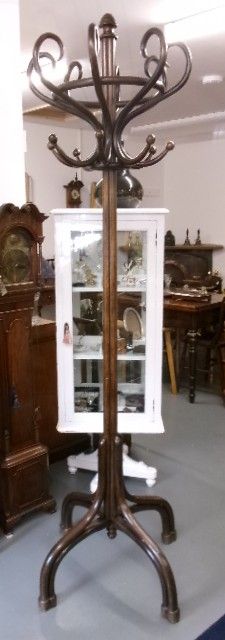
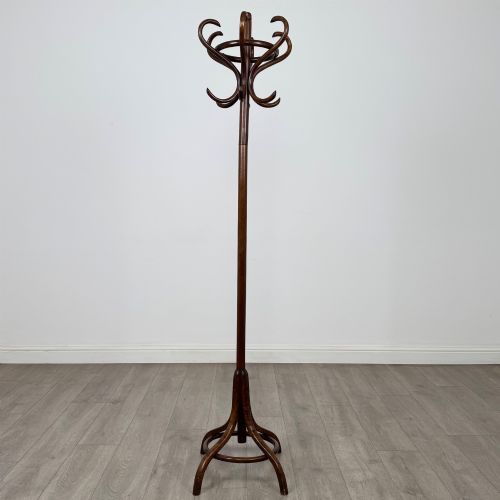
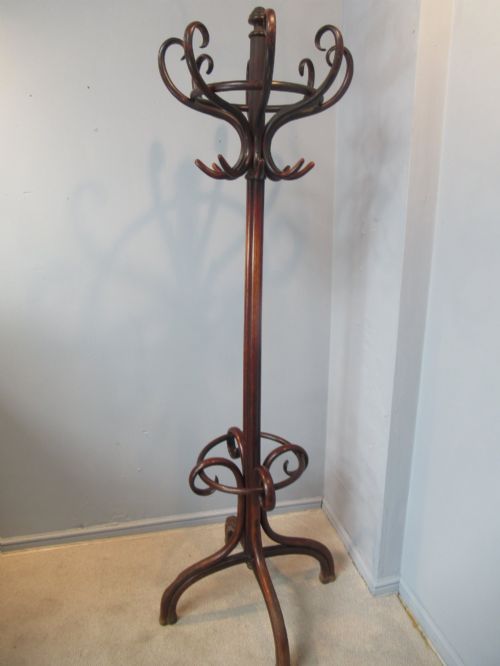
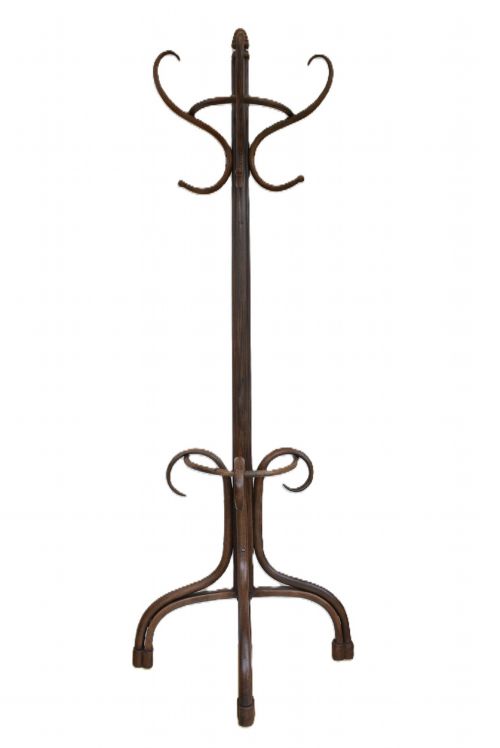
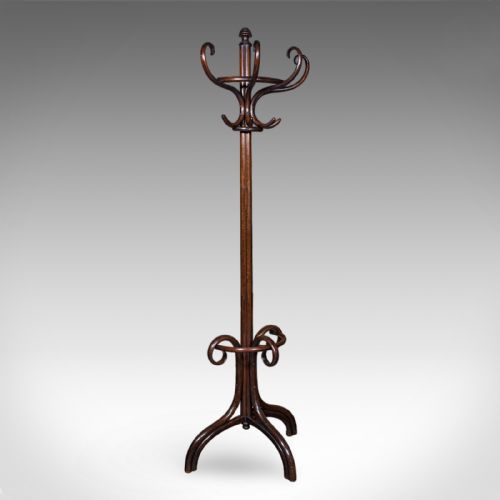
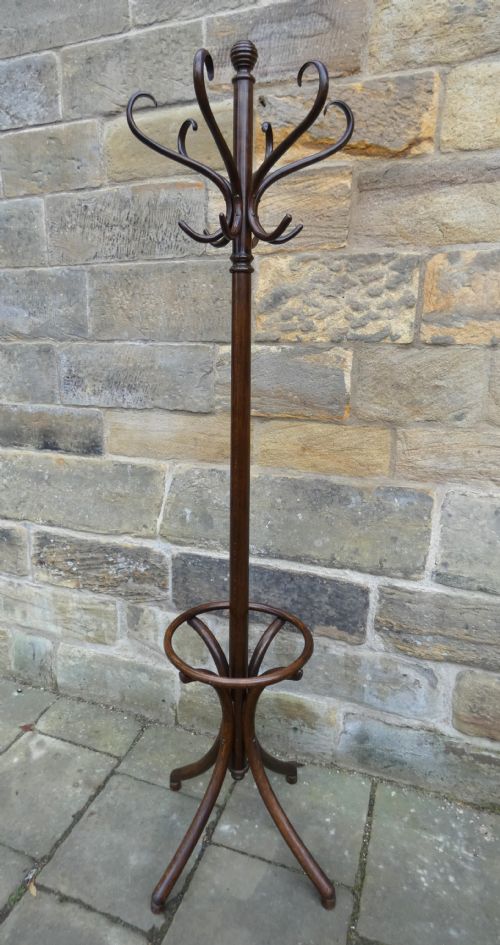
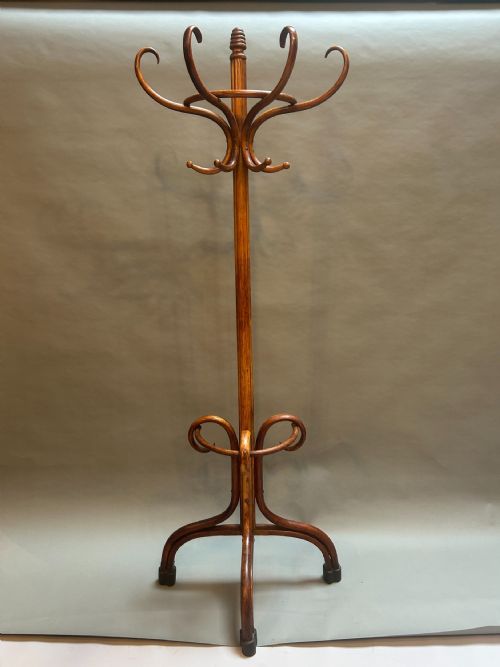
A vintage bentwood hat stand offers slender, steam-bent curves that hold hats and coats while bringing practical elegance to any hallway.
Vintage Bentwood Hat Stand
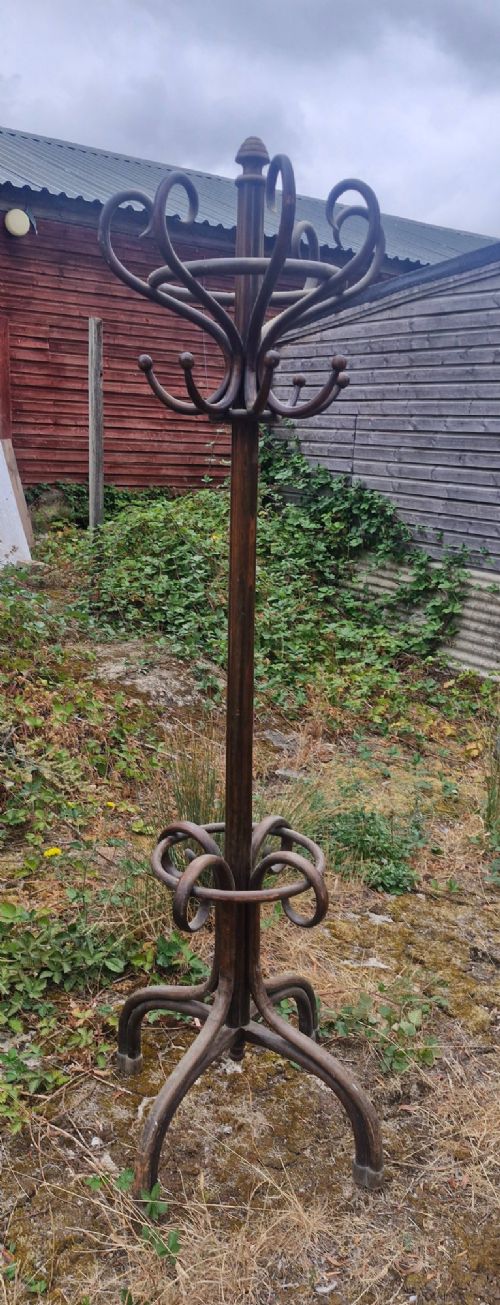
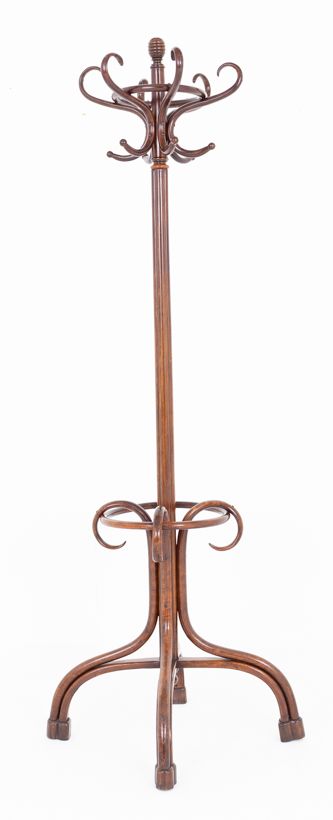
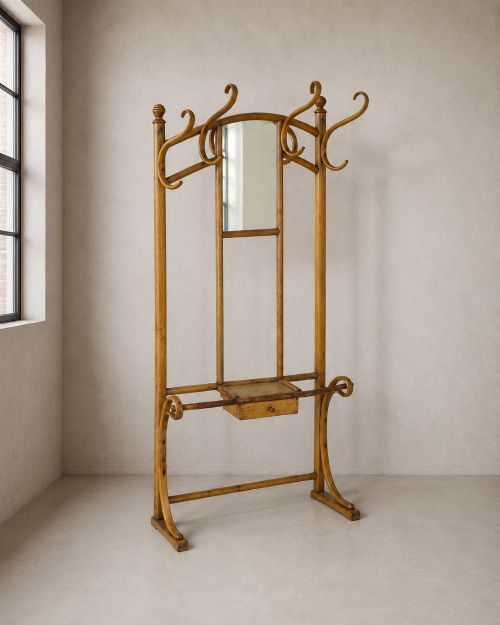
A vintage bentwood hat stand serves as a tall, vertical hall furniture piece designed with branching hooks for headwear and outerwear. These items appear across Victorian, Edwardian, and early-twentieth-century periods, spanning from eighteen eighty to nineteen thirty. Most examples take a free-standing vertical form, though half-round or demi-lune wall-standing designs also occur.
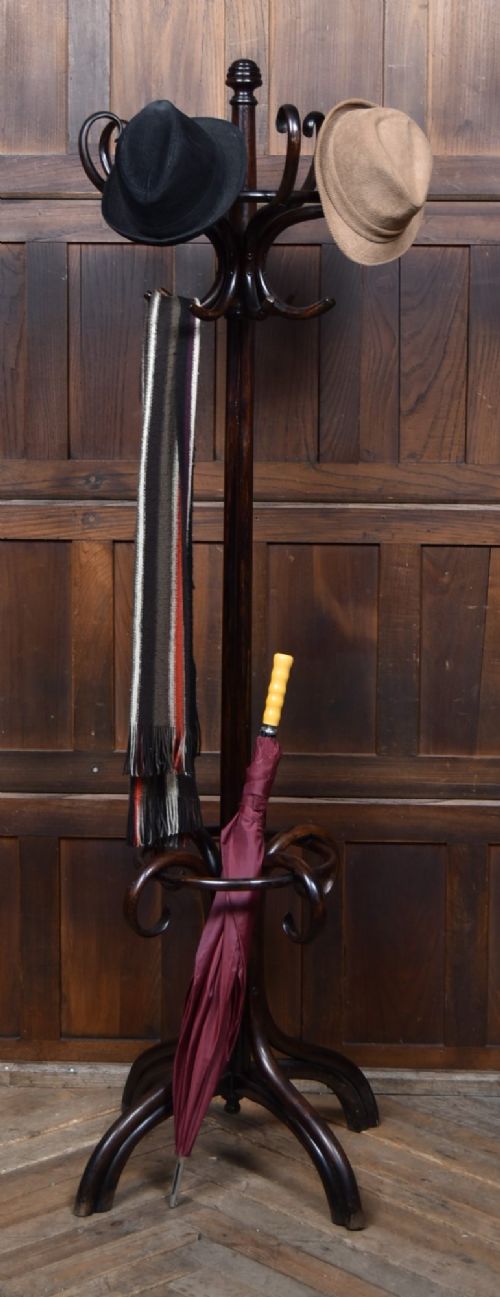
The objects function primarily as hall trees or coat racks, often incorporating lower rings for umbrellas and walking sticks. Pieces originate from Austrian makers and broader European workshops, with styles ranging from plain utility to distinct Art Nouveau curves.
Materials and Construction
Makers utilised beech, beechwood, and steamed beechwood, placing solid timber into steam chambers to render it pliable for manual bending. This hot-bending technique allowed craftsmen to form continuous looped rings and sweeping scroll brackets without joining multiple separate pieces of wood.
Finished surfaces received wood stain or honey-coloured treatments to reveal the grain of the beech. Structural joints relied on sturdy internal screws and fitted screw threads to secure the central column to the heavy base and upper crown.
Listings feature beech and stained wood across Victorian, Edwardian, and early-twentieth-century eras, including pieces labelled by Thonet and Fischel.
Assessing the Build
Quality rests in the weight of the timber and the complexity of the upper crown assembly. Standard models provide simple single hooks, whereas superior versions incorporate double-top tiers, revolving sections, or integrated mirror and glove box compartments.
The integrity of the steam-bent curves dictates the structural grade, with thicker sections resisting the warp and twist often found in lighter, thinner frames.
Thonet·Fischel
The Vintage Bentwood Hat Stand Glossary
- Bentwood
- Wood shaped by applying steam to soften the grain before bending it into curves. This process creates lightweight yet remarkably strong furniture components.
- Hall tree
- A tall piece of furniture placed in an entrance hall for hanging coats, hats, scarves, and storing umbrellas. It often includes a base tray to catch water from wet sticks.
- Demi-lune
- A half-moon shape used in furniture design to allow a piece to stand flat against a wall. This format suits narrow hallways and corridors.
- Thonet style
- Furniture following the pioneering industrial manufacturing methods developed by Michael Thonet. It is characterised by graceful steam-bent beech loops and minimal ornamentation.
Vintage Bentwood Hat Stand: Frequently Asked Questions
How do I stabilise a wobbly stand?
Check the central threaded bolt running vertically through the core of the piece. Tightening this hidden fastener usually restores rigidity to the entire frame.
Ensure the floor surface is level, as uneven wooden floorboards often cause the tall, narrow base to lean.
Can these hold heavy winter coats?
Solid beech frames handle heavy garments easily if the weight is distributed evenly across the upper hooks. Avoid overloading a single side to prevent tipping.
Utilise the lower section for heavier overcoats and reserve the upper tiers for lighter hats and scarves.
Where should I place a hall stand?
Position the piece near your primary entrance to catch coats, hats, and umbrellas as you step inside. Ensure adequate clearance around the base for walking sticks and umbrella rings.
Keep the stand away from direct radiators to prevent the dry heat from cracking the steam-bent beech.
How do I date an older stand?
Examine the timber finish, construction screws, and any maker stamps or paper labels left on the underside of the base. Victorian and early-twentieth-century pieces typically show hand-turned wooden threads and darker stains.
Look for distinctive Art Nouveau curves which point toward production around nineteen hundred.