

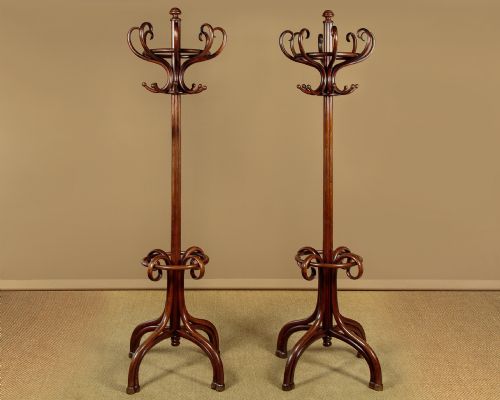
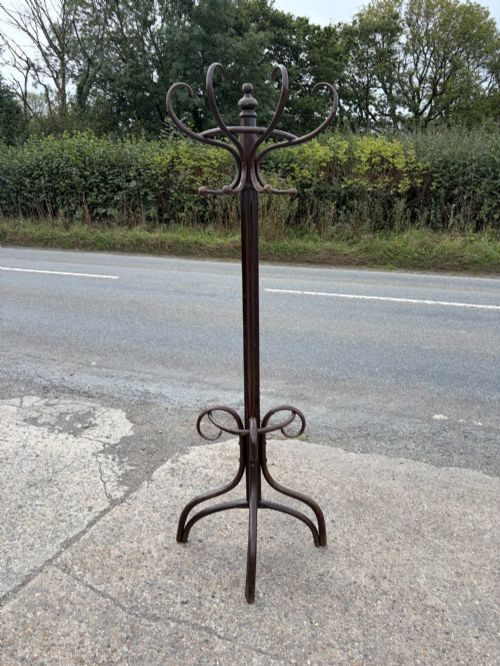
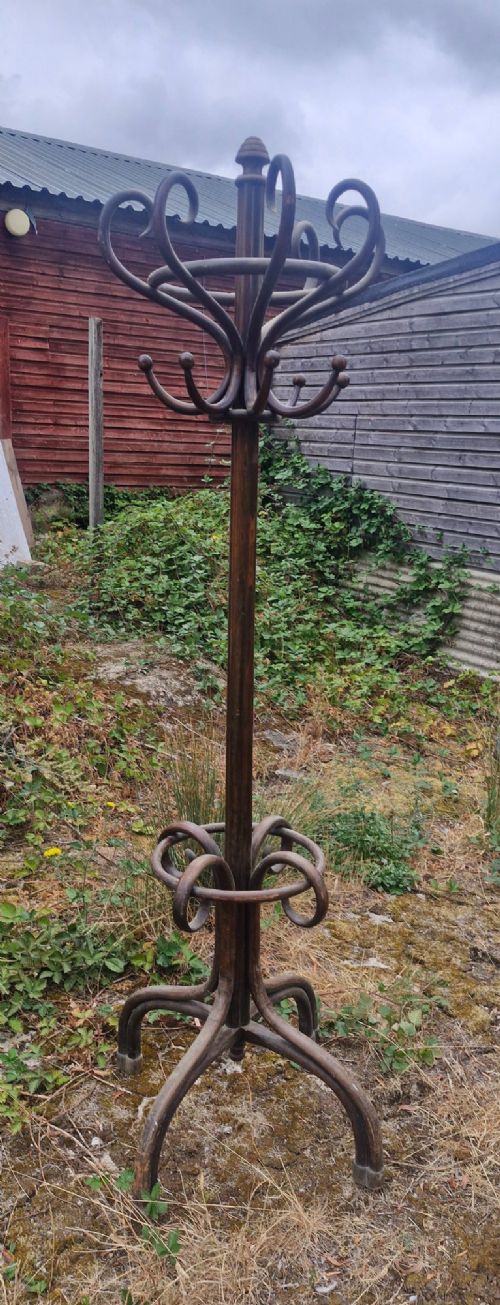
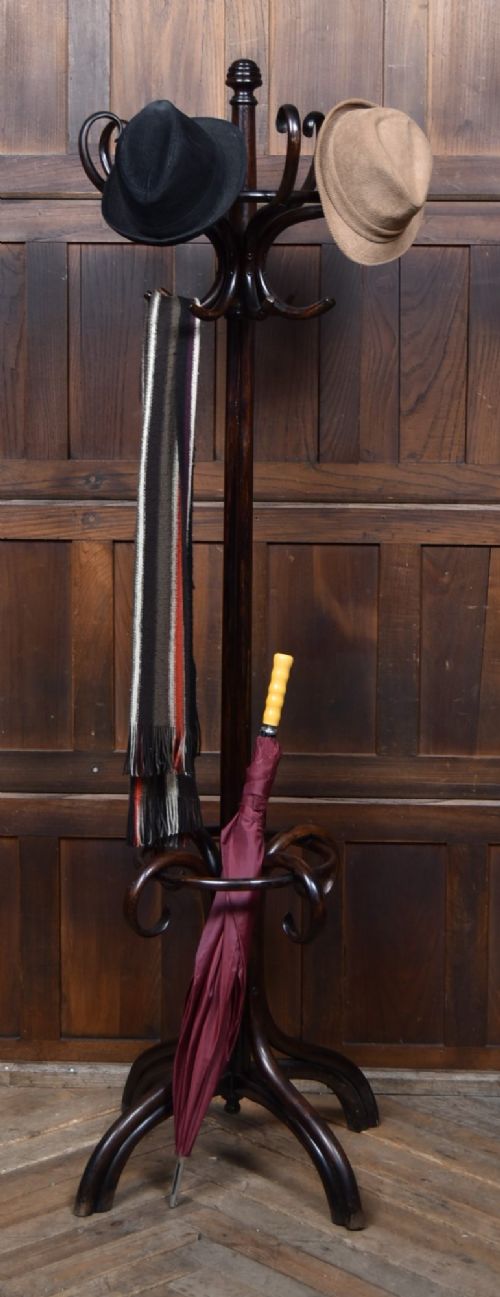
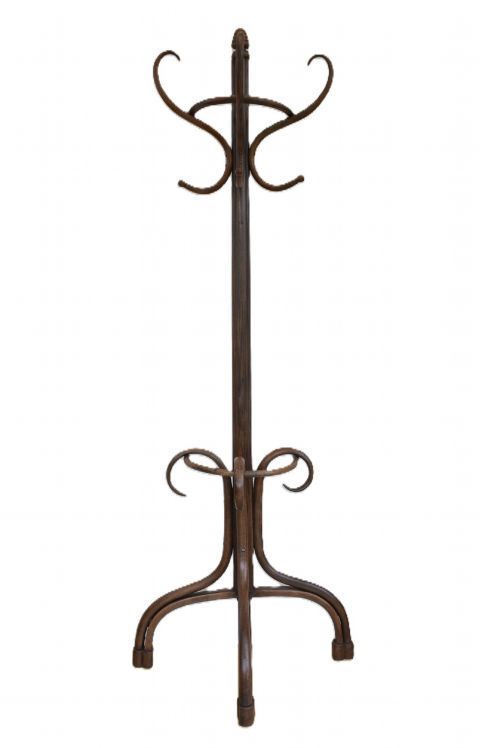


Edwardian Bentwood Hall Stand
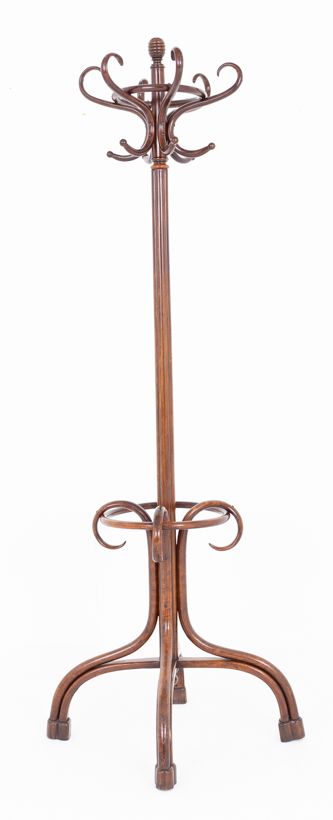
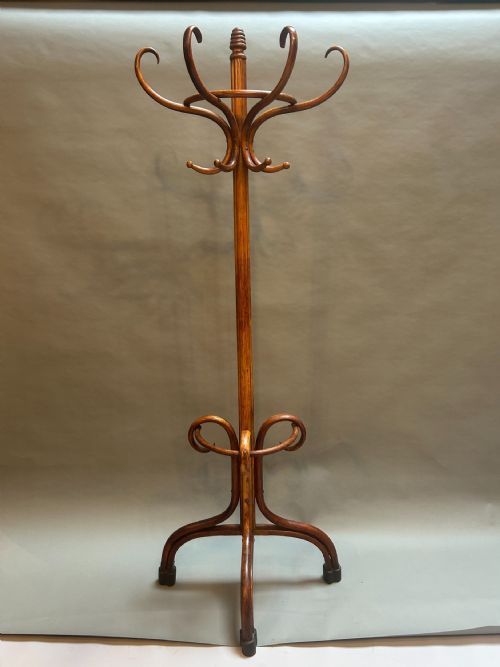
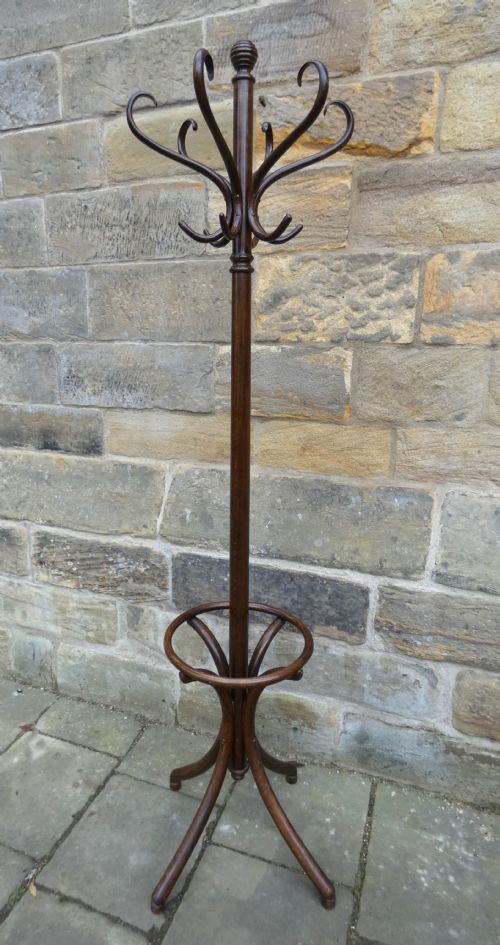
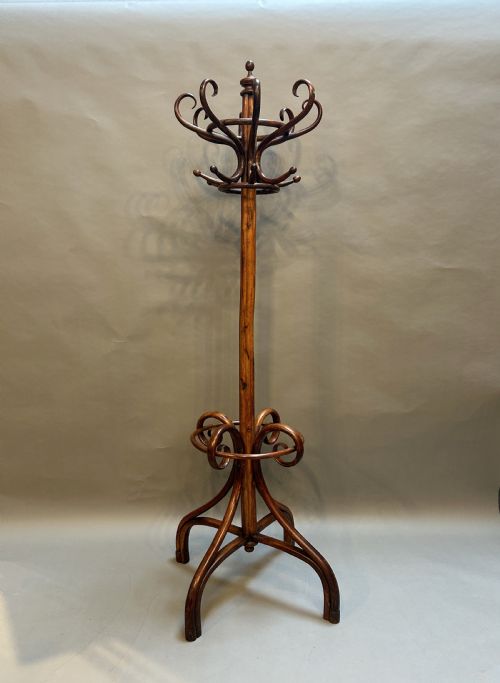
When you want an Edwardian bentwood hall stand, you are looking for steam-formed timber furniture designed to hold coats, hats and umbrellas in a hallway.
Edwardian Bentwood Hall Stand
An edwardian bentwood hall stand combines coat hooks, hat rings and umbrella holders in a single vertical piece of hallway furniture. You will frequently find demi-lune or half-round variants designed to sit flat against a wall, alongside circular and revolving forms.
The objects span production from nineteen hundred through to nineteen thirty, drawing heavily on Edwardian and early twentieth century domestic design. Many pieces incorporate original metal drip trays positioned at the base to catch water from wet sticks and umbrellas.
Makers such as Thonet and Fischel shaped these pieces using distinctive curved timber members. They serve both a practical entrance storage function and display the sculptural possibilities of steam-bent wood.
How They Were Made
Steamed beechwood and beech form the structural core of these pieces, exploited for their capacity to bend without snapping when heated in steam boxes. Craftsmen placed the softened timber into iron moulds to set the curves for umbrella rings and coat hooks.
Wood stain and ebonising treatments provided the dark surface finishes seen across the pieces. Metal components such as drip trays and connector bolts added functional durability to the timber frames.
Edwardian Bentwood Hall Stand Retail Price Guide 2026
Typical asking prices for edwardian bentwood hall stand among the pieces listed under this phrase on Sellingantiques today, from the lower quarter to the upper quarter. They describe what is for sale here now, not the wider market.
Listings feature beech and steamed beechwood shaped into bentwood forms across the Edwardian period and early twentieth century.
What Varies in Quality
Construction mass separates heavy quality items from lighter versions, often indicated by double top configurations and robust gauge timber. The crispness of the curved joints and the presence of makers' branding or stamps distinguish standard workshop output from premier production.
Completeness alters the character of a piece, particularly whether original metal drip trays remain intact at the base. The complexity of the frame, such as revolving mechanisms and demi-lune shaping, dictates the architectural sophistication of the design.
Thonet·Fischel
The Edwardian Bentwood Hall Stand Glossary
- Bentwood
- Wood that has been shaped by heating it with steam until pliable and then bending it in a mould. This technique allows for continuous flowing curves without traditional joinery.
- Demi-Lune
- A half-moon shape used for hall stands designed to stand flat against a hallway wall. This configuration saves floor space while retaining umbrella storage.
- Revolving
- A design feature allowing the upper hat and coat section to spin on a central axis. This mechanism provides access to garments hanging on multiple sides.
- Drip Tray
- A metal tray fitted at the base of a hall stand to catch water from umbrellas and walking sticks. These trays are often removable for emptying and cleaning.
- Thonet Style
- Furniture produced in the manner of Michael Thonet's pioneering bentwood designs. It employs characteristic curved beech components and scrollwork.
Edwardian Bentwood Hall Stand: Frequently Asked Questions
How do I use a hall stand?
You place a hall stand in an entrance hall or corridor to manage everyday outerwear and accessories. The upper hooks accommodate coats and hats, while the base section holds umbrellas and sticks.
Many examples include built-in metal drip trays at the foot to protect flooring from wet umbrellas. Their compact footprint makes them suitable for narrow passageways.
How do I care for bentwood?
You maintain bentwood furniture by keeping it away from direct heat sources and extreme humidity changes. This prevents the steam-bent timber from drying out or warping over time.
Regular dusting with a dry cloth keeps the wood stain and polished surface clean. Avoid placing excessively wet items in the base without ensuring the drip tray is present.
How do I spot Thonet pieces?
You identify Thonet pieces by examining the construction methods and looking for maker stamps or paper labels. The firm pioneered mass production of steam-bent beech furniture in the nineteenth and early twentieth centuries.
Their designs often feature elegant, continuous curves and sophisticated scrollwork. Pieces attributed to them frequently demonstrate superior joinery and weighted stability.