
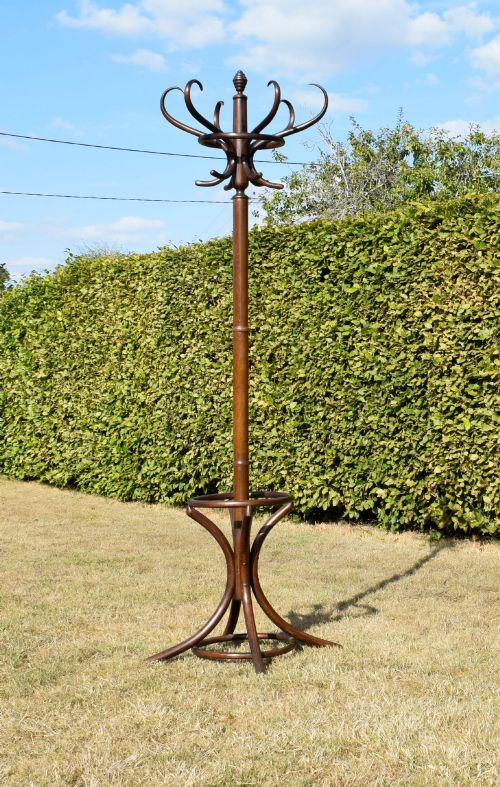
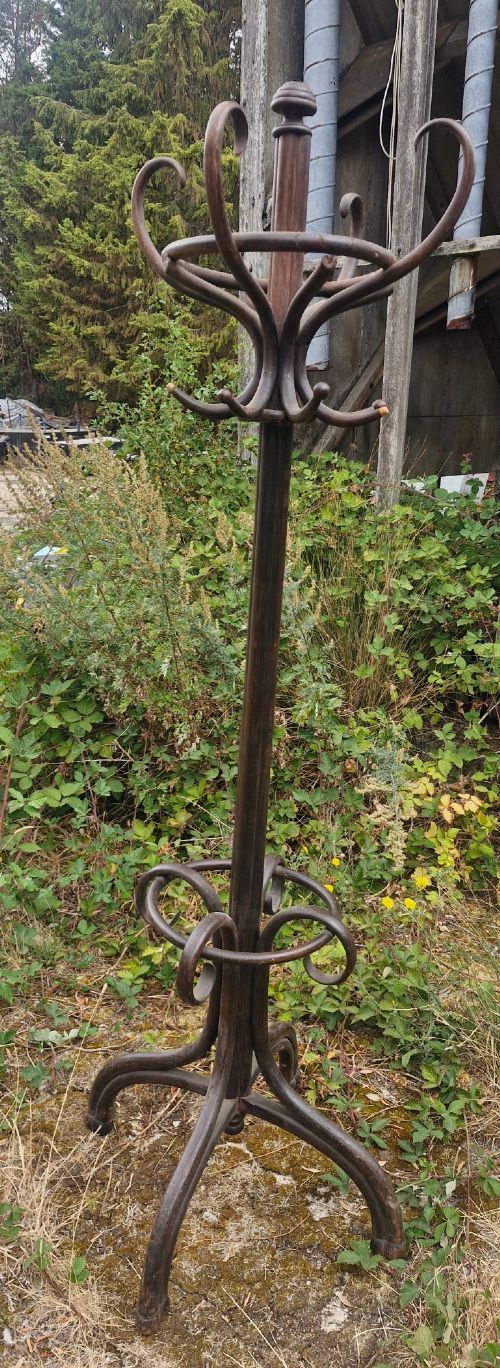
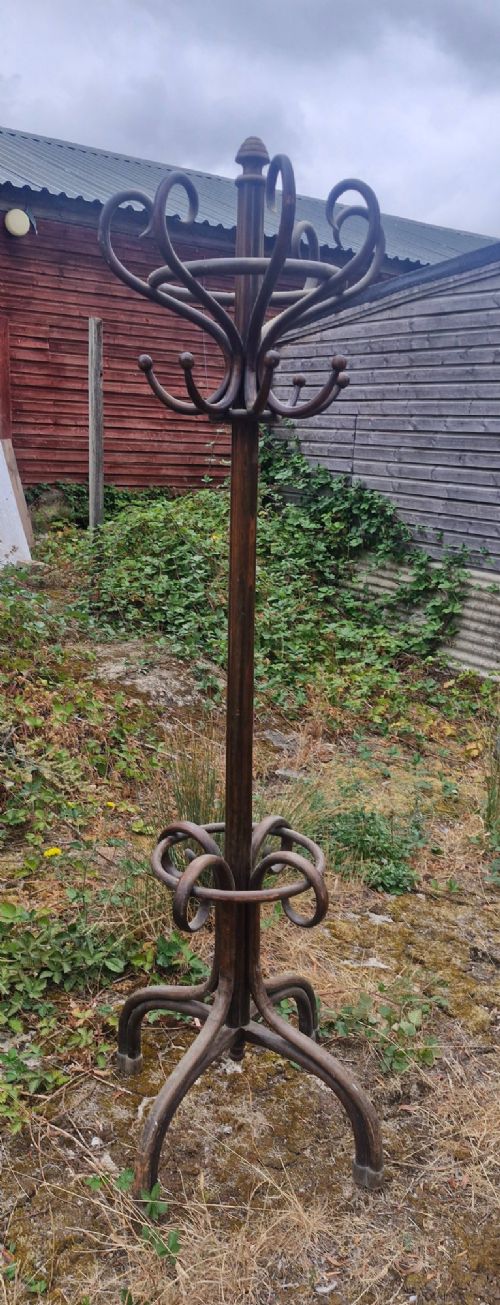
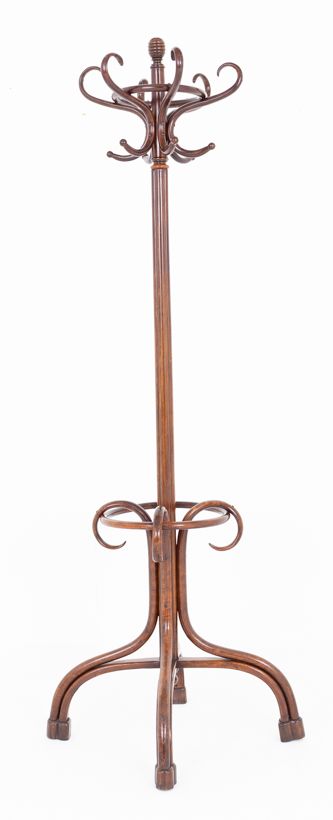
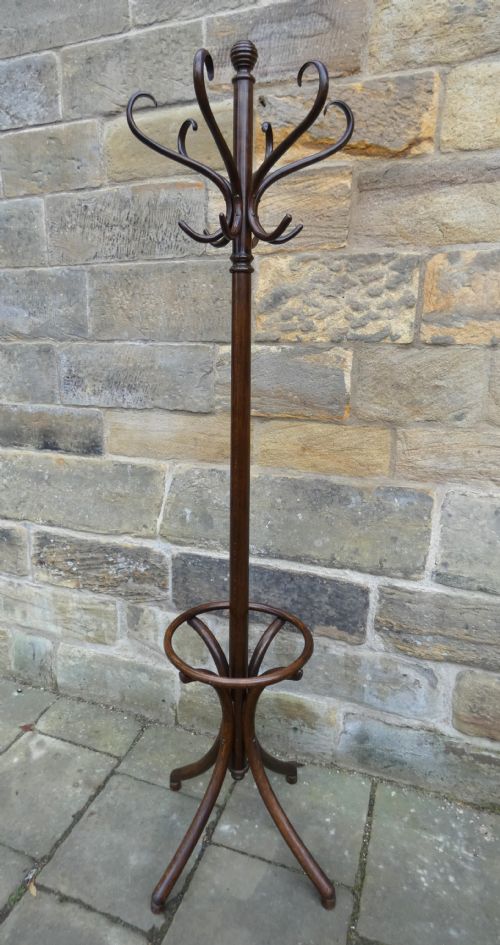
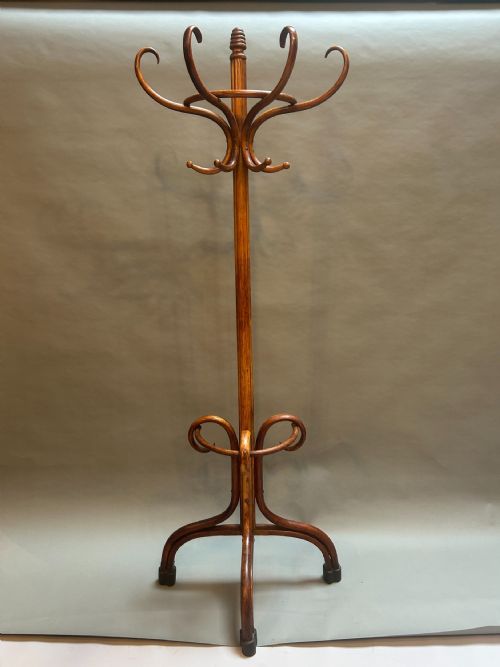
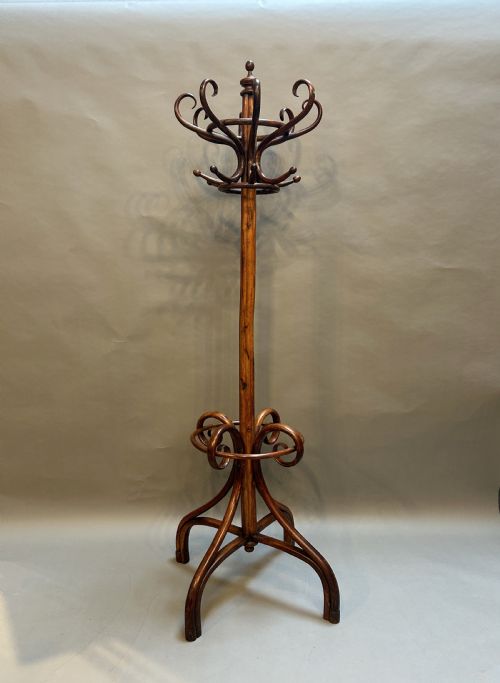
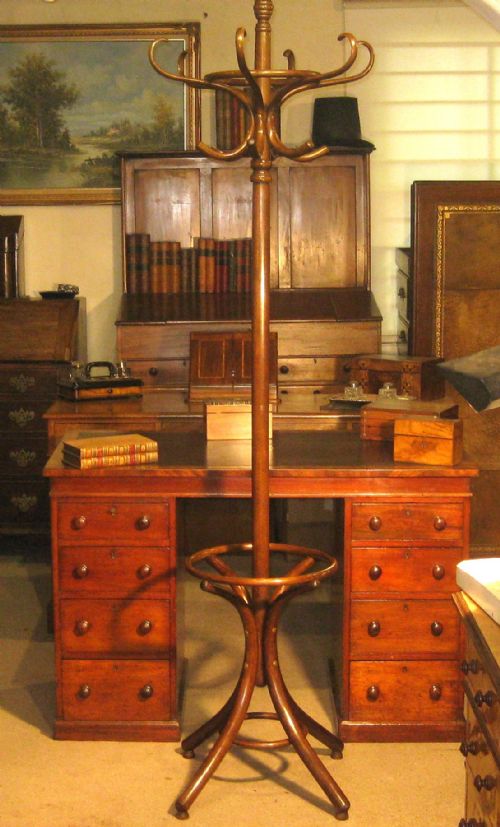
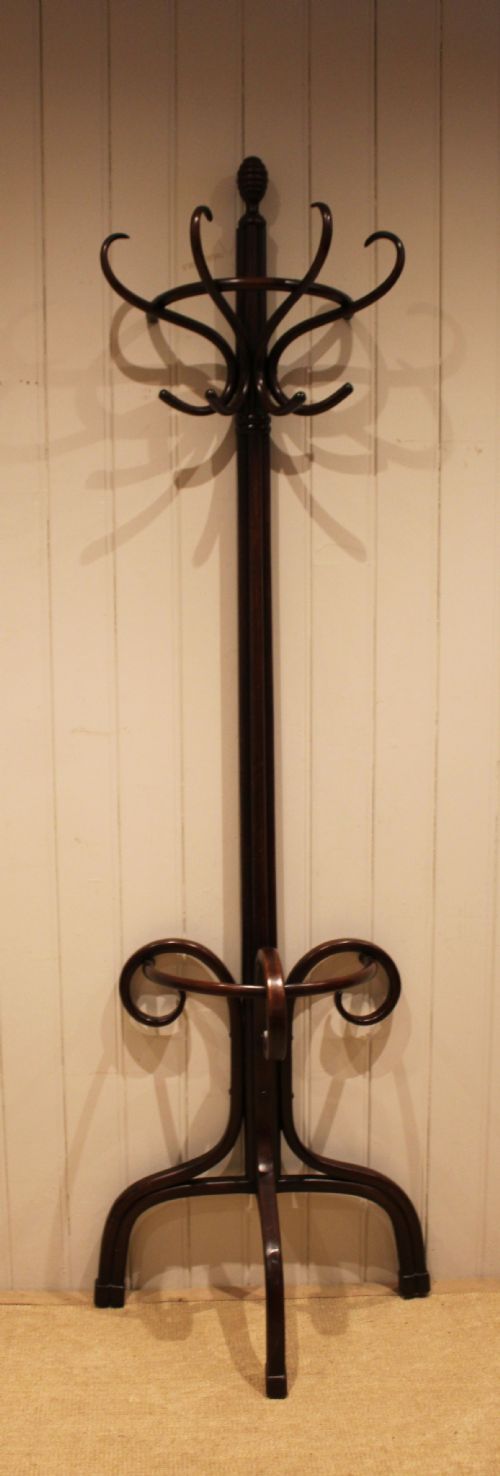


Edwardian Bentwood Hall Tree
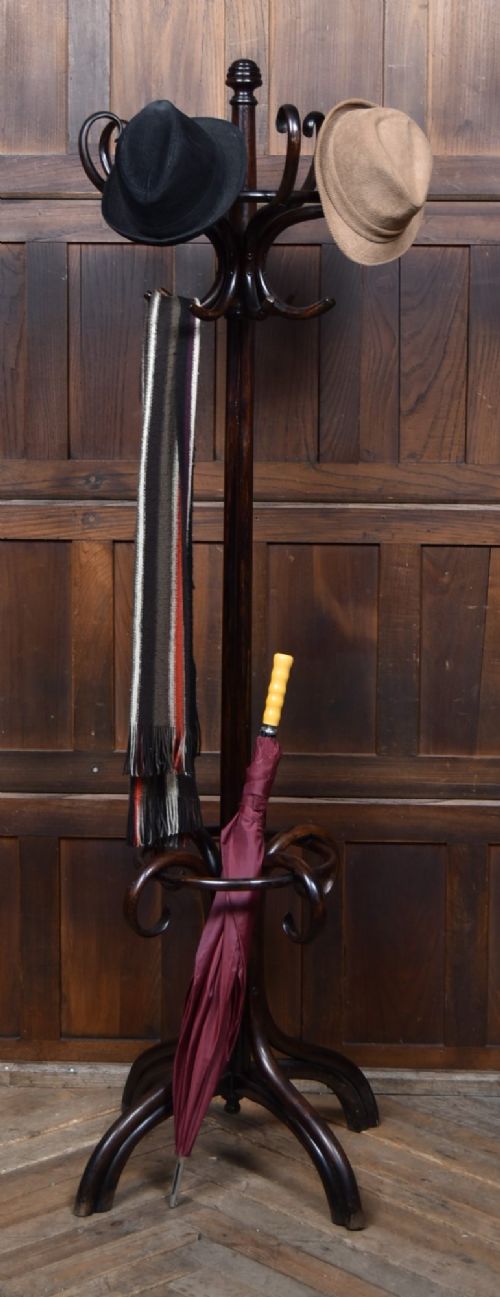
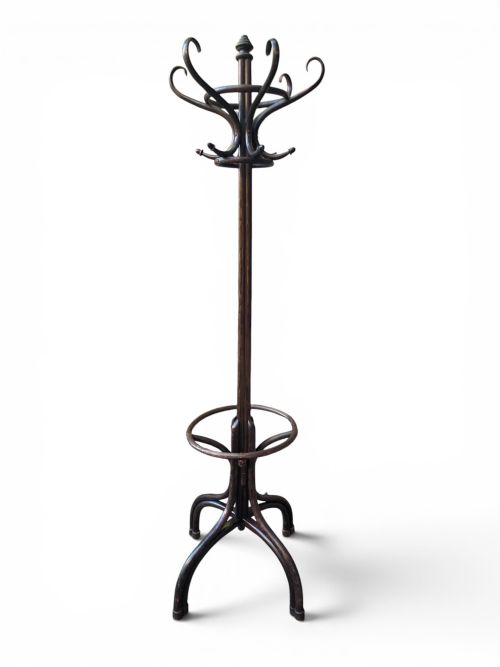
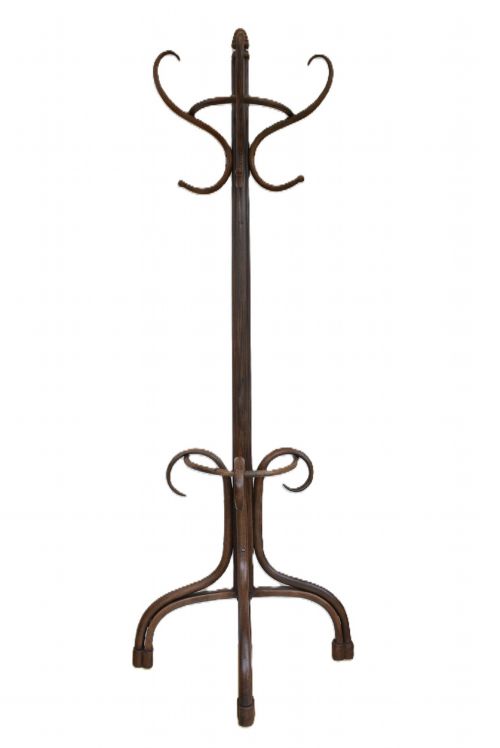
An edwardian bentwood hall tree brings curving organic timber and practical upright storage into hallways, combining lightness with strength.
Edwardian Bentwood Hall Tree
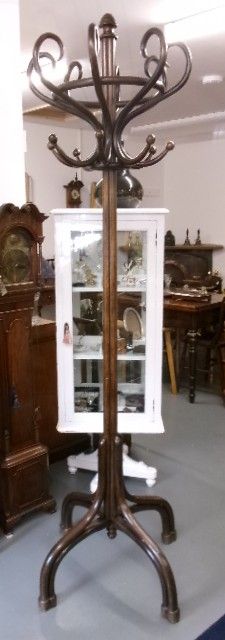
When searching for an edwardian bentwood hall tree, buyers encounter tall vertical stands designed for hats, coats, and umbrellas within a narrow footprint. Most pieces date from the Edwardian period or around nineteen hundred, manifesting as freestanding vertical frames.
The objects appear under various names including coat stands, hat stands, and hall stands. Many examples incorporate revolving top sections or half round demi lune designs meant to sit flush against hallway walls.
Makers such as Thonet and Fischel produced these functional items using steam-bent wood techniques. The forms range from simple upright poles with multiple curved hooks to large heavy quality stands featuring double tops and umbrella attachments.
How they were made
Makers constructed these stands using beech, beechwood, and steamed beechwood. Wood stain finishes the surfaces while maintaining the natural grain of the timber.
Techniques relied on steam-bending wood to create the signature curved components without breaking the grain. This process allowed craftsmen to form loops, scrolls, and arches that served as coat hooks and structural bracing.
Some models feature revolving tops that let users spin their coats round like a carousel while searching for a lost scarf.
What varies in quality
Quality shows in the weight of the timber and the complexity of the bentwood framing. Heavy quality examples feature robust central columns and thicker curved sections that provide greater stability.
Design variations separate standard stands from superior pieces. Double top configurations, revolving mechanisms, and integrated attachments for umbrellas or walking sticks represent higher production standards.
Thonet·Fischel
The Edwardian Bentwood Hall Tree Glossary
- Bentwood
- Wood that has been shaped by exposure to steam and bent into curved forms. This technique creates strong, lightweight structural elements.
- Demi lune
- A half round shape designed to stand flat against a wall. This profile saves floor space in narrow hallways.
- Double top
- A tiered crown arrangement providing extra hanging tiers for garments. Such designs add visual height and capacity.
Edwardian Bentwood Hall Tree: Frequently Asked Questions
What is an edwardian bentwood hall tree used for?
These stands provide upright storage in hallways for garments, headwear, and walking accessories. The vertical arrangement holds multiple items within a compact footprint.
Craftsmen designed the curved upper sections specifically to support hats and coats without distorting the fabric. Lower rings or sections often caught wet umbrellas and walking sticks.
How do I identify an edwardian piece?
Dating relies on period characteristics, construction methods, and design styles associated with the early twentieth century. Pieces from this era often display specific maker labels or characteristic steam-bent proportions.
Evaluation includes looking at the wood stain finish, the thickness of the beechwood, and whether the top section revolves.
Will a half round stand fit in a small hall?
Demi lune shapes stand flush against a flat wall surface to maximise narrow spaces. This configuration keeps the footprint minimal while offering full storage capacity.
Such designs allow placement in tight entryways where a standard round freestanding pole might obstruct movement.
Do these stands require wall fixing?
Most designs function as freestanding wall-standing units supported by a wide stable base. The heavy quality versions maintain balance through solid construction and weighted lower tiers.
Placement simply requires level flooring and adequate clearance for hanging garments around the circumference.