
Hallway Hat Rack
A hallway hat rack brings practical organisation to an entrance, combining solid timbers and sturdy metal hooks to keep coats and hats tidy.
Hallway Hat Rack
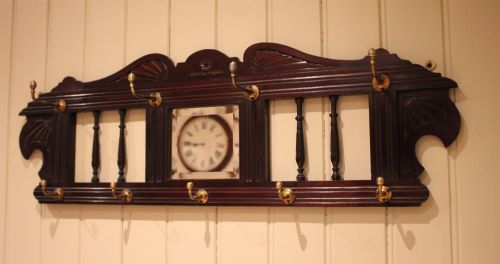
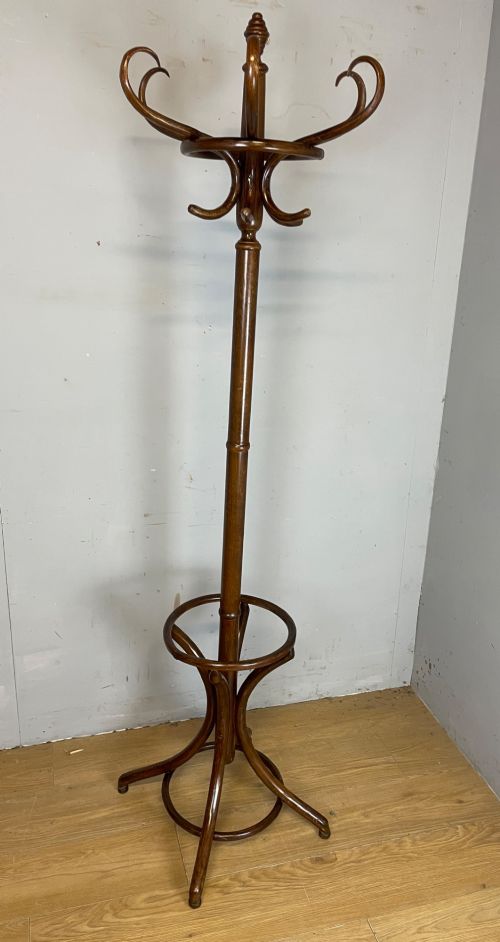
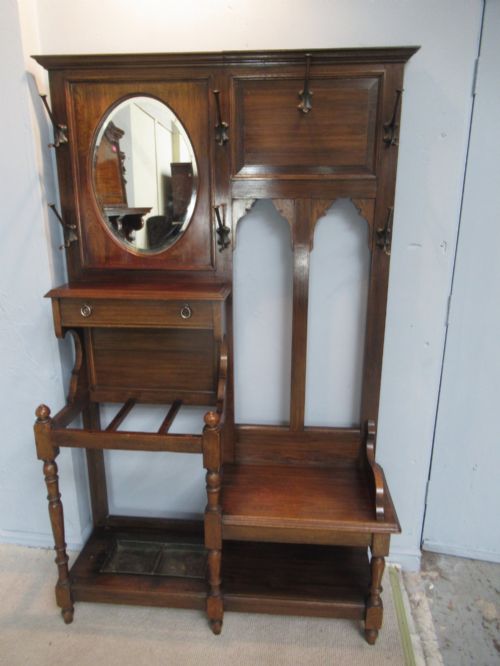
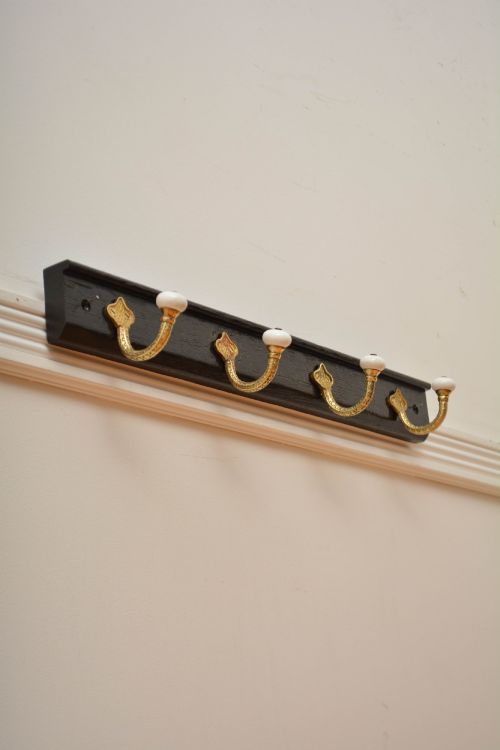
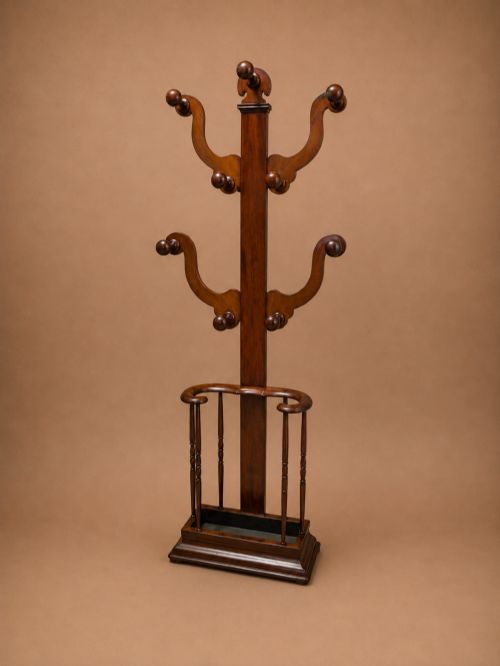
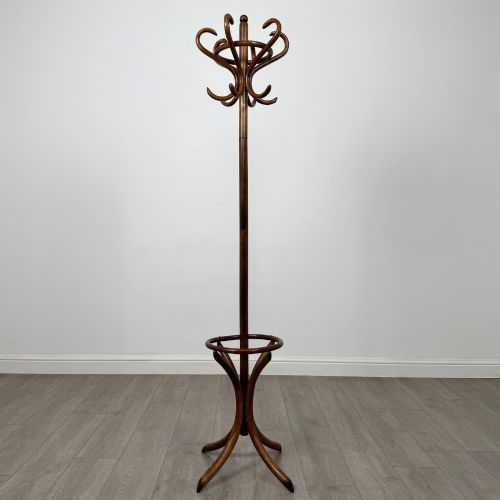
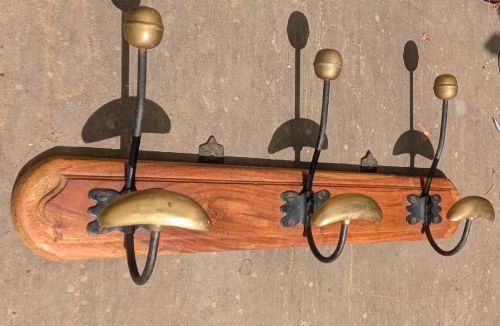
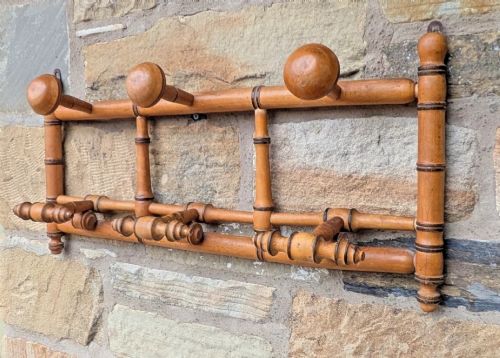
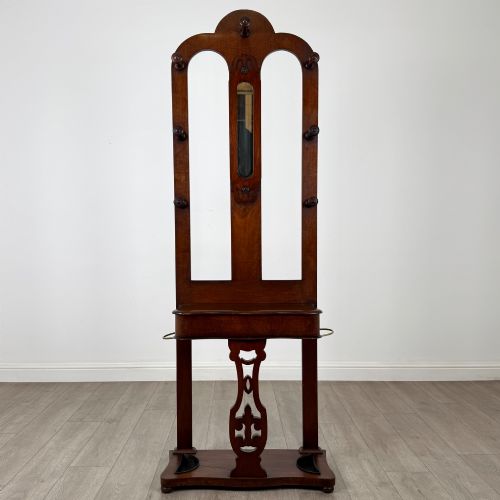
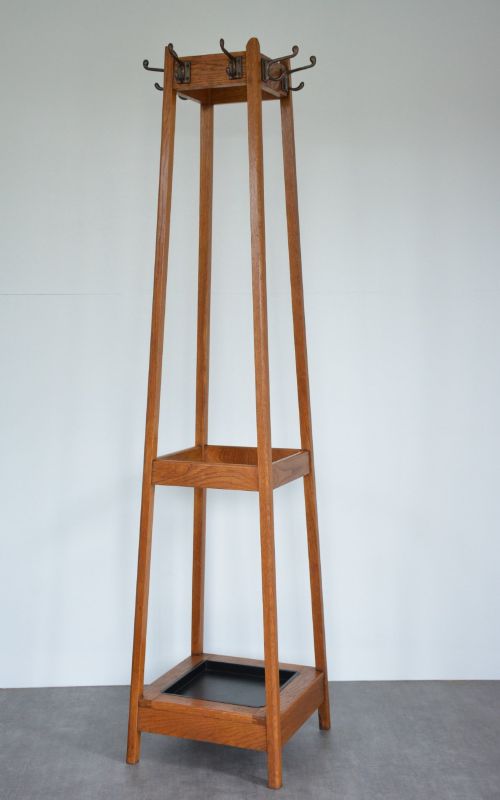
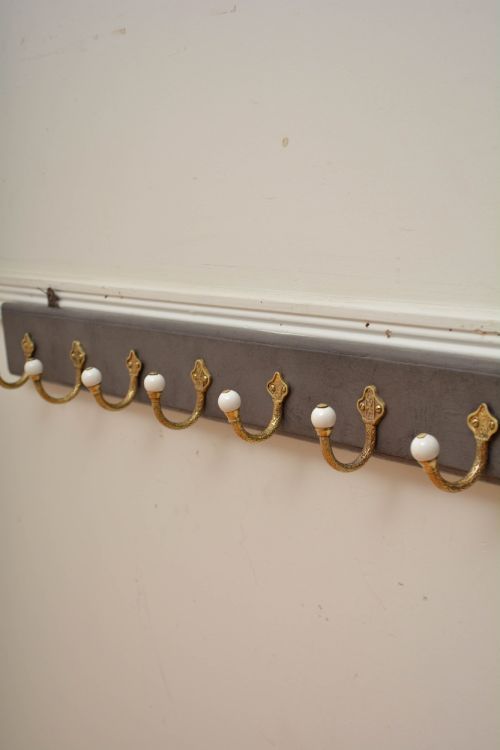
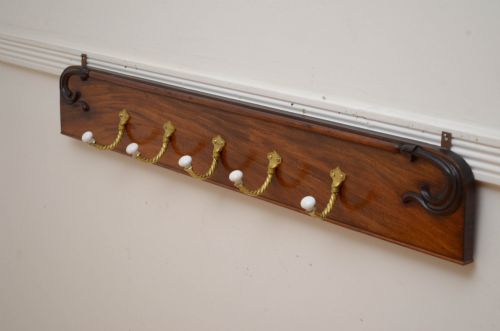
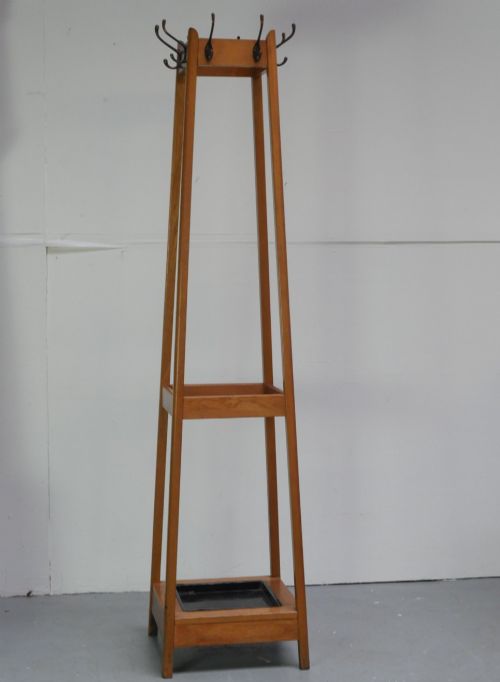
The selection encompasses wall-mounted rails fitted with multiple hooks as well as large floor-standing furniture pieces incorporating mirrors and drip trays. Wall-mounted variants frequently feature wooden backboards mounted with brass and ceramic fixtures, while freestanding versions often utilise shaped beech or oak. Selecting the correct format depends entirely on the available wall space and floor area in the hallway.
How They Were Made
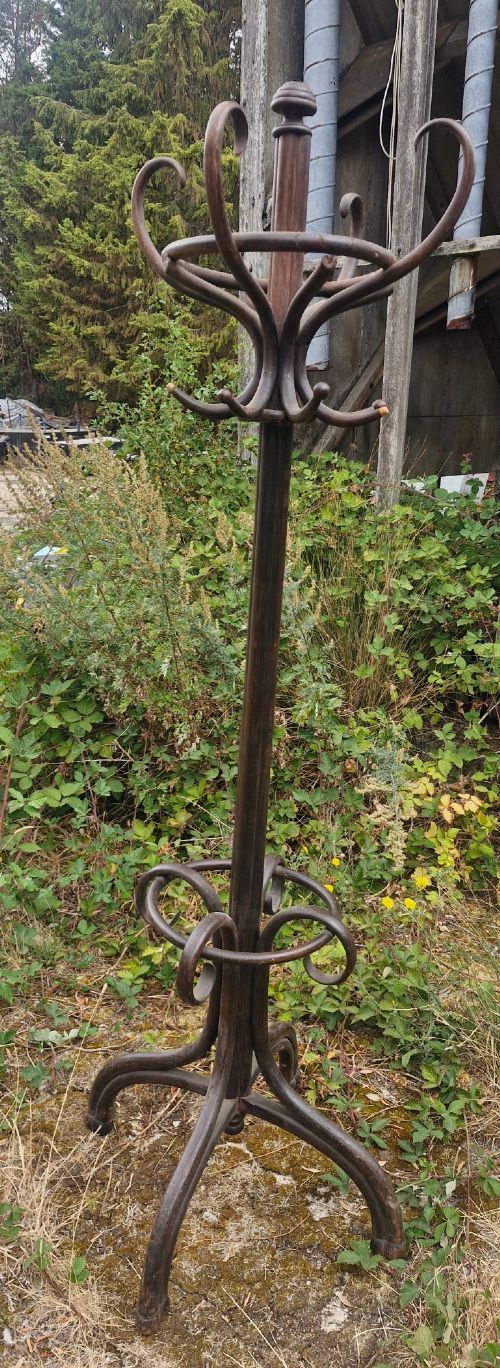
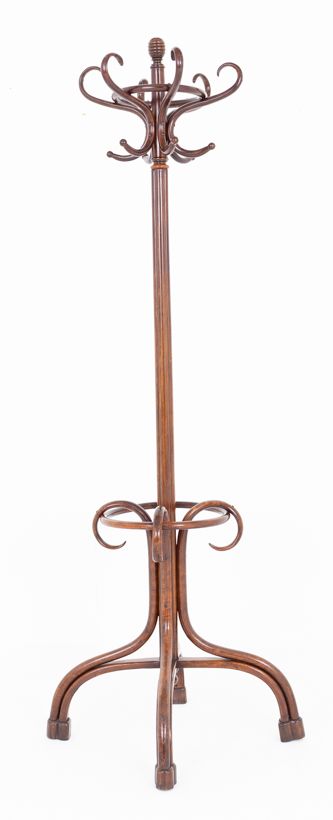
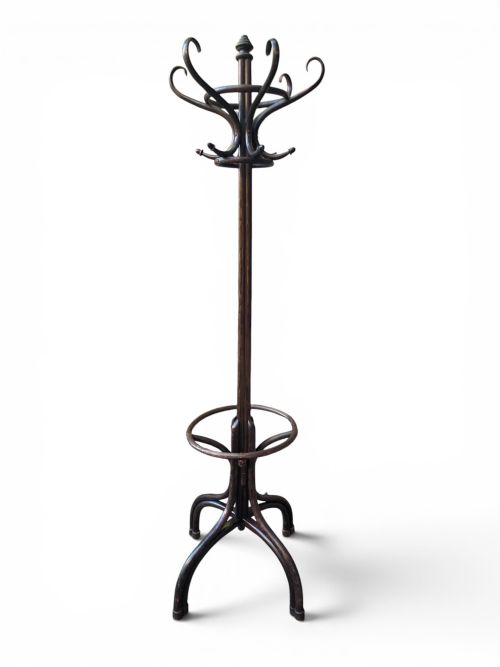
Traditional makers built these pieces using durable hardwoods such as oak, mahogany, walnut, and beech, frequently selecting solid timber to withstand the daily weight of winter garments. Steam-bending techniques shaped flexible beech into the characteristic curves seen on bentwood hatstands originating from the late nineteenth and early twentieth centuries. Structural elements relied on mortise and tenon joinery or sturdy screw fixings to ensure long-term stability under heavy loads.
Metalwork played a functional role through cast brass hooks, sometimes paired with white ceramic tips to prevent fabric damage on garments. Ebonised finishes, carved wooden ornamentation, and applied faux bamboo details provided decorative surface interest. Many freestanding floor models integrated cast iron drip trays and metal umbrella rings to manage wet weather accessories.
The archive demonstrates enduring demand for compact wall-mounted boards and tall freestanding hall trees alike.
What Varies in Quality
Construction methods largely determine the structural integrity of a piece, distinguishing robust workshop production from lighter domestic items. Superior examples utilise solid hardwoods throughout, whereas simpler items rely on veneers or softer secondary timbers. The thickness of the backboard and the method of securing the metal hooks dictate how well the rack bears heavy daily weight over decades.
The refinement of the decorative elements distinguishes standard utility items from finer artistic commissions. Hand-carved details, quality brass castings with intact ceramic inserts, and integrated bevelled mirror glass indicate higher craftsmanship. The complexity of steam-bent wood framing and the presence of makers' marks or specific workshop stamps also elevate the distinction of the object.
Jas. Shoolbred·Astrola·Thonet
The Hallway Hat Rack Glossary
- Bentwood
- Wood shaped by exposure to steam until pliable, allowing manufacturers to create continuous curved forms without traditional joints.
- Hall Stand
- A large freestanding hallway item combining coat hooks, a central mirror, umbrella storage, and frequently a small glove drawer.
- Ebonised
- Wood stained or painted black to imitate the dense appearance of genuine ebony, popular during the Victorian period.
- Demi Lune
- A half-moon shape characteristic of certain wall-mounted or space-saving freestanding racks designed to sit flush against a wall.
- Drip Tray
- A removable metal basin located at the base of a coat stand to catch water from wet umbrellas and walking sticks.
Hallway Hat Rack: Frequently Asked Questions
How do I install a wall-mounted rack?
Wall-mounted racks require secure fixings into solid masonry or internal wall studs to support heavy winter garments safely.
Position the backboard at a height that allows all household members to reach the upper hat hooks easily.
What is the difference between a hall stand and a coat rack?
A coat rack is typically a compact wall-mounted board featuring several metal hooks for hanging garments.
A hall stand is a substantial freestanding piece of furniture that often includes an integrated mirror, umbrella holders, and a seat or glove box.
How do I care for antique bentwood?
Bentwood furniture benefits from occasional dusting with a dry cloth and protection from excessive moisture or direct heat sources.
A light application of traditional beeswax helps maintain the polished timber finish without harming the curved joints.
Are these racks suitable for modern hallways?
These historical pieces provide practical storage that fits narrow modern corridors just as effectively as period properties.
Freestanding designs require no wall drilling, making them particularly useful for rented spaces or contemporary interiors.