
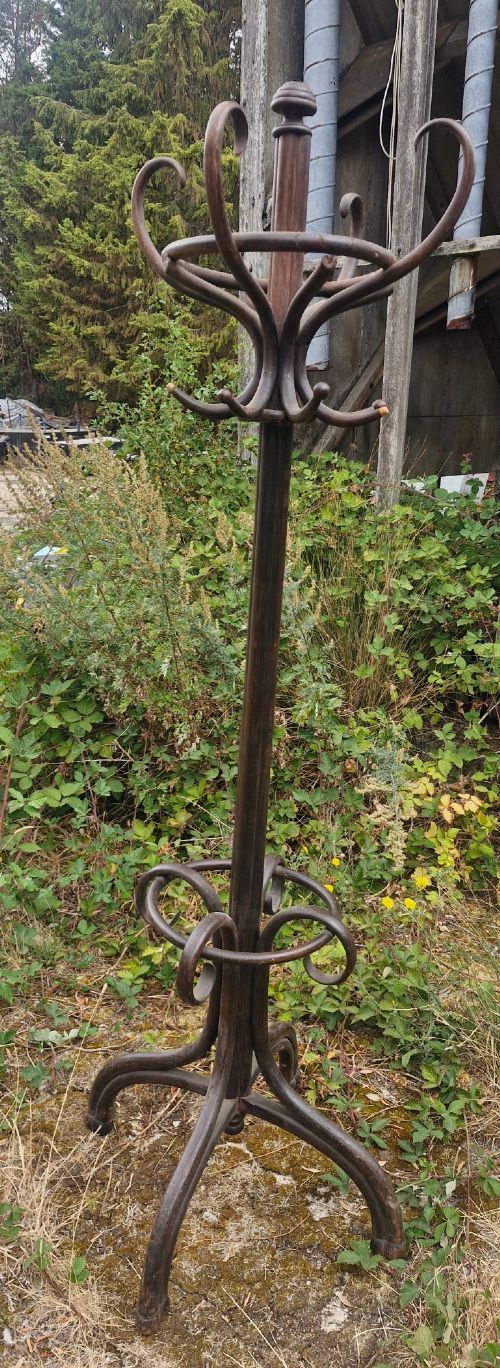
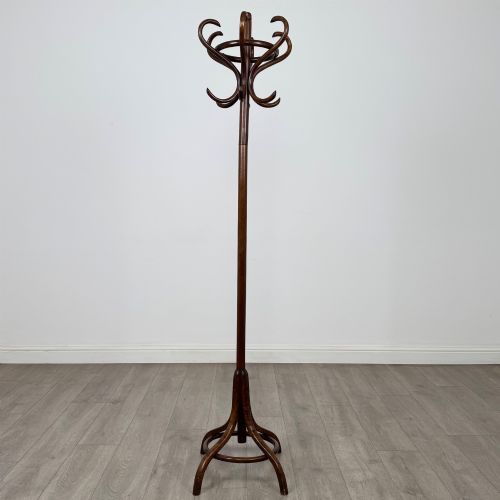
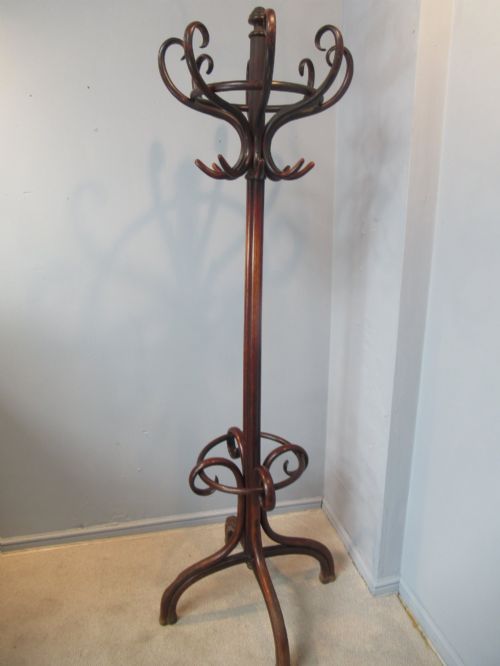
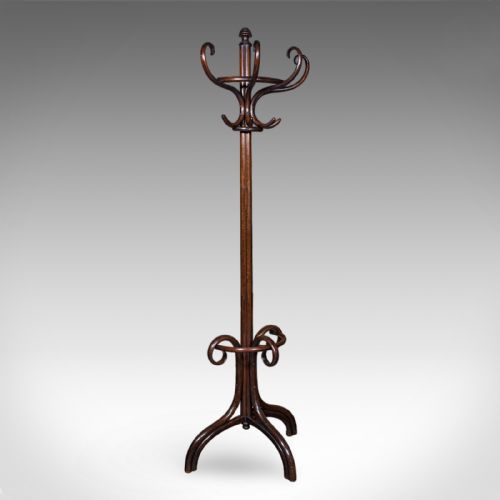


Dark Beechwood Hall Stand
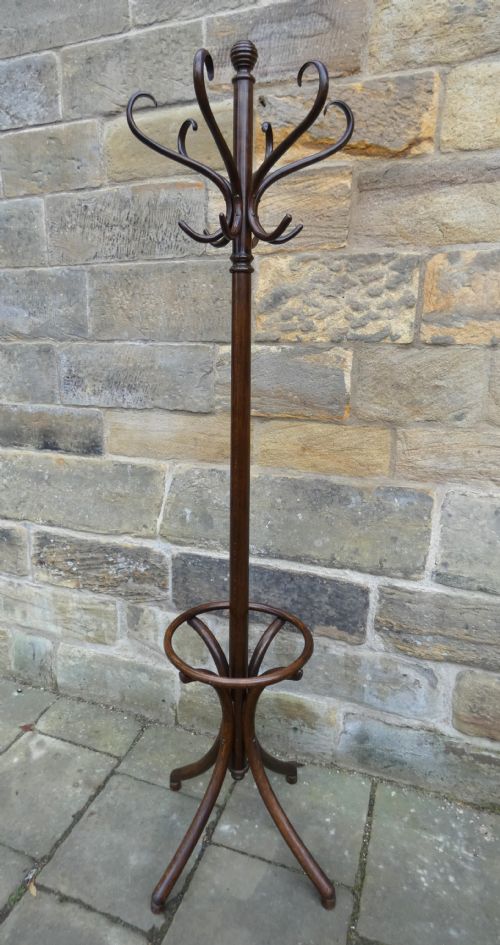
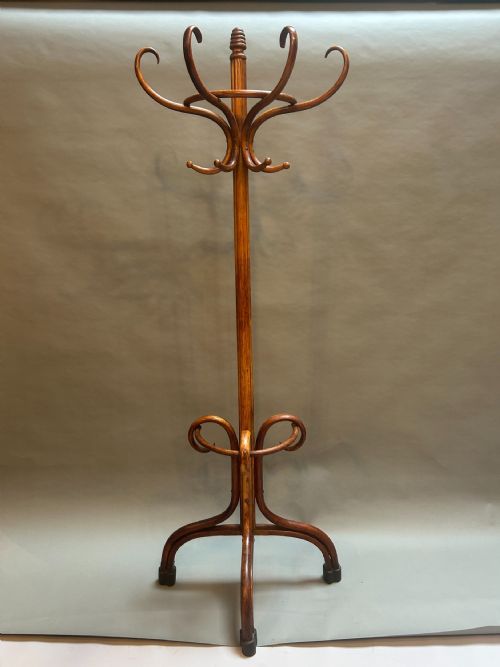
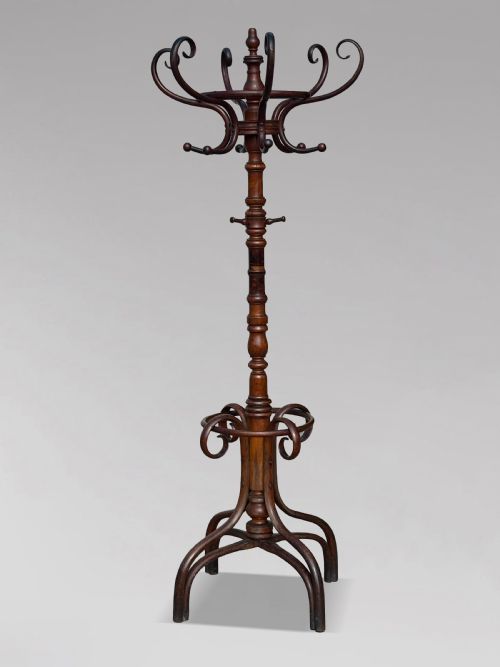
A dark beechwood hall stand is a robust piece of hallway furniture designed for hats and coats, bringing curved wood and practical hanging space to an entryway.
Dark Beechwood Hall Stand
A dark beechwood hall stand is typically encountered in bentwood, Victorian, Edwardian, and early twentieth-century styles. These hallway pieces often function as hat and coat stands, coat trees, or demi lune stands designed to hold outerwear near an entrance.
Most examples originate from the nineteenth century up through the nineteen-thirties, with Austrian bentwood designs and Thonet-style pieces forming a significant portion of what appears on this page. Makers such as Fischel and Thonet are represented among the listings.
The form prioritises vertical utility, offering multiple hooks for garments and hats while maintaining a compact footprint suitable for hallways and corridors.
Materials and construction
These items are constructed from beechwood and beech, frequently utilising bentwood techniques where solid timber is steamed and curved into rounded structural forms. Wood stain and wood finish are applied to impart the characteristic dark tone seen across the pieces.
Selected designs incorporate glass elements or specialised brackets, while the primary framework relies on steam-bent members joined to form stable hat and coat stands.
Listings span the Victorian era, Edwardian period, and the nineteen-thirties, featuring beechwood, bentwood, and glass materials.
Assessing quality
Quality in a dark beechwood hall stand is visible in the smoothness of the bentwood curves and the integrity of the dark wood finish. Finer examples display clean lines and maker labels from established workshops.
The distinction between standard production and superior pieces rests on the precision of the steam-bending technique and the overall crispness of the hat and coat hooks.
Fischel·Thonet
The Dark Beechwood Hall Stand Glossary
- Bentwood
- A furniture-making technique where wood is moistened with steam and bent into curved shapes. This method creates the characteristic rounded frames of these hall stands.
- Demi Lune
- Half-moon shape, often applied to hall stands designed to sit flat against an entryway wall. This form saves floor space in narrow corridors.
- Thonet Style
- A design approach originating from the pioneering work of Michael Thonet in steam-bent furniture. It defines the lightweight yet sturdy aesthetic of many Edwardian and Victorian coat stands.
- Beechwood
- A hard, close-grained timber that responds exceptionally well to steam bending. It serves as the primary material for the stands listed here.
Dark Beechwood Hall Stand: Frequently Asked Questions
What is a bentwood hall stand?
A bentwood hall stand is a vertical entryway furnishing created by steaming and bending beechwood into structural shapes for hanging coats and hats.
These pieces typically date from the Victorian and Edwardian periods, offering a combination of curved timber framework and functional storage.
How do I date a hall stand?
Dating relies on stylistic indicators such as Art Nouveau curves, Victorian massing, or early twentieth-century manufacturing labels.
Evidence from makers like Fischel and Thonet helps place specific pieces within the nineteenth and twentieth centuries.
Where should I place it?
These stands suit narrow hallways, entryways, and lobbies where vertical coat and hat storage is required.
Demi lune variants sit flush against walls to maximise floor space in compact areas.
What materials are used?
Construction relies primarily on beechwood and bentwood finished with a dark wood stain.
Some examples incorporate glass components alongside the wooden framework for added utility.