

Victorian Wooden Writing Box
A victorian wooden writing box is a portable desk built for correspondence, offering hinged slopes, secret drawers and fitted interiors that anchor nineteenth-century writing habits.
Victorian Wooden Writing Box
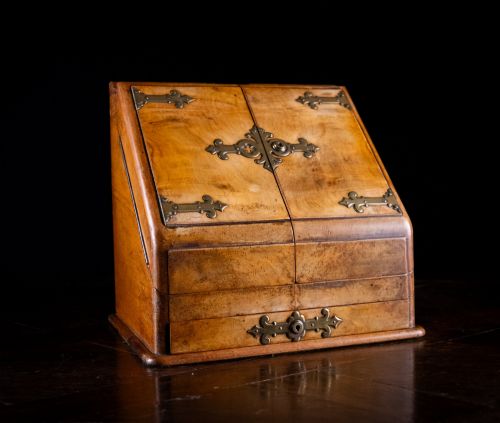
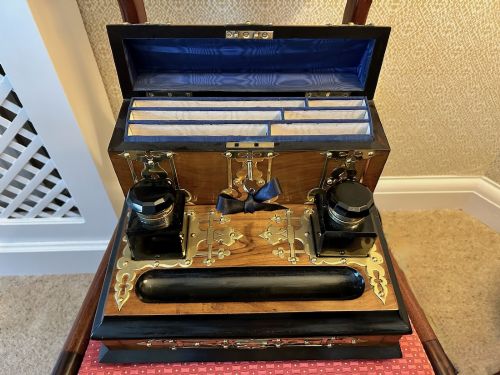
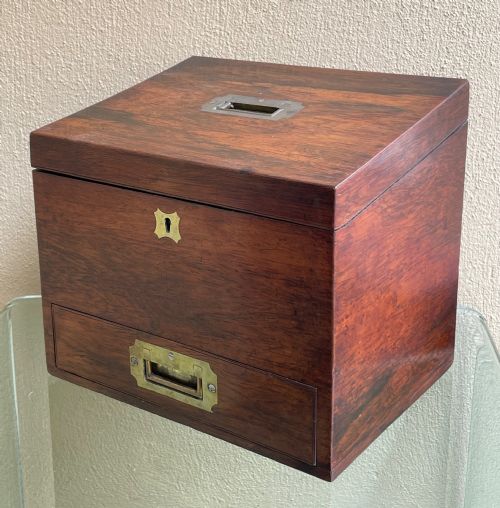
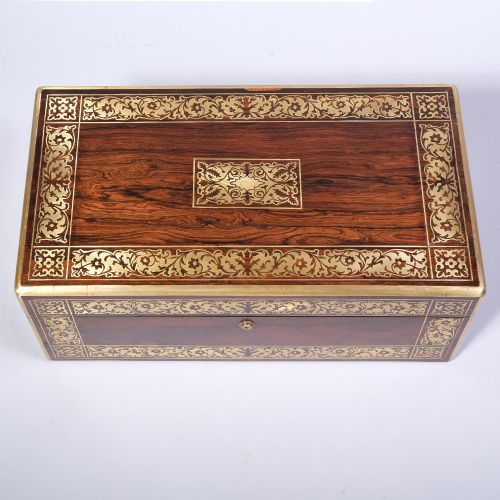
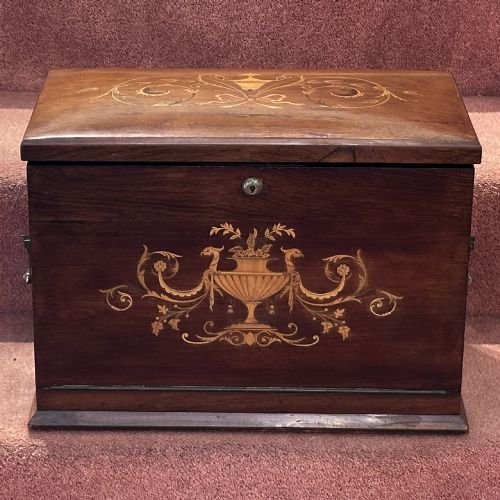
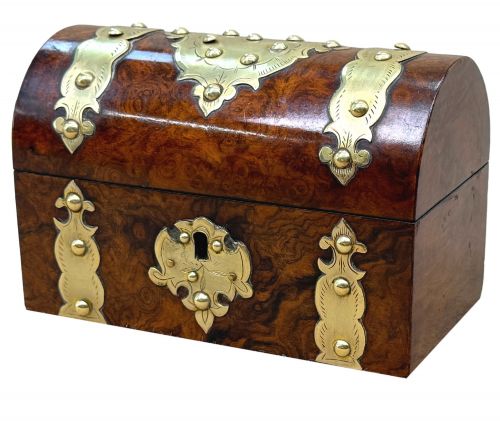
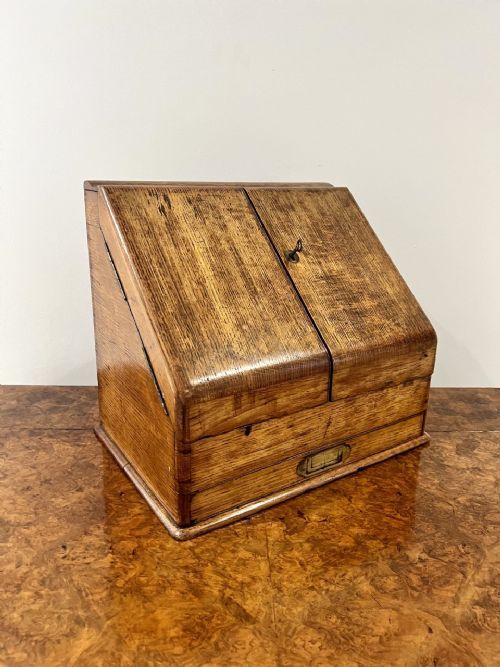
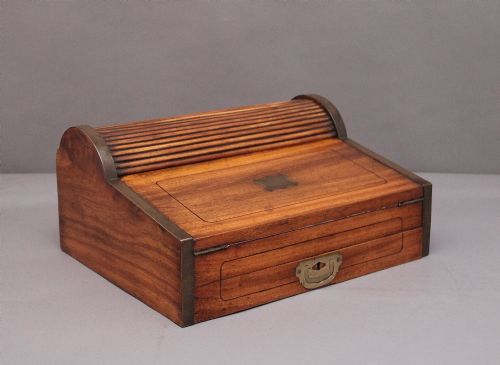
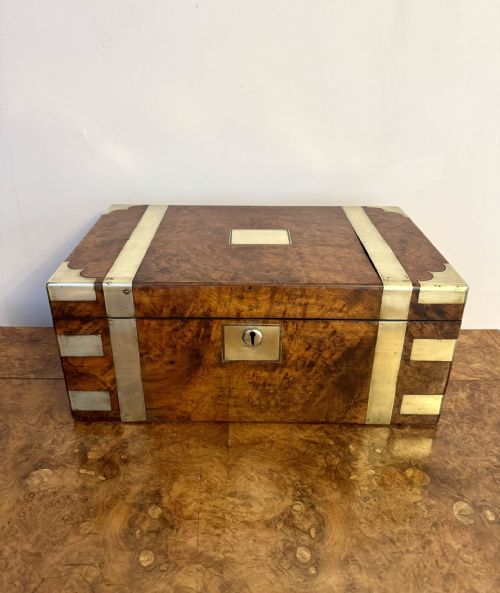
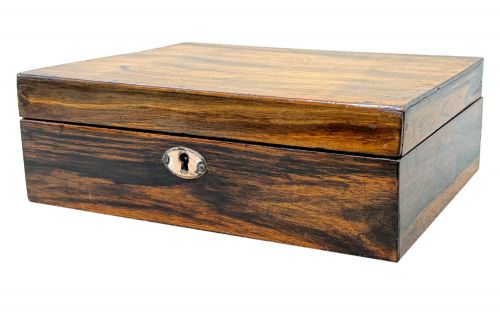
A victorian wooden writing box encompasses portable writing slopes, campaign desks, stationery boxes and document chests designed for nineteenth-century correspondence. The pieces appearing here span compact lap desks to large presentation boxes equipped with fitted interiors and secret compartments.
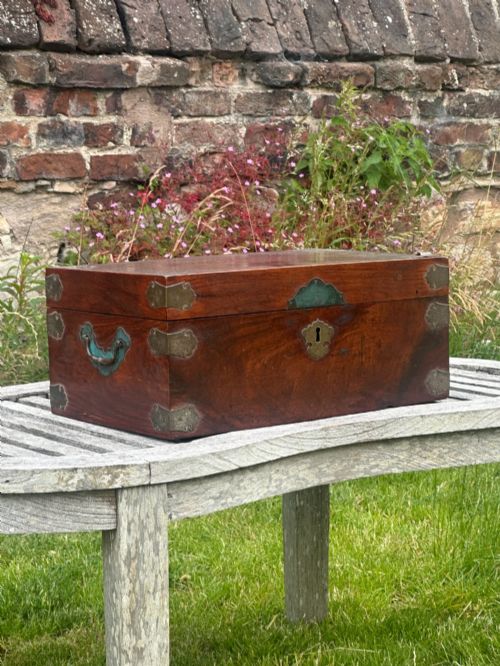
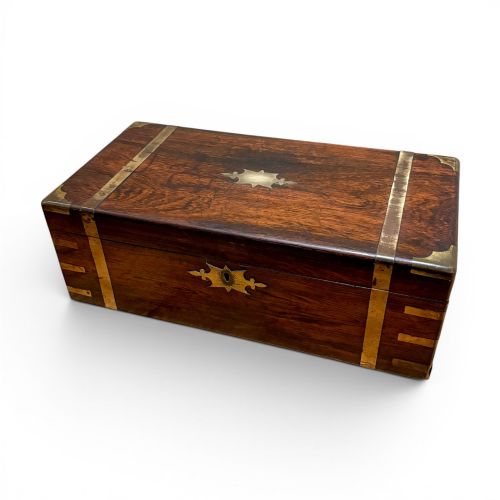
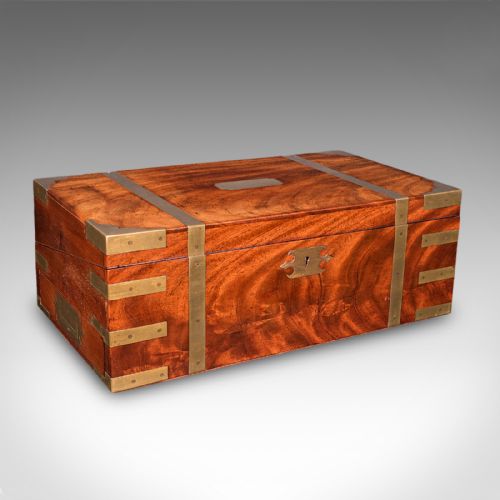
Mahogany, rosewood and walnut dominate the forms, frequently reinforced with brass binding for travel. Buyers encounter campaign styles built for movement alongside decorative bureau boxes intended for stationary use on a desk.
Origins stretch across nineteenth-century British, Anglo-Indian and continental workshops, including specialised Tunbridge ware and parquetry pieces. Each variant reflects the domestic or travel needs of its period, from the 1800s onward.
How they were made
Cabinet makers utilised dense hardwoods such as mahogany, walnut, rosewood, oak and padouk, often selecting figured veneers like burr walnut or satinwood for exterior panels. These timbers provided the structural rigidity necessary for portable desks subjected to frequent travel.
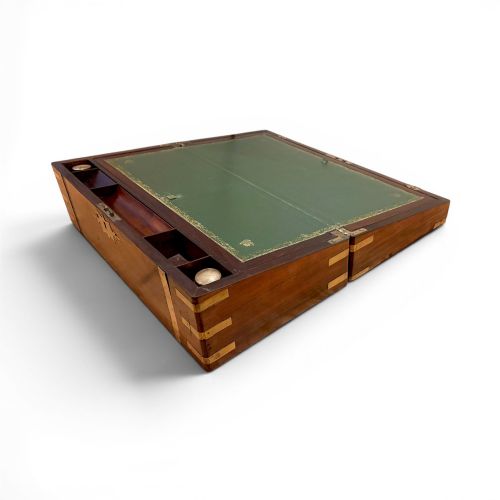
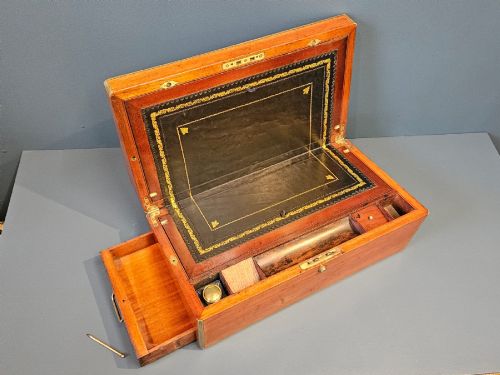
Brass corners, straps and inlay reinforced the construction while adding decorative contrast to the timber surfaces. Interiors incorporated fitted compartments, pen trays, inkwell recesses and secret drawers concealed behind sliding panels.
Listings feature woods including mahogany, walnut, rosewood, burr walnut, oak, camphor wood, padouk and coromandel.
What varies in quality
The sophistication of the internal fittings distinguishes standard portable desks from exceptional examples. Boxes featuring secret drawers, complete satinwood stationery sections and original working locks demonstrate superior craftsmanship.
The choice of exterior timber and decorative technique also determines standing. Highly figured burr walnut, intricate brass inlay, parquetry and specialised Tunbridge ware ornamentation separate utilitarian travel boxes from decorative library pieces.
Edmund Nye
The Victorian Wooden Writing Box Glossary
- Writing slope
- A portable box with a hinged slanted lid that opens to reveal a velvet or leather-lined writing surface and compartments for stationery. These slopes served as travelling desks before the widespread adoption of fitted stationery cabinets.
- Campaign style
- Furniture constructed for military travel, featuring brass corners, flush handles and robust timber to withstand transit. These pieces prioritise durability and portability without sacrificing fitted interior utility.
- Tunbridge ware
- Small wooden decorative objects adorned with mosaic patterns created from hundreds of tiny tinted wood blocks. This meticulous technique flourished in nineteenth-century Kent.
- Secret drawers
- Concealed compartments hidden behind removable panels or false bottoms within a writing box. Makers designed these spaces to secure private letters, currency and valuables.
- Stationery box
- An upright desk accessory built to hold envelopes, writing paper and correspondence. These cabinets typically feature tiered interiors and hinged doors.
Victorian Wooden Writing Box: Frequently Asked Questions
How were Victorian writing boxes used?
These boxes served as portable writing desks for composing letters while travelling or at home. The sloping lid provided a slanted surface for paper, whilst internal compartments stored inkwells, pens and stationery.
Secret drawers within the boxes held private correspondence and valuables. When closed and locked, the entire desk became a secure, compact case suitable for storage or transport.
What is a campaign writing slope?
A campaign writing slope is a portable desk built for military officers and travellers on the move. They feature robust timber construction reinforced with brass corners and recessed carrying handles.
These additions protected the wood from the rigours of transit. Their interiors packed flat or folded securely to contain writing materials during long journeys.
How do I care for a wooden writing box?
Keep the wood conditioned with appropriate furniture wax to prevent the timber and veneers from drying out. Avoid placing the box in direct sunlight or near heat sources, which causes warping and splitting.
Protect the internal leather or velvet writing surfaces from moisture and ink stains. Handle brass fittings gently and avoid over-tightening working locks.
What is Tunbridge ware?
Tunbridge ware describes wooden objects decorated with mosaic marquetry made from native and foreign timbers. Artisans glued thousands of tiny tinted wood segments together to form geometric or pictorial scenes.
These decorative panels were then applied to the exteriors of boxes and correspondence cases. The resulting pieces showcase remarkable miniature carpentry.