



Desktop Writing Slope
A desktop writing slope is a portable box designed for correspondence, offering fitted compartments and a slanted writing surface that folds flat when closed.
Desktop Writing Slope
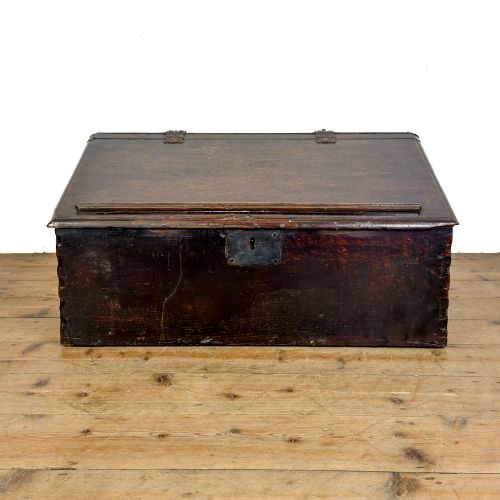
A desktop writing slope sits upon a table or bureau, providing a dedicated portable space for letters, documents and writing implements. The form dates back centuries, evolving from early oak bible and desk boxes into sophisticated portable desks.
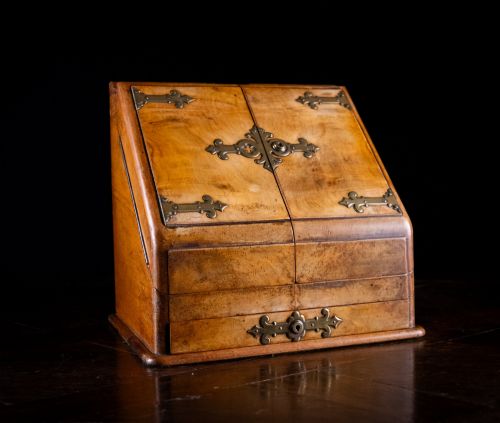
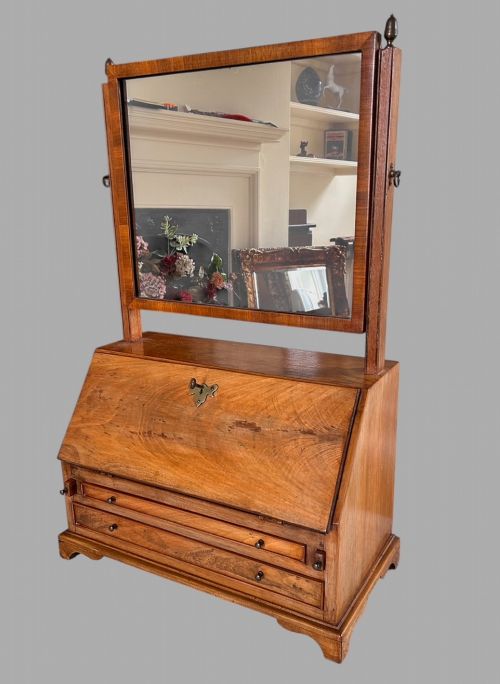
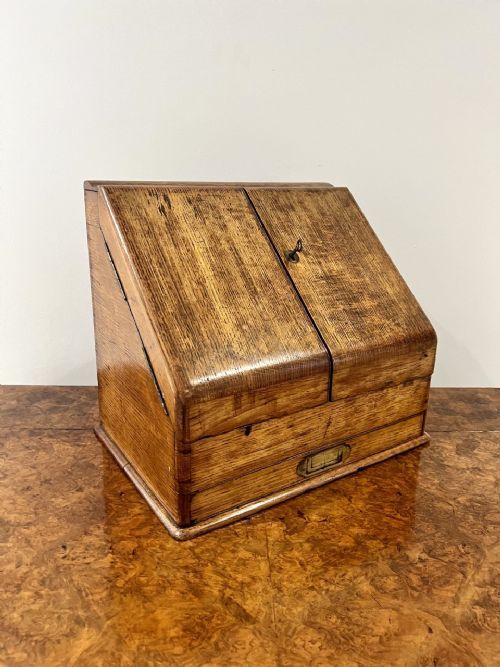
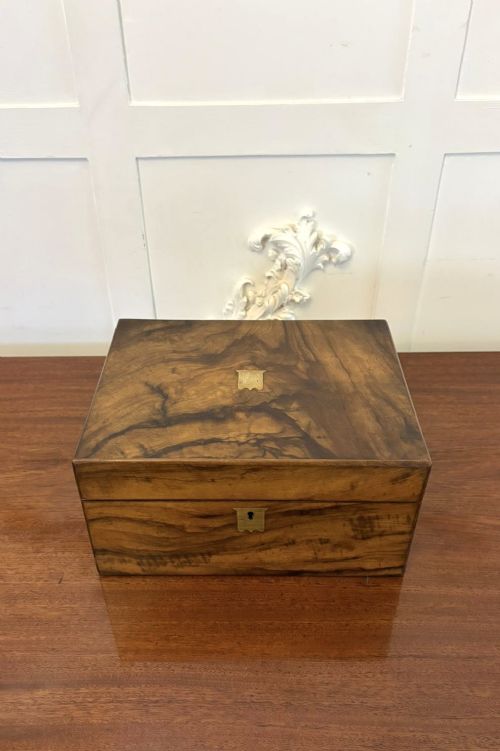
Victorian examples in walnut, mahogany and rosewood dominate the selection, often featuring fitted interiors with velvet or leather writing surfaces and secret drawers. Alongside traditional slopes, buyers encounter stationery cabinets, drop-front chests and tabletop bureaus spanning the eighteenth to early twentieth centuries.
Earlier Georgian and eighteenth-century pieces appear in oak and satinwood, occasionally showing regional craftsmanship such as Welsh miniature bureaux or carved Anglo-Indian bone decoration. Later nineteenth-century iterations incorporate brass binding, inlay, Tunbridge ware and specialised correspondence compartments.
What varies in quality
The choice of timber veneer and grain figure dictates visual appeal, with highly figured burr walnut, coromandel and matched satinwood sitting at the upper end of the scale. Plain mahogany and standard oak represent more utilitarian domestic production.
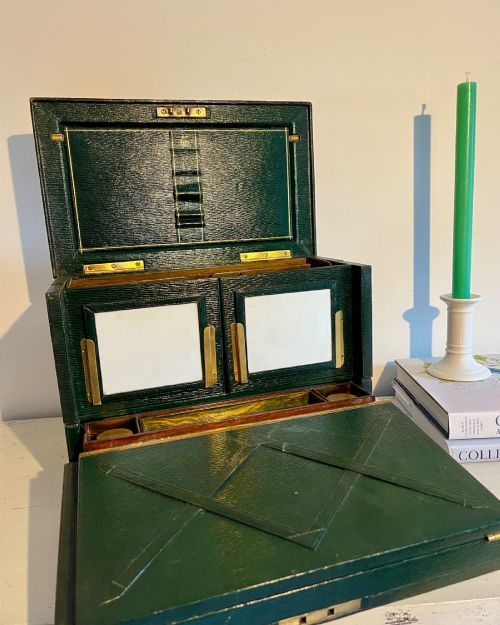
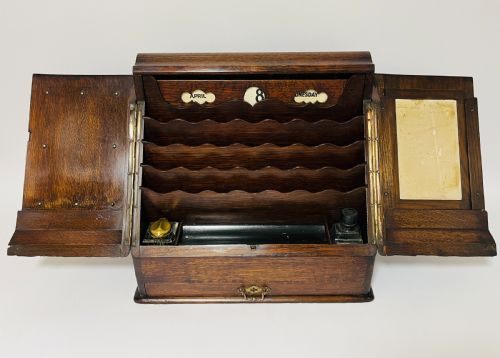
Internal complexity and completeness separate standard boxes from exceptional examples, particularly those retaining original fitted leather writing surfaces, glass ink bottles, working locks and hidden secret drawers. Maker attribution through stamps or labels, such as F Waller or Houghton & Gunn, elevates an individual piece.
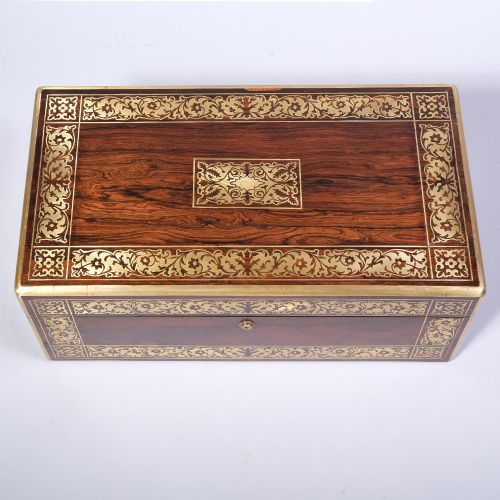
The precision of decorative enrichment - whether intricate marquetry, flush brass inlay, or carved bone - reflects the original maker's skill and workshop standards.
Some Victorian stationery boxes include specialised compartments labelled for answered and unanswered letters.
F Waller·Houghton & Gunn·Lefebvre of Belgium
The Desktop Writing Slope Glossary
- Writing slope
- A portable box with a hinged, slanted lid that opens to reveal a desk surface and storage compartments for paper and ink. These boxes fold flat for travel or storage.
- Stationery cabinet
- An upright desk accessory with doors or a drop front enclosing letter racks, pigeonholes and drawers. They became popular in the Victorian period for organising correspondence.
- Tunbridge ware
- A type of decorative woodwork characterised by mosaic patterns made from tiny wood blocks of various natural colours. It originated in Kent during the nineteenth century.
- Brass bound
- A method of reinforcing box corners and edges with brass strips and corner pieces. This technique provided durability for travel.
- Bible box
- An early form of wooden desk box used to store sacred texts and writing materials. They usually feature hinged flat or sloped lids and simple oak construction.
Desktop Writing Slope: Frequently Asked Questions
What is a desktop writing slope?
A desktop writing slope is a portable wooden box designed to hold paper, pens and correspondence items. When opened, the hinged lid forms an angled surface for writing.
These pieces allowed people to write letters comfortably before fitted desks became standard in every room.
How do I use a writing slope today?
A writing slope functions well on a modern desk or table for organising stationery, letters and modern writing instruments. The internal compartments keep small desk items tidy.
Many collectors also use the flat closed surface as a decorative accent piece or small display stand.
How do I tell an 18th-century box from a Victorian one?
Eighteenth-century boxes typically feature solid oak or mahogany construction with simpler joinery and minimal exterior decoration. They often take the form of heavy bible boxes or plain slant-top chests.
Victorian examples introduce exotic veneers like burr walnut and rosewood, elaborate brass inlay, and complex internal mechanisms such as secret drawers.
What are secret drawers in a writing slope?
Secret drawers are concealed compartments built behind stationery partitions or beneath removable panels within the box. Makers designed them to secure private letters, stamps and valuables.
Accessing them usually requires moving a false divider or pressing a hidden spring mechanism.