




Sloped Oak Letter Box
These sloped oak letter box pieces bring solid Victorian and Edwardian desk organisation to any room.
Sloped Oak Letter Box
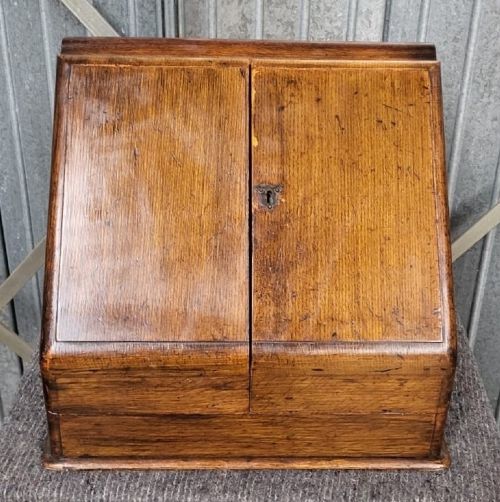
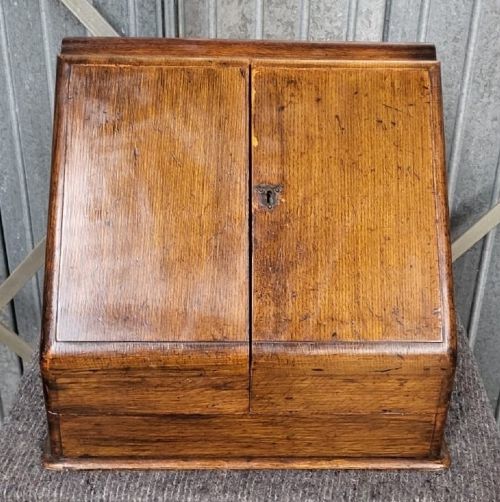
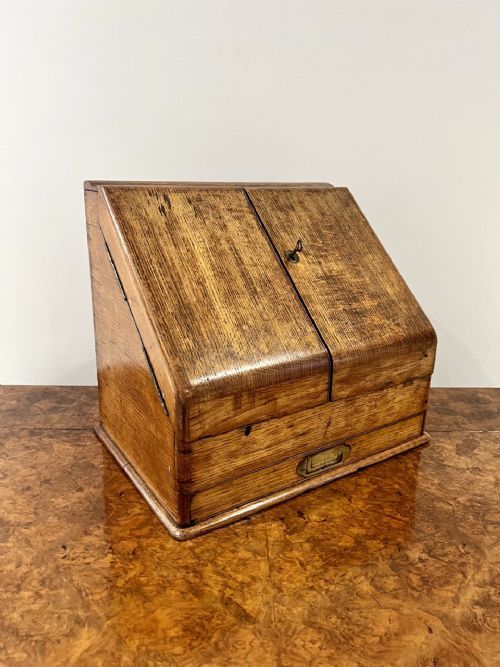
A sloped oak letter box is a desk accessory designed to hold stationery, letters and writing materials within reach. Most examples found here date from the Victorian and Edwardian periods, alongside Georgian and Arts and Crafts pieces.
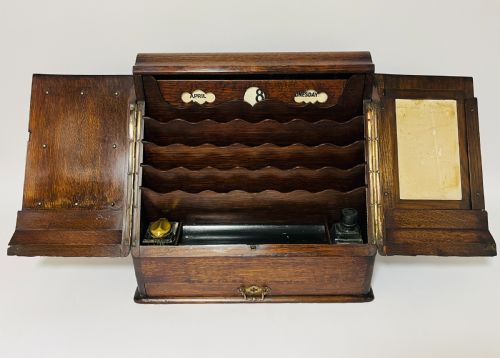
The form typically takes the shape of a stationery cabinet, desktop tidy, writing slope or letter rack with a distinct sloping lid or front. These functional desk boxes range from simple daily utilities to fitted cabinets with internal compartments.
Makers utilised sturdy timbers to create practical containers for the home or office desk. Collectors encounter both plain vernacular pieces and decorative desk boxes finished with brass fittings.
How they were made
Cabinet makers constructed these pieces primarily from solid oak, often featuring a golden or dark finish depending on the period. Brass mounts, hinges and handles provided both structural reinforcement and decorative contrast.
Interiors frequently incorporated leather or fabric linings to protect writing implements and stationery. Glass ink bottles and metal components were integrated into inkstands and letter racks to create complete desk suites.
Sloped Oak Letter Box Retail Price Guide 2026
Typical asking prices for sloped oak letter box among the pieces listed under this phrase on Sellingantiques today, from the lower quarter to the upper quarter. They describe what is for sale here now, not the wider market.
Some stationery boxes still retain traces of old ink stains inside their pen trays, marking the honest work of past letter writers.
What varies in quality
Quality rests in the selection of the timber grain, the weight of the brass hardware, and the complexity of the internal configuration. Superior examples display tighter joinery and well-fitted fall fronts or sloped lids that operate smoothly.
The Sloped Oak Letter Box Glossary
- Stationery box
- A desk container made to hold writing paper, envelopes and small correspondence items upright or flat. These boxes often feature hinged lids or fall-front panels.
- Fall front
- A hinged front panel that drops forward to provide access to internal slots and compartments. This mechanism allows for quick retrieval of letters.
- Letter rack
- An open frame designed to hold letters upright for daily sorting and viewing. They frequently appear combined with inkstands or stationery compartments.
- Writing slope
- A desktop box with an inclined writing surface that lifts to reveal storage space for pens and paper. Georgian and Victorian examples often include lockable compartments.
Sloped Oak Letter Box: Frequently Asked Questions
How were these boxes used?
Users stored incoming and outgoing mail, notepaper, and stamps inside the compartments to keep writing desks tidy. Many examples included slots for letters alongside spaces for ink bottles and pens.
They sat upon desks in studies, libraries, and drawing rooms where daily correspondence took place.
How do I date an oak stationery box?
Dating relies on observing the timber finish, the style of the brass hardware, and construction methods. Victorian and Edwardian pieces often feature machine-sawn timber and specific lock types, while Georgian items display earlier vernacular traits.
Design movements such as Arts and Crafts introduce specific handle forms and decorative hinges that help narrow the period.
How do I care for antique oak desk boxes?
Keep wooden desk boxes away from direct heat sources and strong sunlight to prevent the oak from splitting or fading. Regular dusting with a dry cloth maintains the finish without needing heavy polishes.
Leather or fabric linings inside compartments require gentle cleaning without moisture to preserve the materials.