





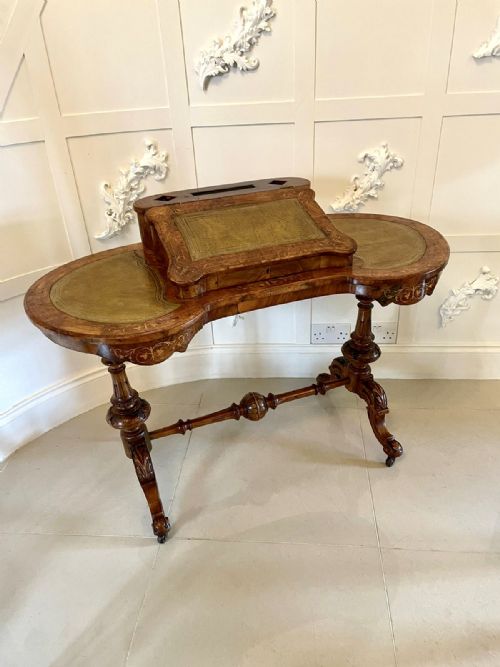


Inlaid Walnut Writing Slope
An inlaid walnut writing slope brings tactile warmth and refined portable organisation to a desk, uniting rich timber grain with meticulous decorative detail.

Inlaid Walnut Writing Slope
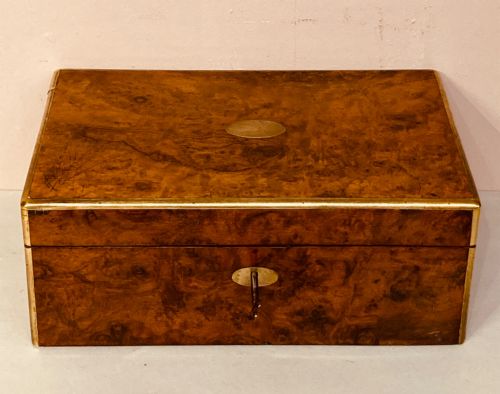
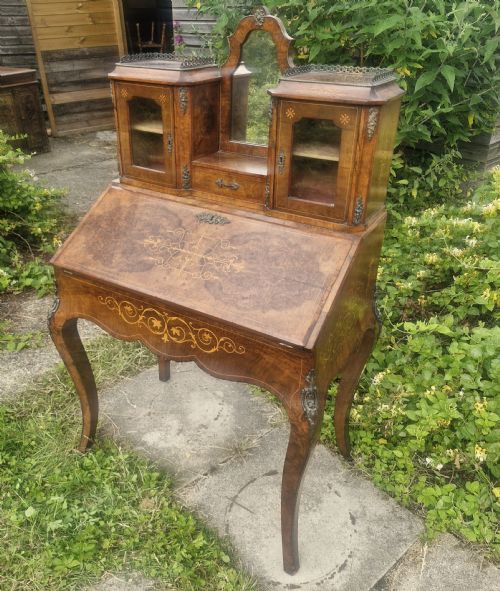
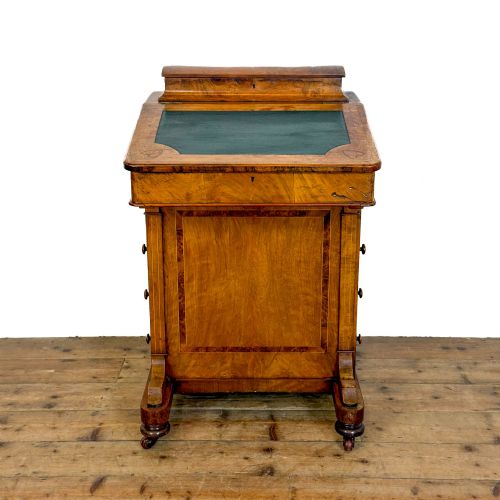
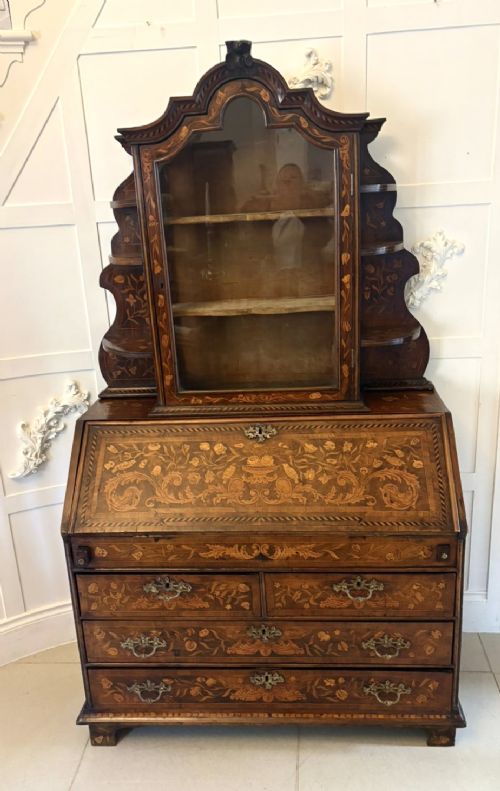
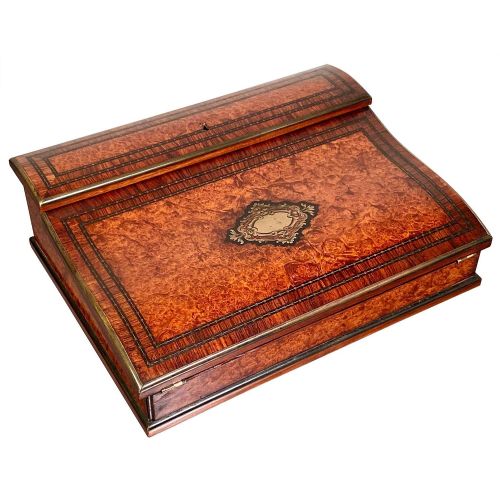
An inlaid walnut writing slope is a portable or stationery-fitted desk designed for correspondence, most frequently seen on this page in Victorian and Georgian incarnations. These pieces span compact travelling lap boxes equipped with secret drawers to larger Davenport desks and bureau bookcases.
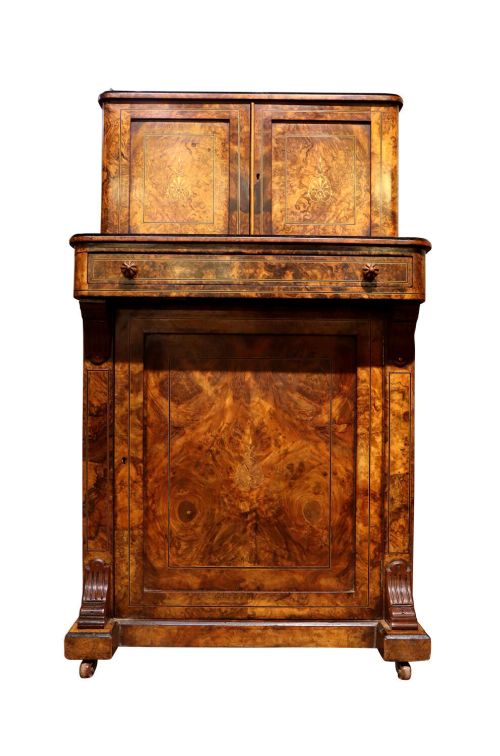
The timber framework relies heavily on burr walnut, valued for its swirling, highly figured grain patterns. These wooden carcasses are often enhanced with contrasting stringing or intricate pictorial marquetry.
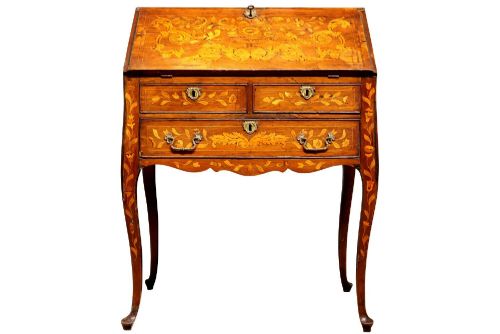
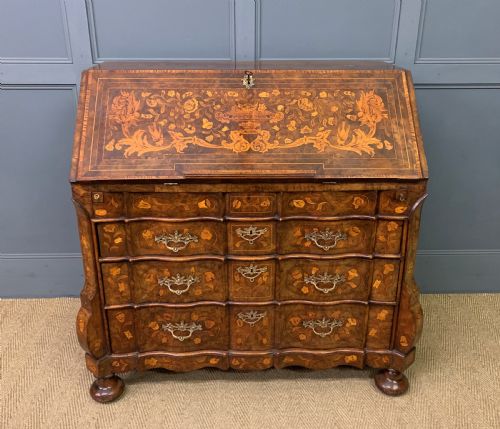
Within the selection, traditional portable lap boxes sit alongside fixed writing tables and bureau desks, all sharing the core characteristic of a sloping writing surface.
Materials and construction methods
Makers utilised solid walnut and burr walnut veneers applied to secondary foundational timbers, creating rich exterior surfaces that display complex natural figuring. These timber surfaces were then inlaid with brass, boxwood, and fruitwood to form geometric lines or elaborate floral marquetry.
Structural hardware played a vital functional role, incorporating flush brass corner binding, hinges, and specialised locks such as Bramah mechanisms to secure valuable papers. Interiors frequently incorporated fitted compartments, leather writing surfaces, and secret drawers concealed behind dummy partitions.
The listings demonstrate a strong preference for Victorian burr walnut, accompanied by Georgian and eighteenth-century Dutch marquetry bureau forms.
Distinctions in quality
The standard of an inlaid walnut writing slope is determined by the selection of the burr walnut veneer and the precision of the inlay work. Finer examples display symmetrical grain matching across the lid and crisp, tightly fitted marquetry without gaps in the surrounding stringing.
Interior execution further separates standard items from superior pieces, particularly the presence of functioning Bramah locks, smoothly operating secret drawers, and high-grade fitted stationery compartments rather than plain secondary woods.
The Inlaid Walnut Writing Slope Glossary
- Burr walnut
- A specialised timber cut from the wart-like growths on walnut trees, producing dense, highly decorative swirling patterns that catch the light. This veneer formed the primary decorative surface for many high-end Victorian writing boxes.
- Marquetry inlay
- An elaborate decorative technique where thin pieces of various coloured woods, such as boxwood and fruitwood, are assembled to create pictorial designs. It transforms a plain writing slope lid into a detailed floral or geometric scene.
- Secret drawers
- Concealed compartments built into the interior architecture of writing slopes behind removable panels or false partitions. They were designed to securely store small valuables and private correspondence.
- Davenport desk
- A compact form of writing furniture featuring a sloped, hinged writing surface above a pedestal of drawers. Many iterations in walnut incorporate side stationery boxes and pull-out desk extensions.
- Tunbridge ware
- A meticulous form of woodworking involving mosaic patterns constructed from tiny tinted wooden blocks, often integrated into box lids. This technique originated in Kent and frequently decorates nineteenth-century stationery boxes.
Inlaid Walnut Writing Slope: Frequently Asked Questions
How do I date an inlaid walnut slope?
Dating relies on examining construction techniques, hardware styles, and the specific type of walnut veneer employed across different eras. Victorian pieces often incorporate extensive brass banding and Tunbridge ware, whereas Georgian examples tend toward restrained boxwood stringing.
Interior fabric choices, such as tooled leather panels and the complexity of secret drawer mechanisms, also offer reliable chronological markers.
Were these slopes meant for travel?
Many smaller writing slopes were constructed specifically for travel, featuring robust brass bound corners and secure locks to withstand transit. Larger versions functioned more as stationary desk accessories kept permanently in a study or drawing room.
Portable lap desks allowed Victorian travellers to maintain correspondence away from home with all necessary inks and papers enclosed.
What maintenance do walnut writing slopes need?
Maintenance involves keeping the timber away from direct heat sources and sudden humidity shifts to prevent the walnut veneer from lifting. Occasional application of a suitable wax polish helps preserve the lustre of the wood grain and protects the inlaid stringing.
Leather writing surfaces benefit from gentle cleaning and conditioning to maintain their suppleness without dampening the surrounding woodwork.