


Victorian Whatnot Shelf
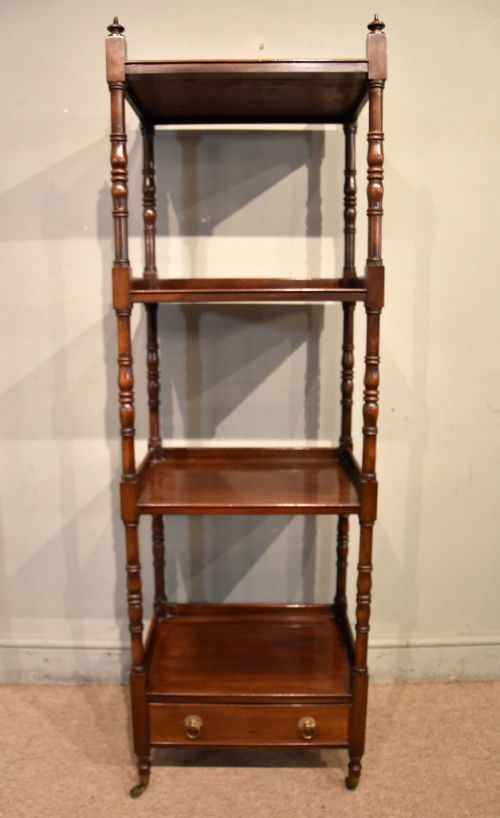
A victorian whatnot shelf brings multi-tiered display space into a room, offering upright timber tiers designed to hold ornaments, books and collections.
Victorian Whatnot Shelf
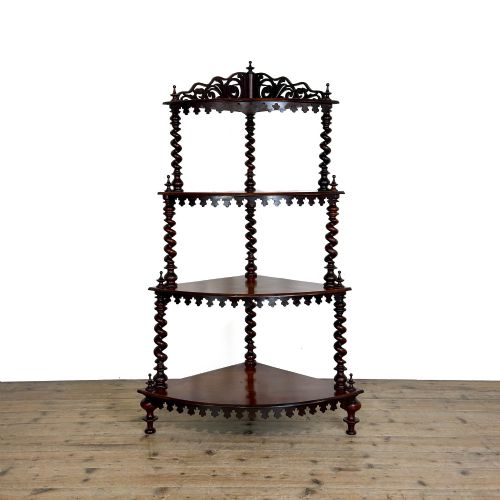
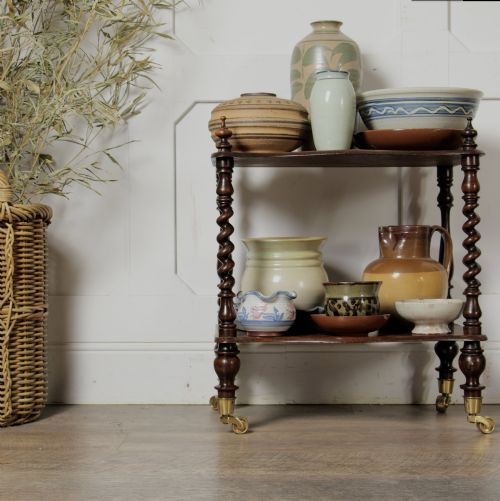
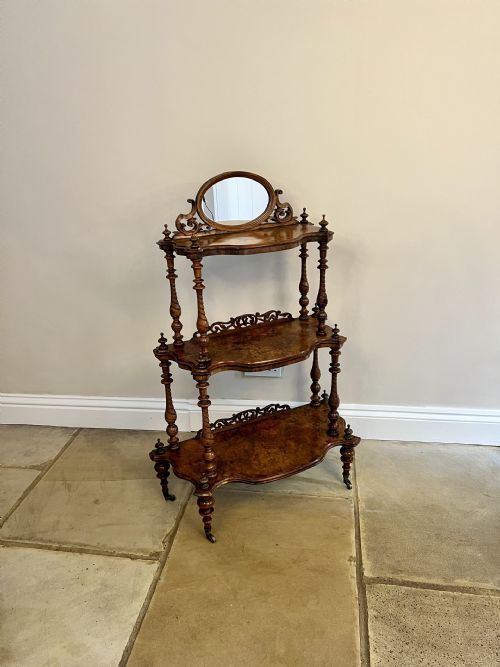
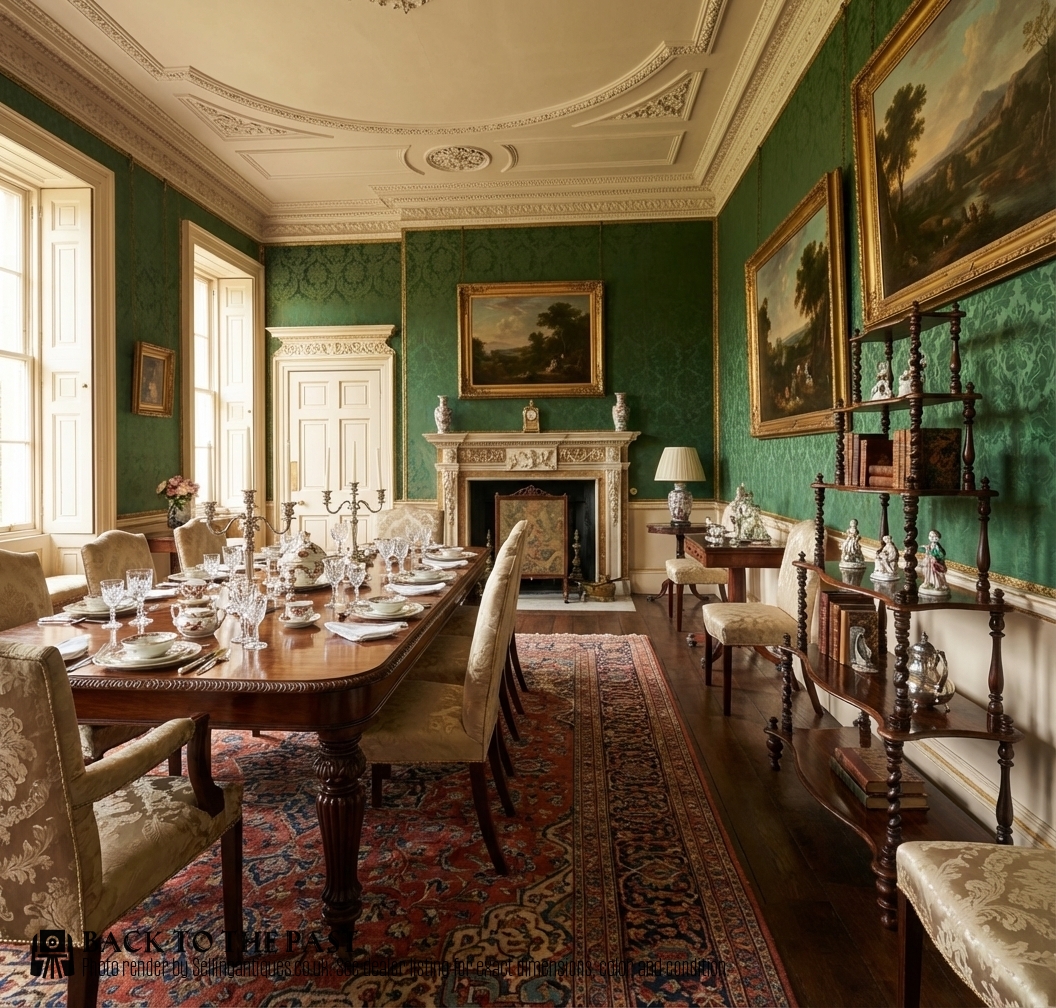
A victorian whatnot shelf is a multi-tiered display unit intended for rooms where ceramics, books or small decorative objects required neat arrangement. These pieces appear in several structural formats across the nineteenth century, including freestanding units, corner stands, hanging shelves and combined etagere forms.
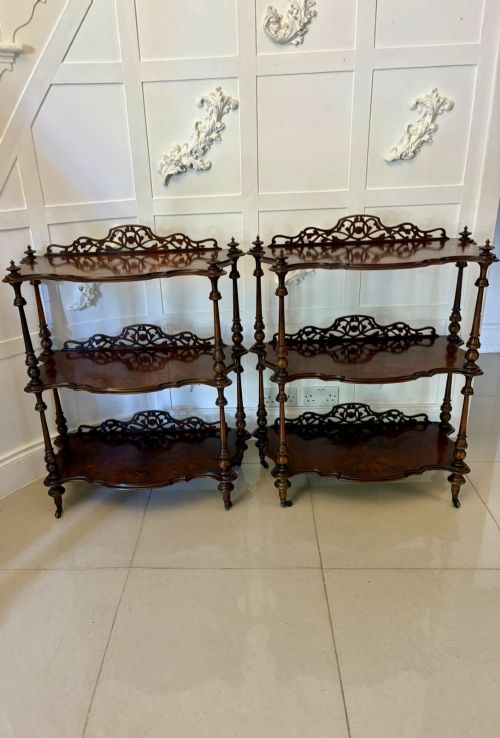
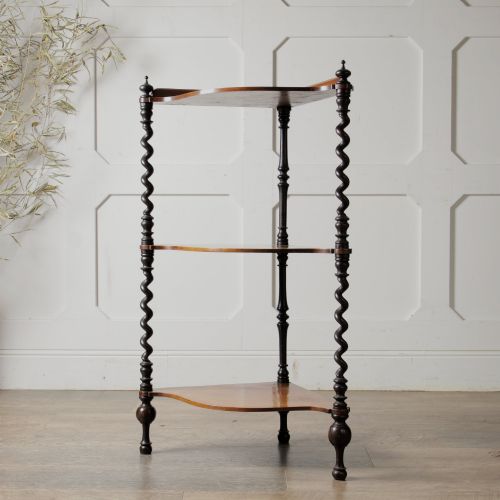
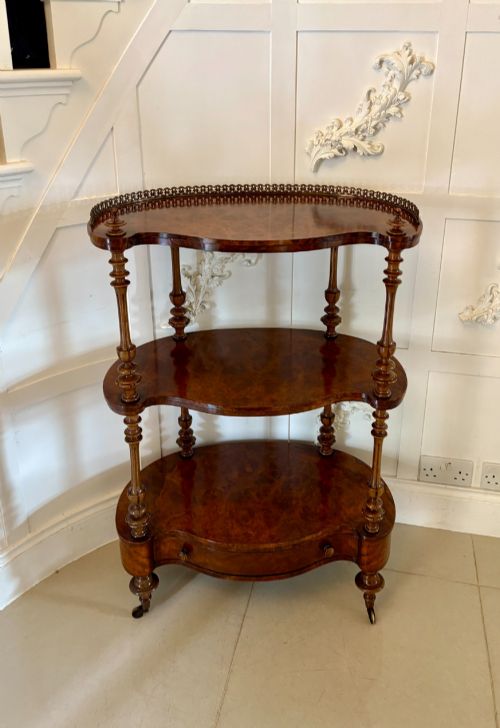
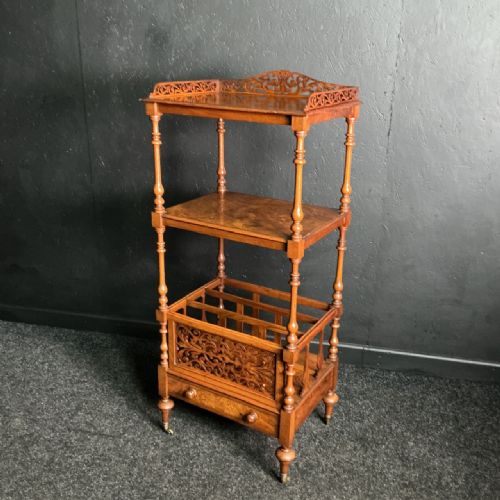
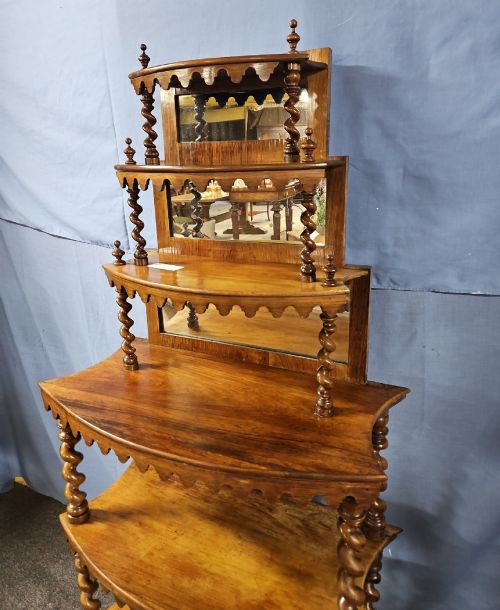
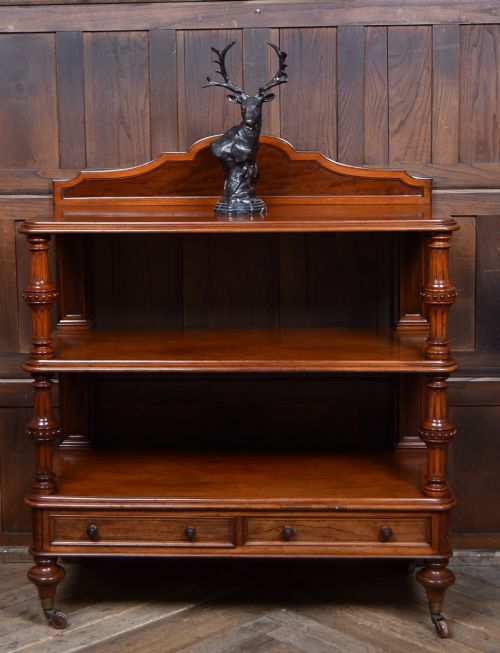
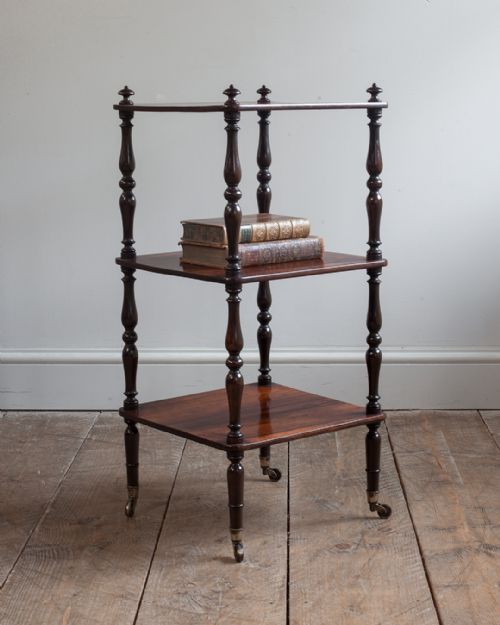
The version most commonly met on this page is the freestanding multi-tiered walnut or mahogany whatnot, often built with three or four graduating levels supported by turned columns or barley twist uprights. Pieces span various regional workshops, incorporating occasional corner cabinets, side tables with lower tiers, and specialised forms featuring fitted drawer sections or lower cellarettes.
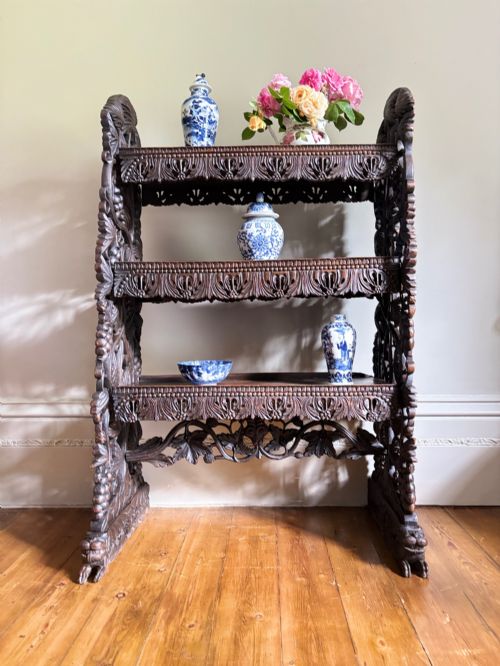
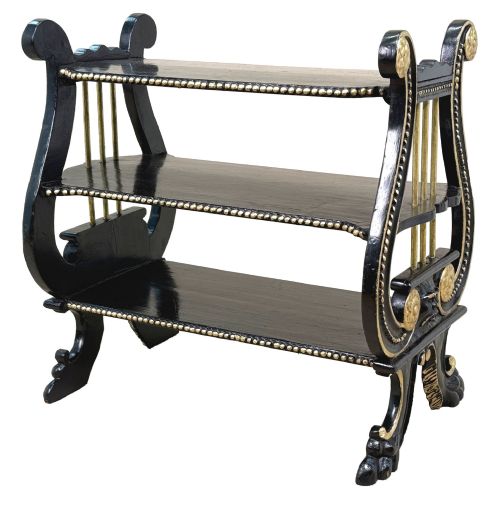
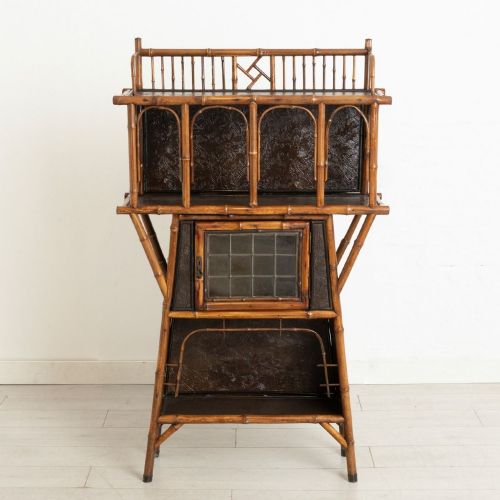
Design vocabulary stretches from straightforward mahogany shelves to serpentine-shaped burr walnut display stands and ebonised frames with parcel gilding. Examples also encompass Anglo-Indian padauk shelves and bamboo structures linked to specific makers, demonstrating the varied stylistic influences running through the period.
Materials and Techniques
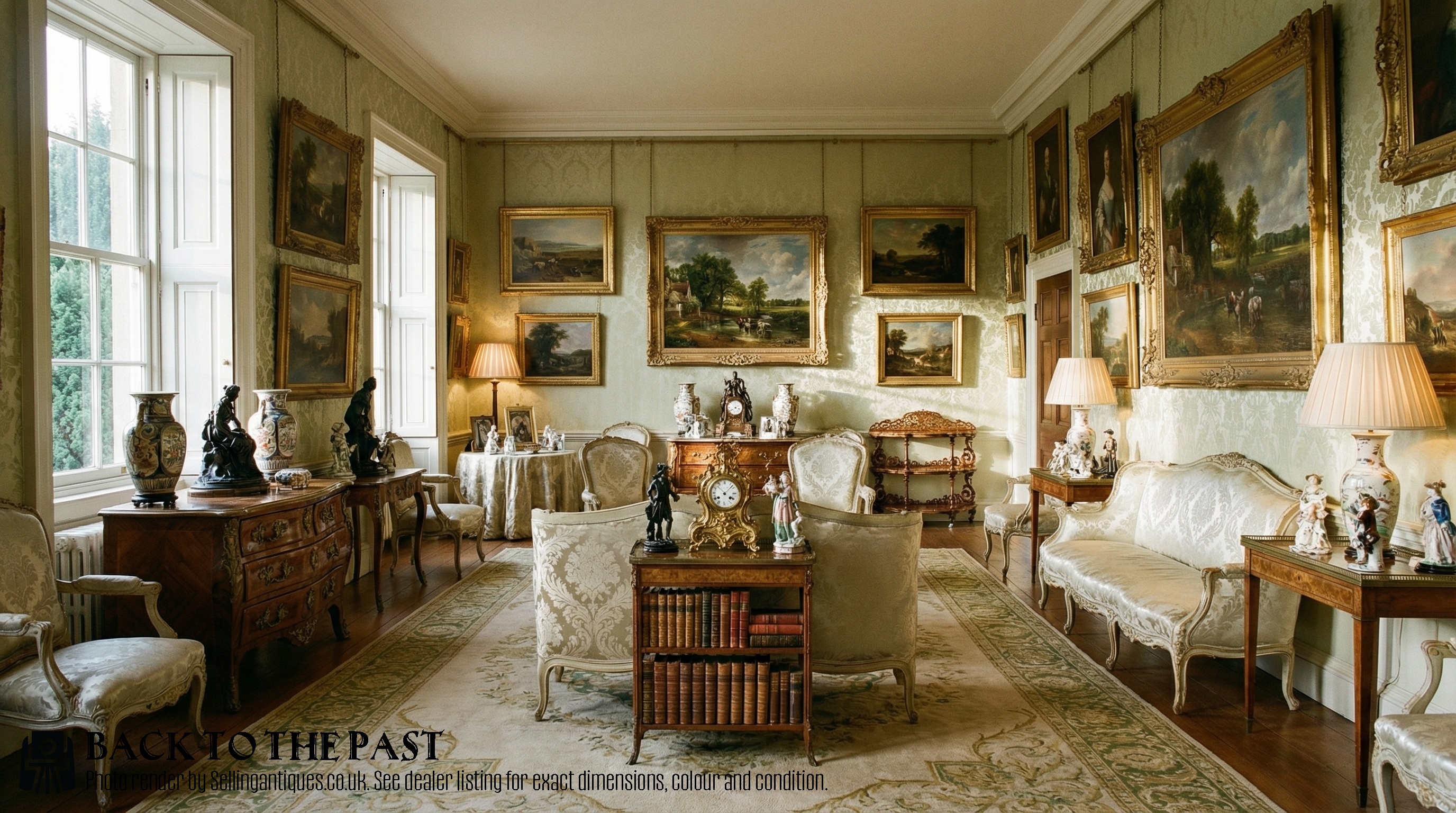
Makers utilised dense cabinet timbers, relying heavily on figured walnut, burr walnut, mahogany, and rosewood for primary tier surfaces and structural uprights. Ebonised wood, padauk, bamboo, and oak also appear, sometimes accented with brass mounts, glass panels, or gilt metal detailing.
Construction techniques combined robust joinery for supporting multi-tiered weight with decorative veneering, particularly on burr walnut tops and serpentine shelves. Turning lathes shaped upright columns like barley twists, while specialist marquetry, parcel gilding, and fine carving defined the decorative elaboration on higher-grade exhibition pieces.
Victorian Whatnot Shelf Retail Price Guide 2026
Typical asking prices for victorian whatnot shelf among the pieces listed under this phrase on Sellingantiques today, from the lower quarter to the upper quarter. They describe what is for sale here now, not the wider market.
A sturdy whatnot holds a remarkable quantity of small porcelain cats without losing its balance.
Gradations in Execution
Quality separates through the choice of timber veneer selection, where highly figured burr walnut and rich rosewood outclass plain secondary timbers. The crispness of hand-carved details, the execution of barley twist turnings, and the integration of marquetry or gilt metal mounts dictate the level of craftsmanship.
Structural integrity and proportion also separate standard domestic items from exhibition-grade pieces. Freestanding stability, refined edge moulding, and harmonious tier gradation indicate a higher standard of original workshop production.
Leonard Wyburd·Liberty and Co·Samson and Son
The Victorian Whatnot Shelf Glossary
- Whatnot
- A multi-tiered piece of furniture designed for displaying ornaments and books. It emerged in the late eighteenth century and remained popular throughout the Victorian era.
- Etagere
- A set of open shelves for displaying small objects, often synonymous with a whatnot. The term derives from French and frequently denotes lighter, more decorative framing.
- Barley twist
- A type of column or spindle carved with a spiral turn resembling barley sugar. It appears frequently on the upright supports of Victorian stands and tables.
- Serpentine
- A curved line that waves inward and outward, commonly used on table tops and shelf fronts. This shaping requires careful cutting and edge moulding.
- Marquetry
- Inlaid wood patterns forming decorative pictures or geometric designs on furniture surfaces. Craftsmen used contrasting veneers to achieve pictorial effect.
Victorian Whatnot Shelf: Frequently Asked Questions
What is a Victorian whatnot shelf?
A Victorian whatnot shelf is a multi-tiered furniture piece designed for displaying ornaments, books, and collections in nineteenth-century interiors.
These pieces use stacked open shelves supported by upright columns, providing vertical display space without heavy enclosed cabinetry.
How were whatnot shelves used originally?
Original nineteenth-century use focused on displaying decorative ceramics, silver, small sculptures, and bound volumes in drawing rooms and parlours.
Corner versions utilised neglected angles of a room, while freestanding models stood against walls or between windows to showcase prized possessions.
How do I care for antique wood?
Preserving antique wood requires stable room humidity and protection from direct sunlight to prevent veneer cracking and fading.
Regular dusting with a dry, soft cloth maintains the finish without moisture damage, avoiding modern silicone sprays.
How do I distinguish wood types?
Walnut exhibits a rich brown tone with darker grain figuring, whereas burr walnut displays swirling knot patterns formed from tree growths.
Mahogany offers a denser reddish-brown hue, and rosewood presents dark purplish-brown streaks across a heavy, dense grain.