

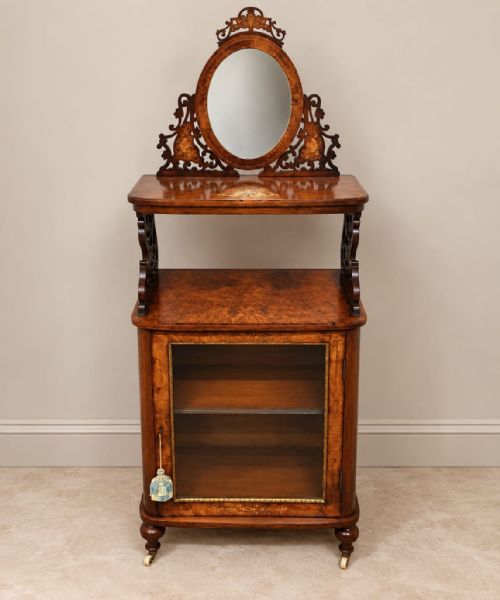

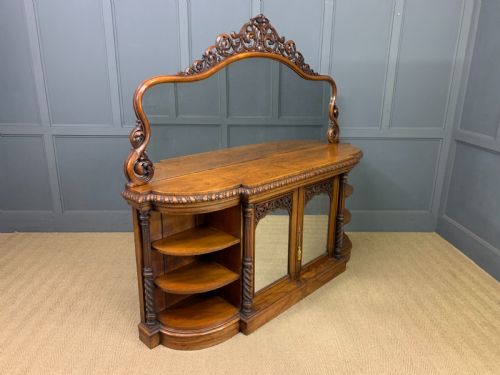


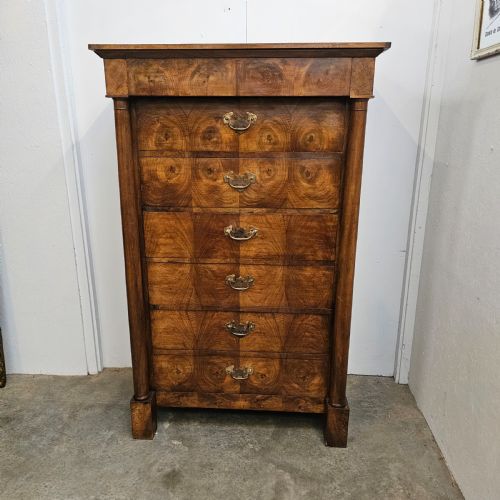


Burr Walnut Chiffonier
A burr walnut chiffonier brings rich, swirling grain and functional low cabinetry to a room, offering both display space and concealed storage.
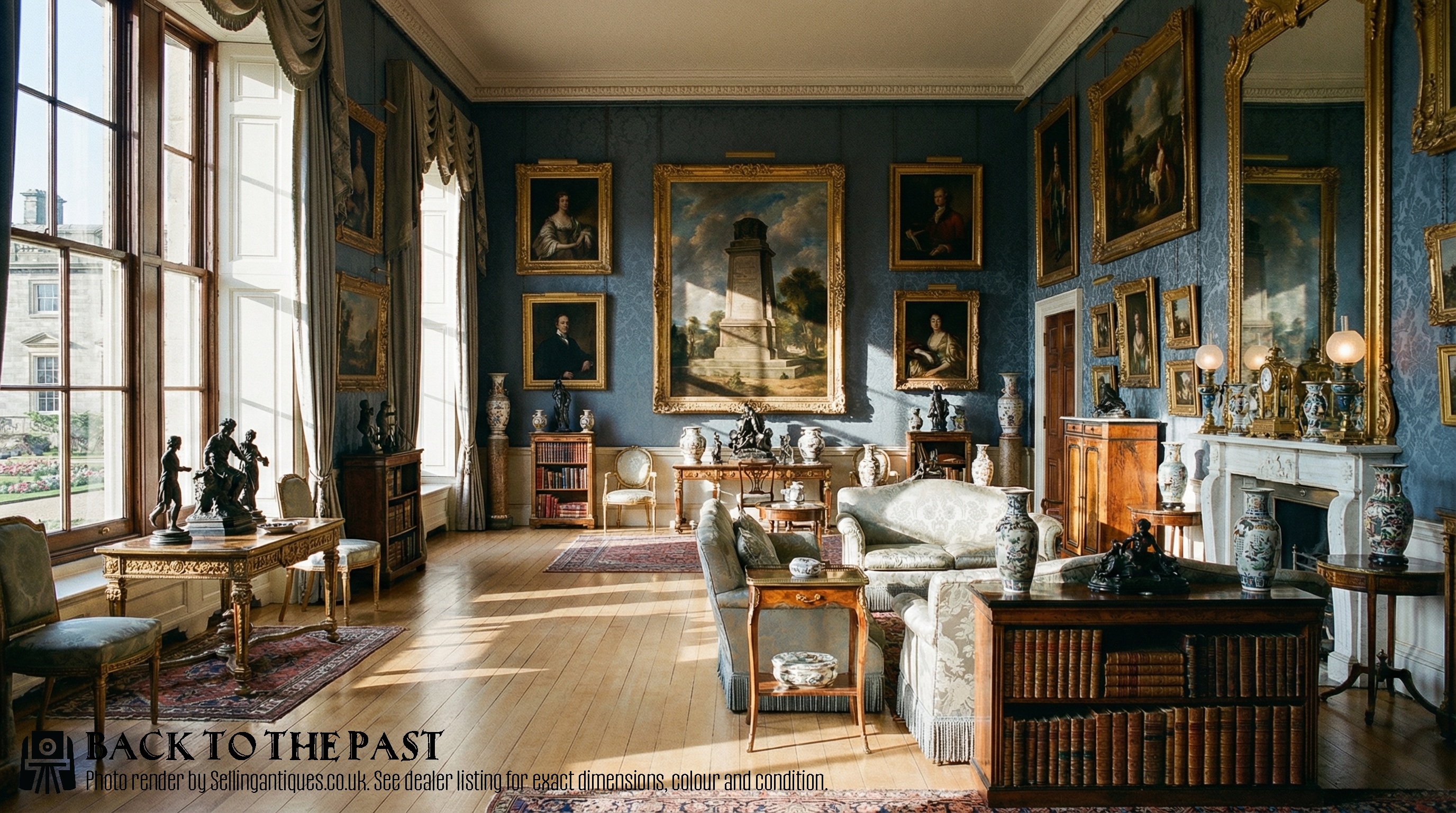
What a burr walnut chiffonier is
A burr walnut chiffonier is a low cabinet designed for the dining room or parlour, combining shelving, cupboards, and sometimes a mirror back. These pieces predominantly date from the nineteenth century, reflecting Victorian and French Empire design sensibilities.
The most common formats on this page are Victorian and later nineteenth-century variations, including mirror-backed chiffoniers, credenzas, and side cabinets. They frequently incorporate display elements such as whats or glass doors alongside traditional lower storage cupboards.
Makers of the period utilised the undulating figuring of burr timber to create striking visual focal points on doors and drawer fronts. Surviving examples demonstrate how these versatile sideboards served both decorative and utilitarian purposes in period homes.
What varies in quality
Quality rests primarily in the selection and application of the burr walnut veneer, where dense, lively grain patterns command greater visual appeal. The crispness of carved details, the integration of mirror glass, and the precision of inlaid wood further separate standard production from finer workshop output.
Structural integrity also dictates worth, seen in the seamless alignment of bowed or serpentine doors and the retention of original brass hardware. Pieces boasting superior proportions and uncompromised bookmatched veneers represent the pinnacle of the cabinet maker's craft.
Retail Price Guide 2026
Typical UK retail prices for burr walnut chiffonier, calculated from the Sellingantiques database of over a million retail prices indexed since 2003. This retail price guide relies exclusively on Sellingantiques data; no external sources or auction records are used, so the figures do not describe the wider market.
The wild, swirling eyes in burr walnut grain mean your sideboard practically comes with its own abstract art installation built right into the doors.
The Burr Walnut Chiffonier Glossary
- Burr walnut
- A prized timber harvested from the tree's root or growth excrescences, yielding a swirling, knotty grain pattern. This veneer is sliced thin and applied to primary furniture surfaces for decorative impact.
- Chiffonier
- A low nineteenth-century sideboard or cabinet, typically featuring enclosed cupboards below and sometimes shelving or a mirror above. It evolved from simpler serving tables to multifunctional parlour furniture.
- Credenza
- A low-profile side cabinet originating in continental Europe, often sharing characteristics with nineteenth-century chiffoniers and sideboards. They frequently incorporate glass doors or extensive marquetry.
- Bookmatched
- A woodworking technique where adjacent veneer slices are opened like a page to create a symmetrical, mirrored pattern across a panel. This method highlights the natural movement within burr timber.
- Ormolu
- Gilt-bronze mounts applied to furniture for decorative enrichment, common in French Empire and high-end Victorian pieces. The technique involves finishing bronze with a mercury-gold amalgam.
Frequently Asked Questions
What is a burr walnut chiffonier used for?
These cabinets serve as practical low storage units while providing a decorative surface for ornaments and lamps in reception rooms. The internal shelving accommodates books or tableware, while upper sections often display small collectables.
Historically, they occupied dining rooms or parlours as serving stations and focal points for displaying fine porcelain. Today, they function similarly in modern interiors, adding warmth and texture against plain walls.
How do I date a Victorian chiffonier?
Dating relies on observing construction methods, timber choices, and stylistic cues recorded across nineteenth-century examples. Pieces from around eighteen-fifty often display heavier proportions and mirror backs, while later decades embraced serpentine fronts and intricate inlay.
Examining internal secondary woods and backboards provides further clues regarding the manufacturing era. Hardware styles, such as brass escutcheons and door latches, also align with specific periods of production.
Are chiffoniers and credenzas the same thing?
While these terms often overlap in nineteenth-century listings, distinct architectural differences generally separate them. Chiffoniers frequently include tiered shelving or mirror backs, whereas credenzas tend to be strictly low cabinets with sliding or hinged doors.
Both forms utilise burr walnut and similar decorative vocabulary, leading to interchangeable descriptions by dealers. Examining the upper superstructure usually clarifies whether a piece is primarily a chiffonier or a credenza.
How should I care for burr walnut furniture?
Maintain these nineteenth-century surfaces by keeping them away from direct sunlight and rapid temperature fluctuations that can dry out old veneers. Occasional dusting with a soft, dry cloth preserves the polished finish without risking moisture damage.
Avoid placing damp items or heavy liquids directly onto the wood or marble tops. Feeding the timber with appropriate wax periodically helps maintain the depth and lustre of the burr grain.