
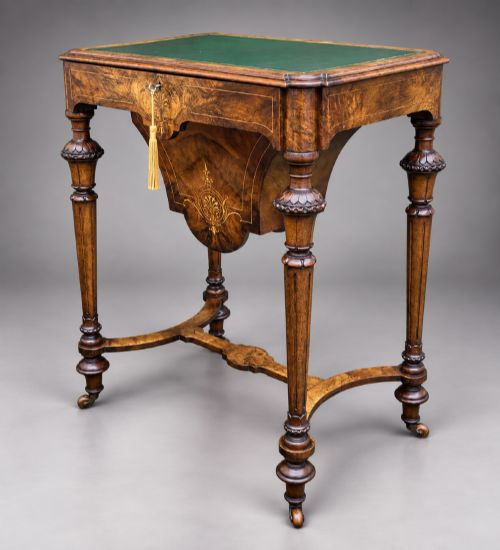
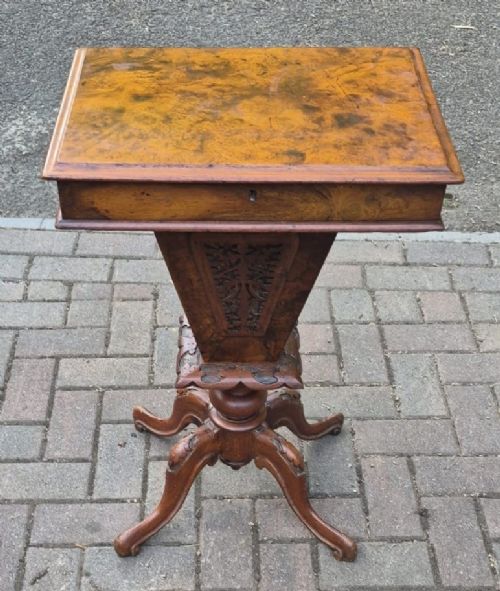


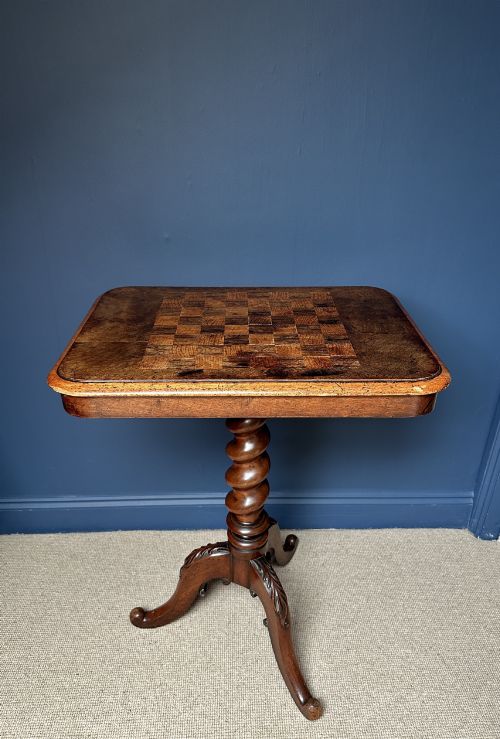
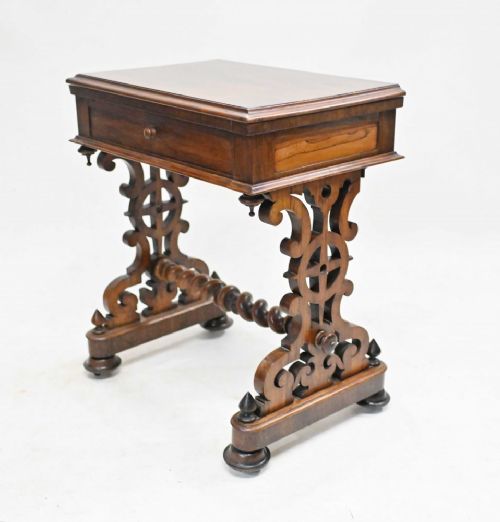

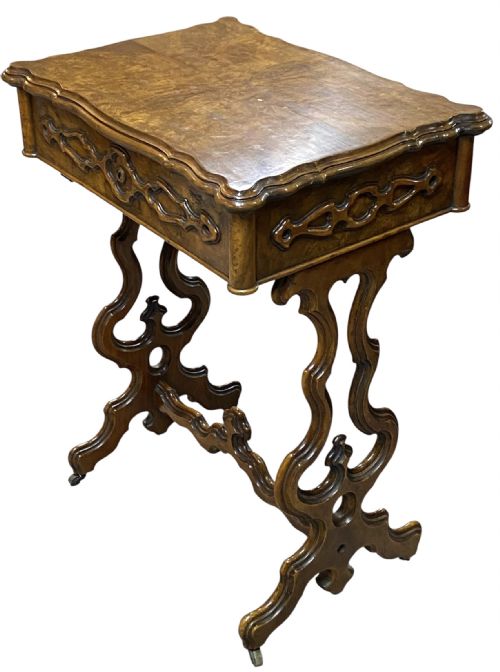


Victorian Walnut Sewing Table
A victorian walnut sewing table brings together refined timber work and practical domestic storage for the nineteenth-century needlework enthusiast.
Victorian Walnut Sewing Table
A victorian walnut sewing table is a specialised piece of nineteenth-century furniture designed to hold threads, needles, and textiles while serving as an elegant occasional table.
The most common form on this page combines a lidded work box above a fabric basket or bag, often resting on carved pedestals or tripod legs.
Many examples double as games tables featuring inlaid chess or backgammon boards on the folding top, reflecting the multifaceted social uses of the parlour.
Materials and Technique
Cabinetmakers utilised rich burr walnut and figured walnut veneers over sturdy timber carcases, applying French polish to accentuate the swirling grain patterns.
Advanced examples incorporate intricate marquetry, wood inlay, and boxwood lines, alongside brass hardware and fitted wooden interiors with small compartments for cotton reels.
Structural supports range from delicate turned columns to elaborately carved pillar bases, typical of mid-nineteenth-century joinery.
Victorian Walnut Sewing Table Retail Price Guide 2026
Typical asking prices for victorian walnut sewing table among the pieces listed under this phrase on Sellingantiques today, from the lower quarter to the upper quarter. They describe what is for sale here now, not the wider market.
Several tables feature built-in backgammon boards, proving our ancestors took their parlour board games just as seriously as their needlework.
Evaluating Craftsmanship
The standard of a victorian walnut sewing table rests on the selection of the veneer, where dense, highly figured burr walnut commands greater visual presence.
Interior execution distinguishes standard production from superior pieces, particularly the presence of fitted compartments, original ivory or bone accessories, and intact silk sewing bags.
Structural integrity of the folding mechanisms and the crispness of the inlaid chess boards or marquetry motifs further separate ordinary examples from exceptional ones.
The Victorian Walnut Sewing Table Glossary
- Burr walnut
- A prized timber veneer harvested from the excrescences of walnut trees, displaying chaotic and highly decorative grain patterns. It forms the primary visual draw for high-end nineteenth-century tables.
- Marquetry inlay
- The art of applying decorative pieces of wood veneer to a structural structure to form intricate pictures or geometric patterns. These are frequently found on the lids of superior work tables.
- Trumpet table
- A distinct nineteenth-century form featuring an octagonal or circular body that flares outwards toward the base like a musical instrument. It usually conceals a deep sewing bag below.
- Tunbridge ware
- A specialised form of decorative woodwork originating from Kent, characterised by tiny mosaic tiles made from different natural woods to create geometric or pictorial scenes.
Victorian Walnut Sewing Table: Frequently Asked Questions
What was a sewing table used for?
These pieces served as dedicated workstations for Victorian women to store threads, needles, and ongoing needlework projects in the parlour.
Many designs also incorporated folding tops with integrated chess or backgammon boards to provide post-dinner entertainment.
Are the fabric bags inside original?
Original fabric sewing bags beneath the wooden boxes are exceptionally scarce due to fragile textiles degrading over time.
Most surviving examples feature period-appropriate replacement silk or velvet linings that match the historic character of the timber.
How do I care for walnut furniture?
Keep nineteenth-century walnut pieces away from direct sunlight and heat sources to prevent the delicate burr veneers from drying out and lifting.
Apply a light microcrystalline wax periodically to nourish the French polished surface rather than modern liquid polishes.