






Victorian Walnut Sewing Box
When you search for a victorian walnut sewing box, you uncover timber vessels and fitted tables designed to house the needlework and trifles of nineteenth-century households.
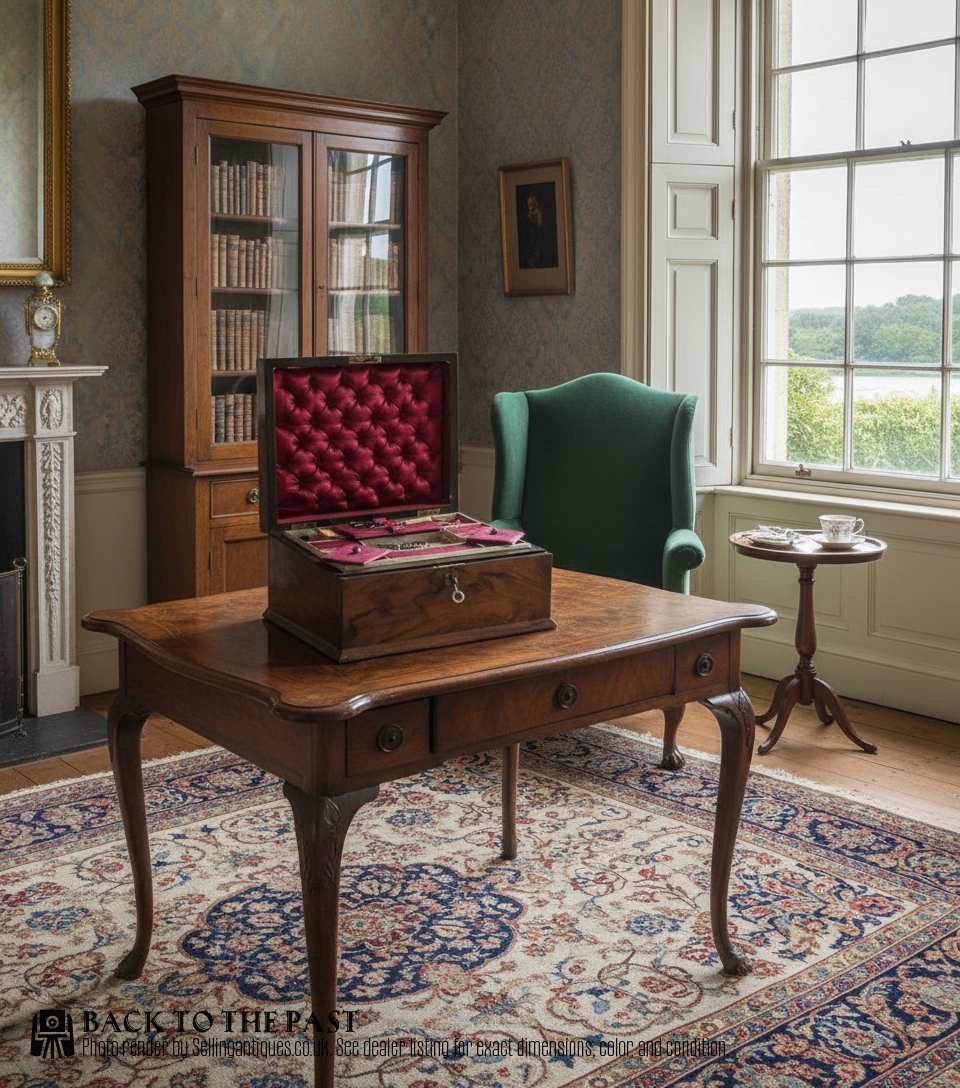
Victorian Walnut Sewing Box
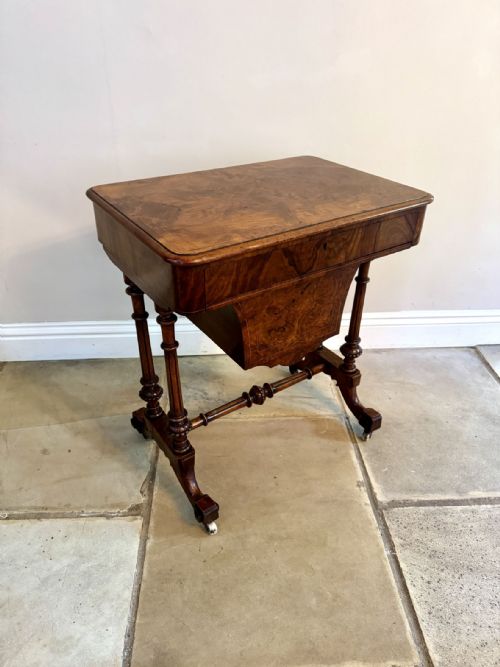
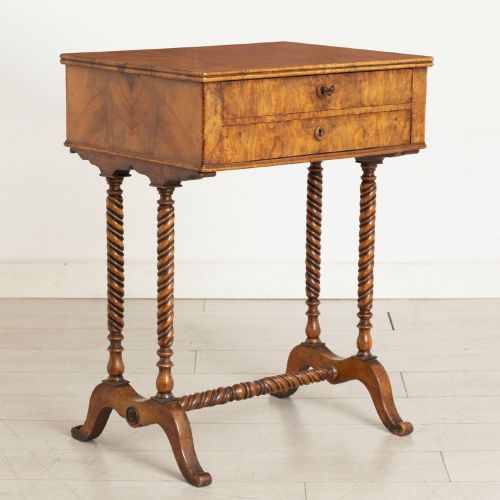
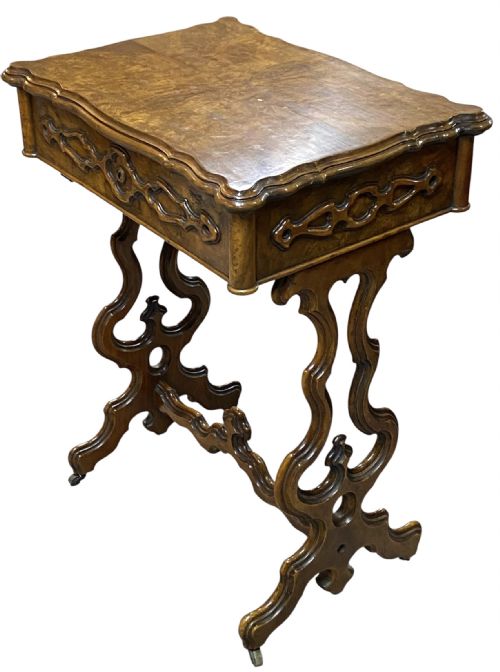
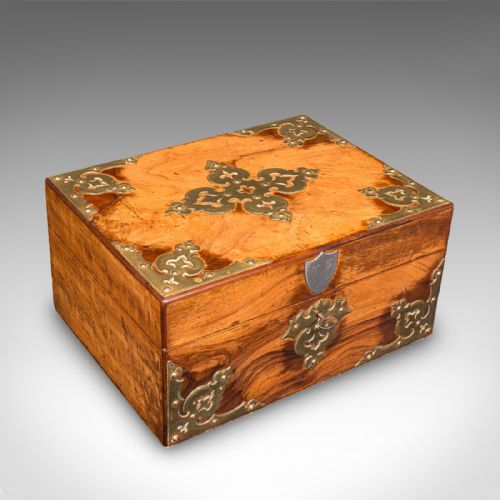
A victorian walnut sewing box typically appears as a portable workbox or a substantial freestanding sewing table, dating predominantly from the mid to late nineteenth century. These pieces were essential items for gentlewomen, intended to hold threads, needles, and fragments of embroidery close at hand in the parlour.
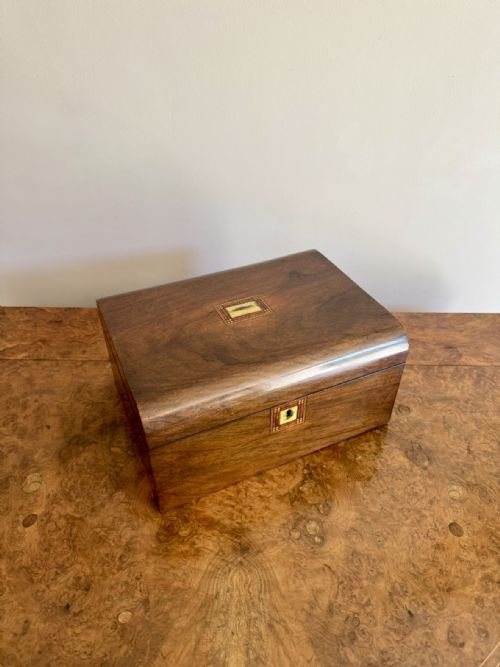
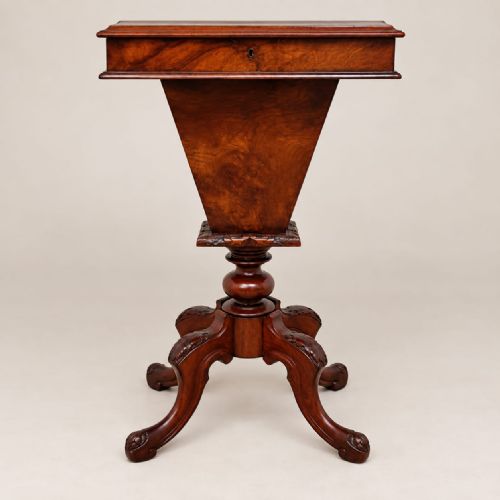
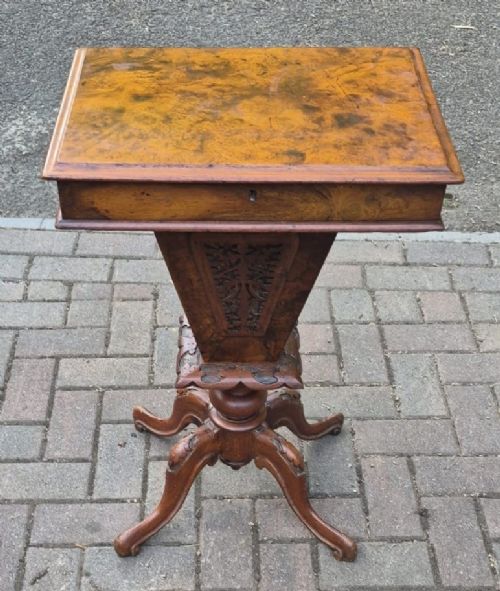
The portable box variants range from simple rectangular caskets to domed or shaped receptacles fitted with internal compartments and trays. Freestanding versions incorporate columns, carved supports, or trumpet-shaped pedestals beneath hinged lids, often combining needlework storage with space for writing or games.
Makers of the period utilised richly figured woods to create items that doubled as decorative furnishings for domestic interiors. Surviving examples frequently merge utility with intricate craftsmanship, reflecting the high value placed on domestic arts during the Victorian era.
How They Were Made
Cabinet makers constructed the primary carcase of these pieces using solid wood, applying veneers of burr walnut or figured walnut to external surfaces to showcase dramatic grain patterns. These veneers were frequently enhanced with delicate wood inlay, boxwood stringing, or geometric marquetry motifs.
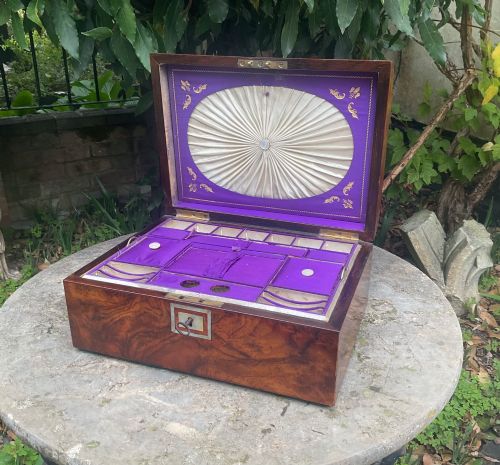
Specialist techniques such as Tunbridge ware decoration appear on select boxes, incorporating tiny mosaic wooden tesserae to form pictorial or geometric lid panels. Brass hinges, locks, and escutcheons secured the lids and compartments, whilst internal trays were lined with fabric or silk to protect delicate sewing implements.
Listings feature walnut as the primary timber, complemented by brass fittings and fabric linings across various Victorian decades.
What Varies in Quality
The distinction between ordinary and superior pieces rests largely in the choice of timber veneer and the precision of the cabinet work. Highly figured burr walnut with symmetrical grain patterns and crisp, unblemished marquetry or Tunbridge ware inlay commands greater regard than plain timber surfaces.
Interior architecture further separates the standard examples from the exceptional ones. Fully fitted compartments featuring matching wooden lids, original silk linings, and integrated pin cushions or ivory fittings indicate a higher grade of commission by the maker.
Waring & Gillow
The Victorian Walnut Sewing Box Glossary
- Burr walnut
- A prized timber cut from walnut tree growths, displaying complex, swirling grain patterns that create rich visual depth on box lids and tabletops.
- Tunbridge ware
- A meticulous form of British woodworking from Kent that uses thousands of tiny dyed wood blocks to create mosaic pictures and geometric borders.
- Trumpet table
- A freestanding sewing table featuring an octagonal or rounded body that flares outward toward the base, resembling the bell of a musical instrument.
- Marquetry
- The art of applying decorative veneer pieces in various woods to a carcase structure to form intricate pictures or abstract ornamental patterns.
- Work table
- A multi-functional nineteenth-century furniture form designed specifically for needlework, housing internal compartments and often a suspended fabric catch bag.
Victorian Walnut Sewing Box: Frequently Asked Questions
What is the difference between a work box and a sewing table?
A work box is a portable tabletop container designed to be carried from room to room, housing smaller sewing implements, threads, and personal trinkets inside a compact lockable carcase.
In contrast, a sewing table is a permanent freestanding piece of furniture featuring legs or a pedestal base, offering a larger workspace and deeper internal storage beneath a hinged lid.
How do you identify Tunbridge ware on these boxes?
Tunbridge ware is identified by its distinctive mosaic surface decoration, which is assembled from countless microscopic squares and triangles of naturally coloured woods to form floral or geometric scenes.
These mosaic panels are typically set into the lids of walnut boxes as central medallions or border frames, displaying an extraordinary level of miniature carpentry.
Were these items used exclusively for sewing?
Whilst primarily built to house needles, threads, and needlework projects, many of these walnut receptacles served secondary purposes within the nineteenth-century home.
Interior compartments frequently accommodated letters, writing materials, or jewellery, and several variants integrated folding boards on top for chess, backgammon, or card games.
How should a walnut sewing box be cared for today?
Preserving these pieces requires placing them away from direct sunlight and household heat sources, which can dry out the walnut veneer and cause warping or splitting in the wood.
Applying occasional conservative coats of quality furniture wax helps maintain the lustre of the timber finish without damaging the historical patina or the delicate inlay work.