



Victorian Wooden Work Box
A victorian wooden work box provides a neat tabletop compartment for sewing implements, letters and keepsakes.
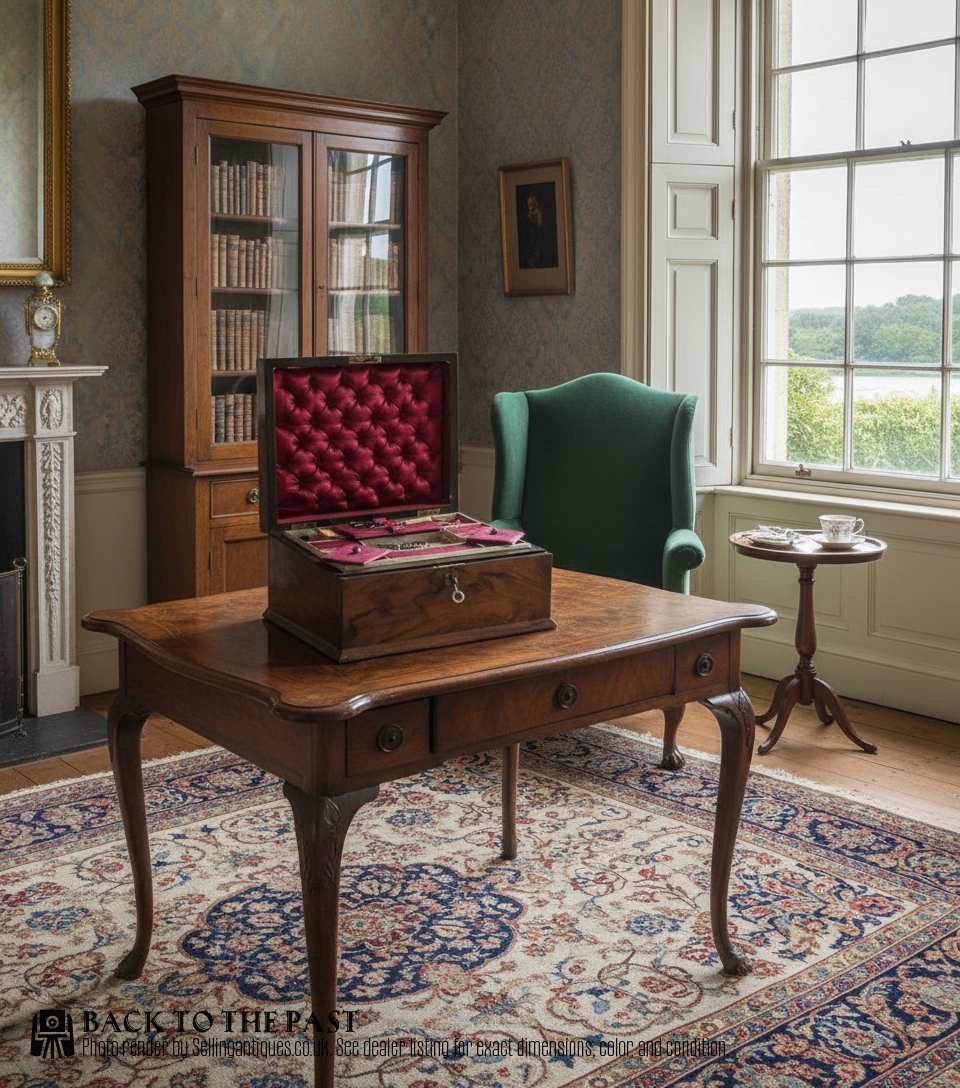
Victorian Wooden Work Box
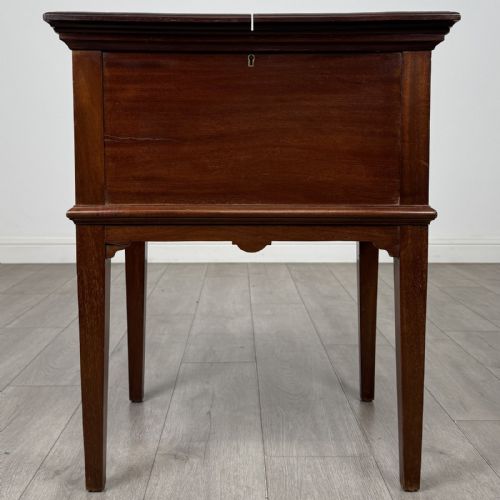
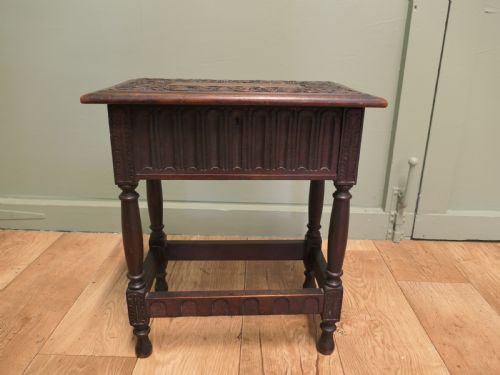
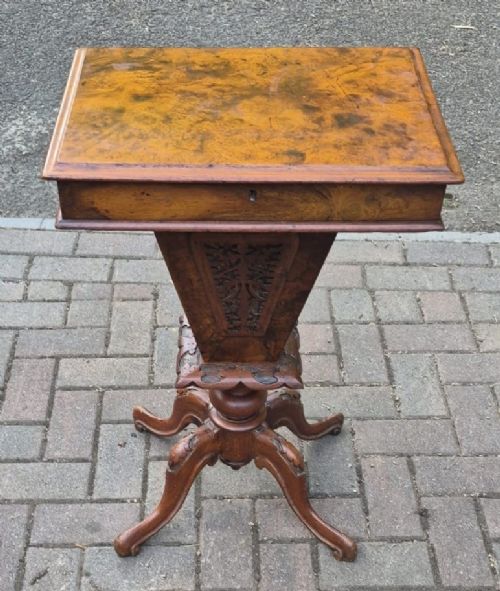
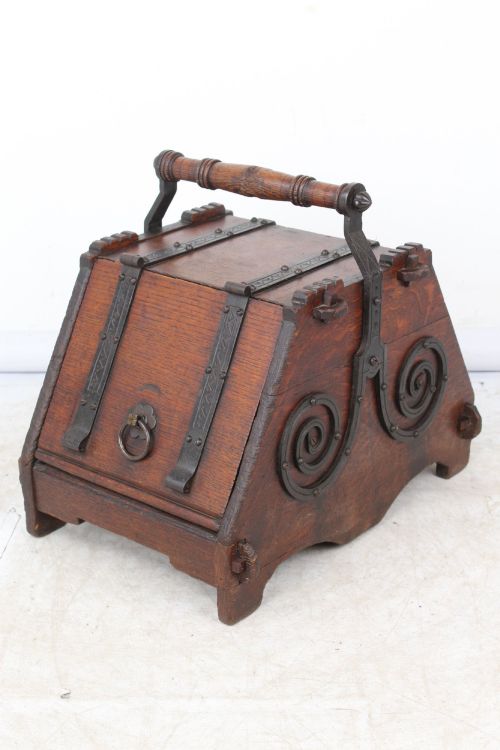
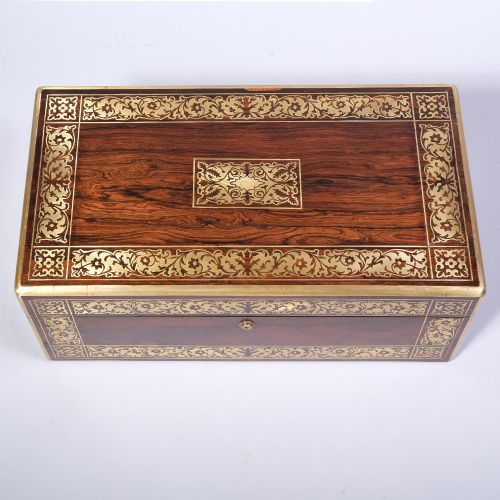
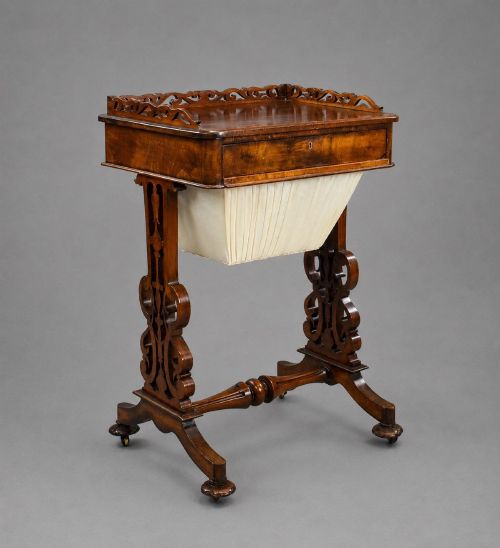
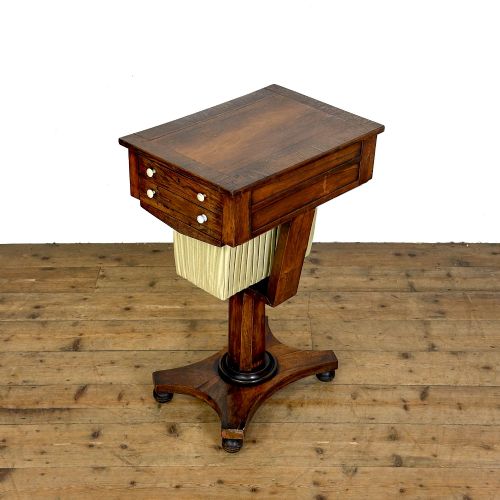
A victorian wooden work box typically takes the form of a portable desktop casket or a freestanding sewing table designed for domestic needlework and correspondence. These pieces originate primarily from the nineteenth century, encompassing styles such as Gothic Revival, Regency, and Anglo-Indian.
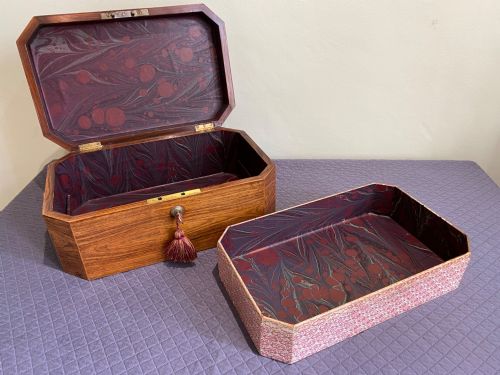
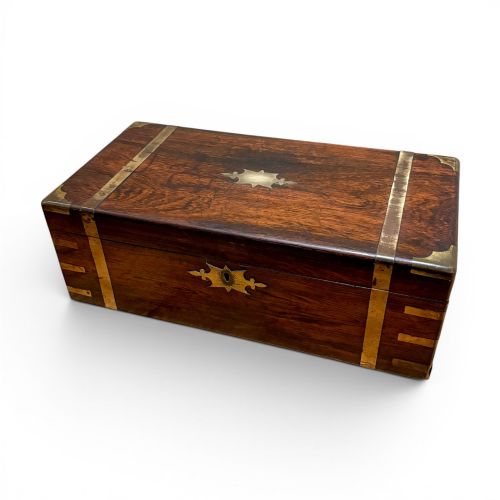
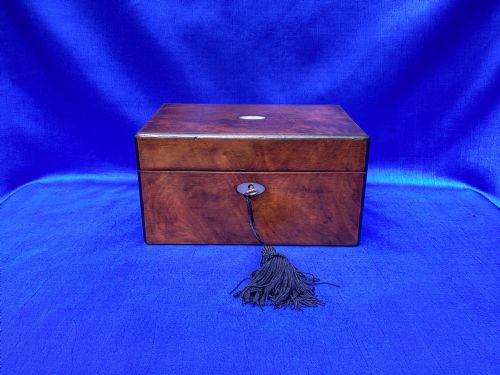
The selection on this page leans toward walnut, rosewood, and mahogany constructions, ranging from small desktop boxes with mother-of-pearl inlay to substantial freestanding sewing tables and writing slopes.
Materials and Technique
Cabinetmakers utilised dense timbers like rosewood, walnut, and burr walnut as foundational woods, frequently applying intricate marquetry, boxwood stringing, or Tunbridge ware mosaic patterns to the exterior surfaces.
Brass banding, brass inlay, and mother-of-pearl cartouches reinforce corners and ornament lids, while internal compartments utilise finer secondary woods to organise spools, bodkins, and papers.
Some nineteenth-century makers packed delicate scenery into miniature caskets using nothing more than cork, straw, and porcupine quills.
Design and Execution
Quality rests in the precision of the cabinetwork, seen in flush-fitting lids, tightly mitred corners, and the restraint or ambition of the decorative inlay.
Finer examples retain intact internal fitted trays, original working locks with keys, and balanced proportions across both miniature tabletop caskets and larger freestanding work tables.
The Victorian Wooden Work Box Glossary
- Tunbridge ware
- Woodware decorated with tiny mosaic tiles assembled from different coloured woods to form pictorial or geometric motifs. It originates from the spa town of Tunbridge Wells in Kent.
- Writing slope
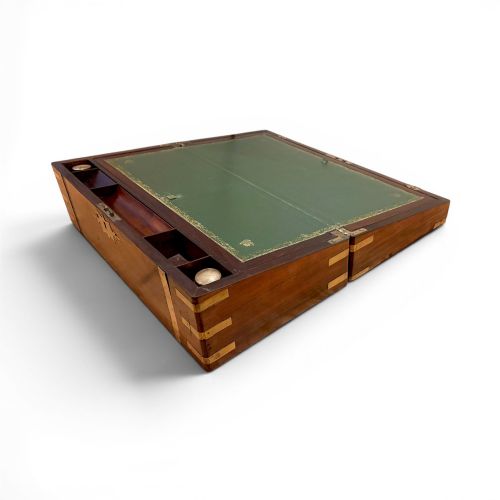
- A portable slant-topped desk hinged to fold flat, containing a sloping writing surface, inkwell recesses, and hidden compartments for stationery.
- Marquetry
- Decorative veneer applied to furniture structures in geometric patterns or pictorial scenes using various coloured woods and organic materials.
- Campaign
- Portable furniture designed for military officers on the move, typically fitted with flush brass handles, protective brass corners, and sectional frames.
- Boulle
- Elaborate marquetry technique utilising tortoiseshell and brass inlay, named after the French cabinetmaker André-Charles Boulle.
Victorian Wooden Work Box: Frequently Asked Questions
What is a victorian wooden work box used for?
These boxes served nineteenth-century households as tidy receptacles for sewing threads, needles, lace, and correspondence.
Today they function effectively on side tables or desks to hold modern stationery, jewellery, and small keepsakes out of sight.
How do I identify a sewing table?
Sewing tables stand on legs, frequently incorporating an under-slung fabric bag or wooden compartment designed to hold textile projects.
They combine the utility of a small occasional table with internal storage specific to needlework.
What woods were used for these boxes?
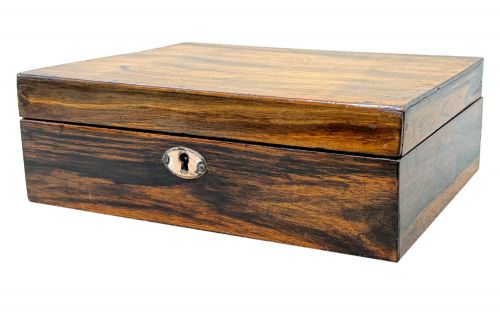
Cabinetmakers selected dense hardwoods including rosewood, walnut, burr walnut, mahogany, and coromandel for durability and rich grain patterns.
Secondary woods such as pine or mahogany often form the internal partitions and framing beneath the decorative veneers.
Are writing slopes different from work boxes?
Writing slopes open to reveal a slanted surface covered in leather or velvet for writing letters, alongside slots for inkwells and pens.
Standard work boxes concentrate on flat lift-off or hinged lids that open to shallow compartmentalised trays for sewing gear.