
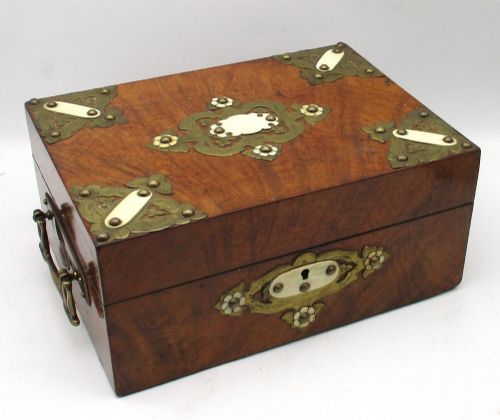


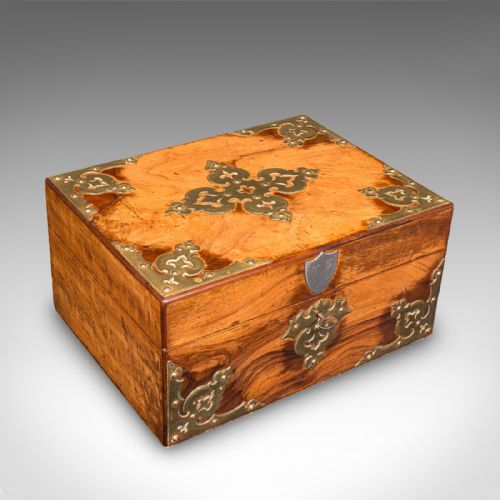
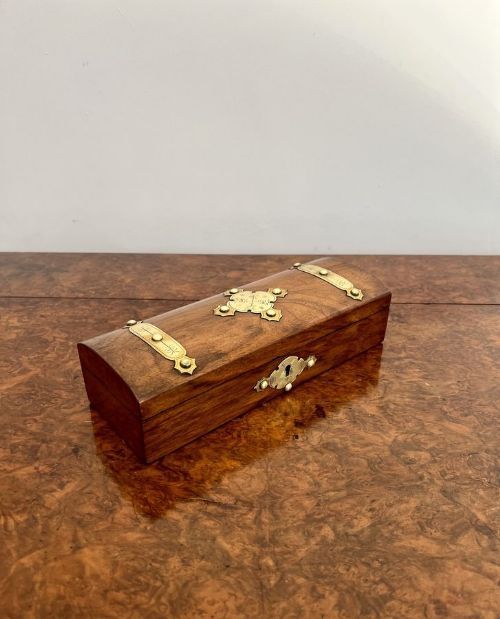


Walnut Vanity Box
A walnut vanity box is a fitted receptacle for personal grooming items, offering polished burr veneers and compartments that organise dressing tools for daily use.
Walnut Vanity Box
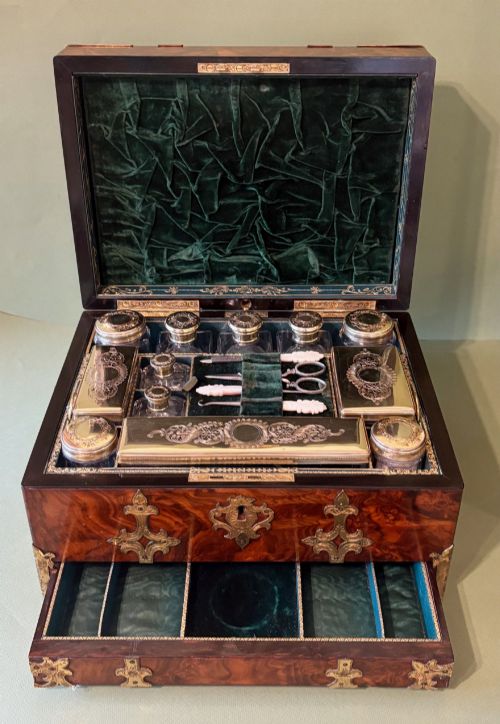
When you search for a walnut vanity box, you encounter containers built to hold cosmetics, brushes, and personal accessories during the Georgian and Victorian eras. These items range from compact travelling cases to larger dressing boxes fitted with glass bottles, silver mounts, and secret drawers.
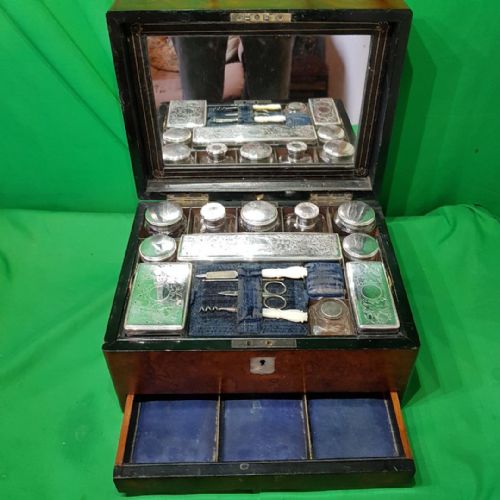
The version you meet most frequently on this page is the Victorian burr walnut box, often brass-bound or inlaid with mother-of-pearl. Such pieces reflect the mid-nineteenth-century demand for portable luxury, combining rich timber grains with functional internal layouts designed for travellers and home use alike.
How they were made
Cabinetmakers constructed the carcass from solid timber before applying thin veneers of figured or burr walnut to external surfaces, creating decorative grain patterns. Brass banding, corner mounts, and escutcheons reinforced the corners and edges of boxes intended for travel.
Interiors utilised velvet or silk linings, fitted wooden trays, and compartments tailored to hold glass jars with silver tops, ivory brushes, and small sewing implements. Parquetry and inlay work in bone or pearl further decorated the lids and fronts of finer examples.
What varies in quality
The distinction between standard and superior examples lies in the selection of the burr walnut veneer and the precision of the internal fittings. High-quality boxes feature deeply figured, book-matched timber grains across the entire lid and sides rather than plain veneers.
Completeness dictates much of the value within this category. Boxes retaining their original matched set of glass bottles, silver-lidded jars, and functioning locks with keys demonstrate higher integrity than those with replaced interiors or missing components.
Parkins & Grotto·Trussell Brighton
The Walnut Vanity Box Glossary
- Burr walnut
- A timber harvested from walnut tree growths, producing swirling, knotty grain patterns prized for decorative veneer work on fine boxes.
- Ormolu
- Gilded bronze mounted onto furniture or boxes, providing metallic accents that contrast against dark walnut surfaces.
- Parquetry
- Geometric patterns formed by fitting small pieces of wood veneer together, often seen on Victorian keepsake and glove boxes.
- Escutcheon
- A small protective plate surrounding a keyhole, usually fashioned from brass to match the box corners and handles.
Walnut Vanity Box: Frequently Asked Questions
What is a walnut vanity box?
A walnut vanity box is a portable chest lined with fabric and fitted with compartments for toiletries, cosmetics, and grooming accessories.
These pieces date predominantly from the Victorian and Georgian periods, showcasing polished timber veneers and often incorporating glass and silver accessories.
How were vanity boxes used?
Owners used these boxes to transport and store personal grooming items, jewellery, and writing materials at home or during travel.
Lift-out trays and secret compartments kept small items secure and organised while the outer brass banding protected the wood during transit.
How do I date a walnut vanity box?
Dating relies on construction methods, hardware styles, and the wood veneers used in the carcass.
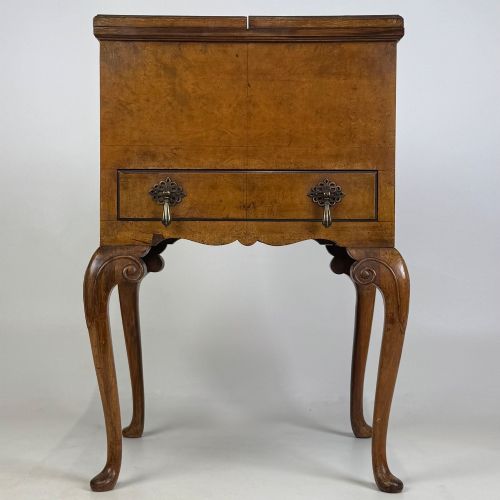
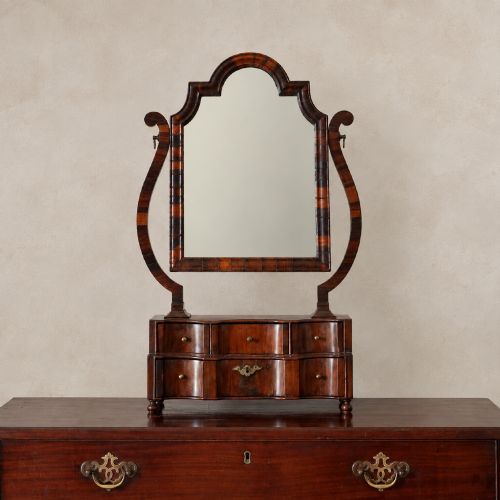
Georgian examples tend to be simpler toilet mirrors, whilst mid-nineteenth-century Victorian versions frequently utilise burr walnut with brass binding and fitted internal mirrors.
How do I care for burr walnut?
Burr walnut requires stable indoor humidity away from direct sunlight and heat sources to prevent the delicate veneer from cracking or warping.
Gentle dusting with a dry cloth maintains the polished finish without stripping the historical wax or lacquer.