






Fitted Walnut Sewing Box
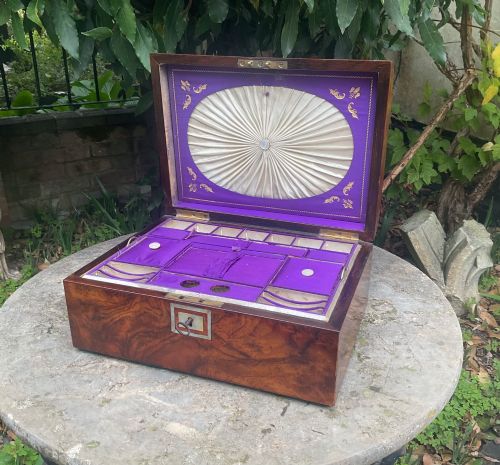
These fitted walnut sewing boxes combine mid-to-late Victorian cabinet-making with intricate internal fittings, offering both practical storage and decorative presence.
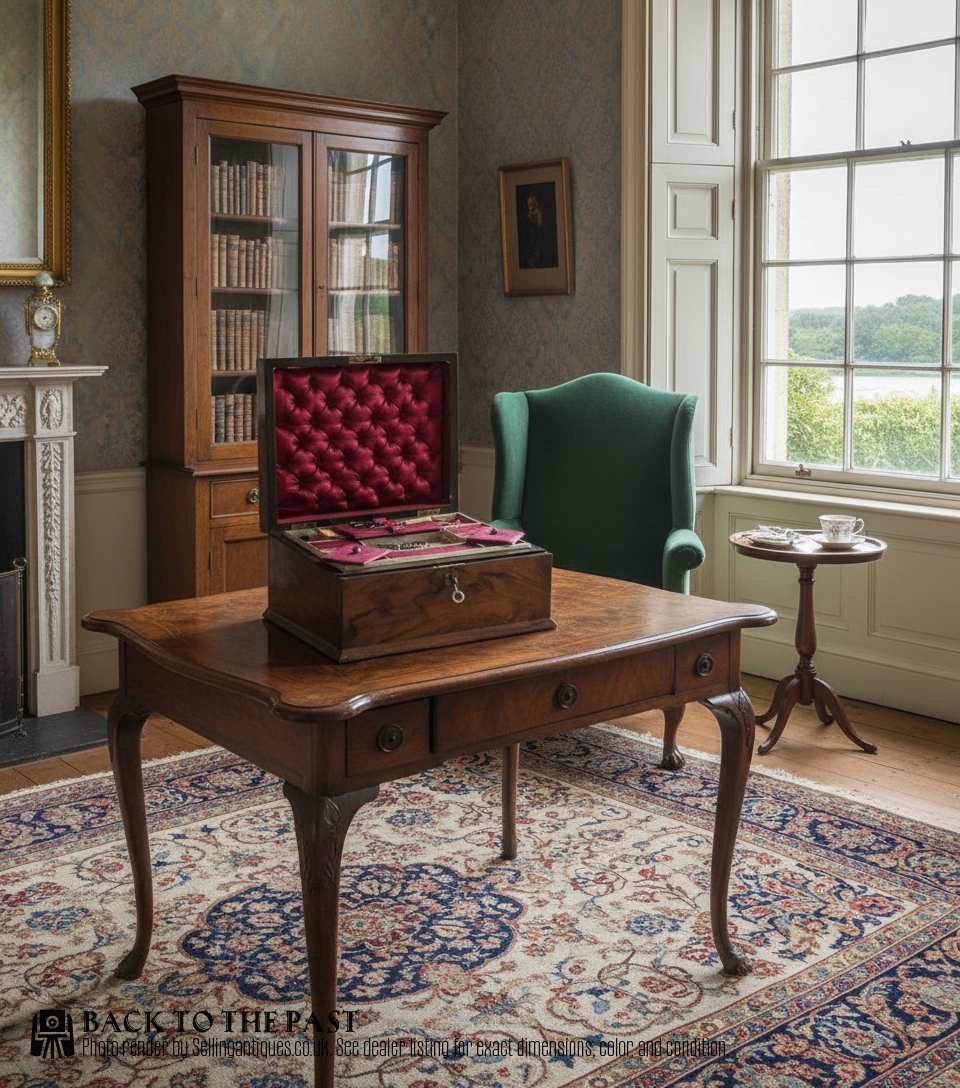
Fitted Walnut Sewing Box
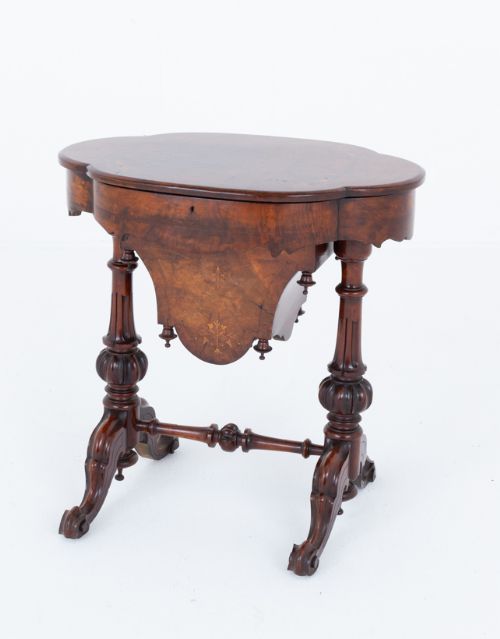
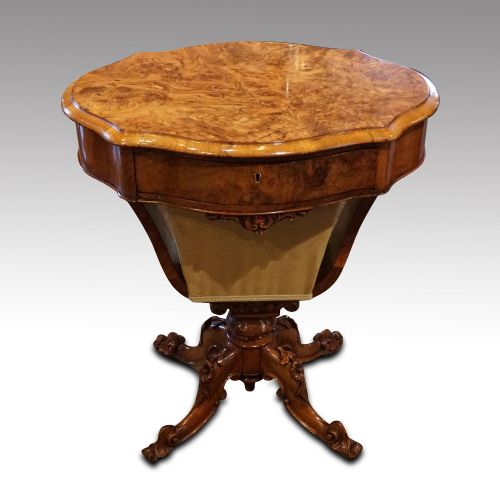
When you search for a fitted walnut sewing box, you encounter pieces spanning the nineteenth century, most frequently from the Victorian period around eighteen sixty. The selection comprises both freestanding work tables with cradle or carved and turned supports and smaller table-top jewellery boxes or workboxes.
These items bring together rich timber surfaces and compartmented interiors designed to hold cottons, needles and small implements. The forms range from oval worktables to rectangular boxes inlaid with boxwood, reflecting the domestic habits of the period.
How they were made
Cabinet-makers utilised burr walnut and figured walnut veneers over solid timber carcases, often applying boxwood inlay to create geometric or floral patterns on the lid and surfaces. Brass hardware secures the lids and locks, while turned and carved wooden supports elevate the freestanding tables.
The interiors are lined with fabric, leather and textile materials, fitted out with custom compartments and trays designed to organise sewing tools. Joinery techniques from the nineteenth century ensure the stability of both the small table-top boxes and the larger pedestal work tables.
Materials recorded across the selection include burr walnut, figured walnut, boxwood inlay, brass, fabric, leather and textile.
What varies in quality
The distinction between standard and superior pieces rests on the choice of veneer and the crispness of the inlay work. Burr walnut with a deeply figured grain commands greater visual interest, while finely executed boxwood inlay demonstrates the hand of a skilled artisan.
Internal arrangement and the preservation of the original fabric and leather linings significantly influence the character of each piece. Tables featuring substantial carved and turned supports and intact fitted compartments represent the higher tier of nineteenth-century production.
The Fitted Walnut Sewing Box Glossary
- Burr walnut
- A type of walnut veneer taken from the wart or burl of the tree, prized for its swirling, highly figured grain patterns. It forms the primary decorative surface on many nineteenth-century sewing boxes.
- Work table
- A freestanding nineteenth-century table equipped with a bag, box or fitted interior for holding sewing and needlework. These pieces often feature carved or turned supports.
- Boxwood inlay
- A technique where contrasting pale boxwood is set into recesses in the walnut surface to form decorative lines or motifs. It creates a sharp visual border on the lids and panels.
- Fitted interior
- An internal arrangement of lidded compartments, trays and dividers designed to organise small implements and sewing accessories. It remains a key feature in both boxes and tables.
Fitted Walnut Sewing Box: Frequently Asked Questions
What is inside a fitted walnut sewing box?
The interior typically contains a tray with small lidded compartments, pin cushions and spaces for cotton reels and bodkins. These sections are lined with fabrics or leather.
Many boxes retain their original paper linings and small bone or mother-of-pearl sewing tools within the fitted compartments.
How do I date a walnut sewing box?
Dating relies on the style of the cabinet-work, the shape of the supports and the materials used in the construction. Pieces from the Victorian era often display rich burr walnut veneers and specific turning styles.
Archival records and typical nineteenth-century design markers help narrow down the decade of manufacture, particularly around eighteen sixty to eighteen eighty.
Are these pieces freestanding or table-top?
The selection includes both compact table-top boxes intended for dressing tables and larger freestanding work tables with cradle bases. Both variants share the characteristic fitted interior.
Freestanding versions incorporate carved and turned legs, sometimes functioning as sewing and lamp tables combined.
How should I care for Victorian walnut?
Maintain the wood by keeping it away from direct sunlight and fluctuating heat sources that can dry out the veneer. Gentle dusting and occasional application of appropriate wax preserve the finish.
Internal fabric and leather linings require dry conditions and careful handling to protect the original nineteenth-century materials.