




Victorian Turned Spindle Chair
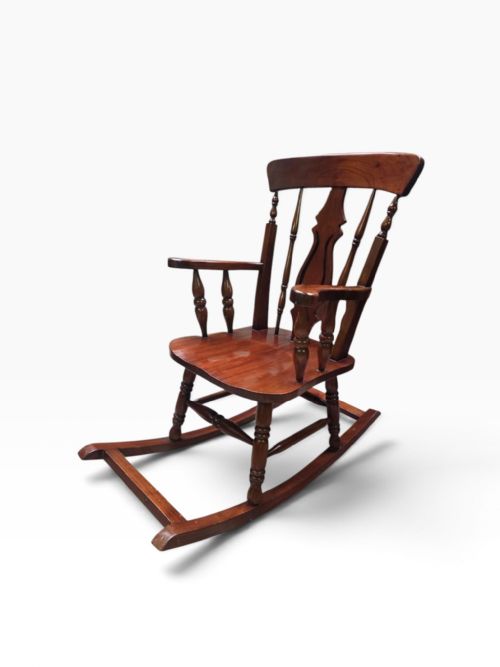
A victorian turned spindle chair offers solid wood construction and robust country or vernacular joinery, making it a sturdy and characterful seat for daily use.
Victorian Turned Spindle Chair
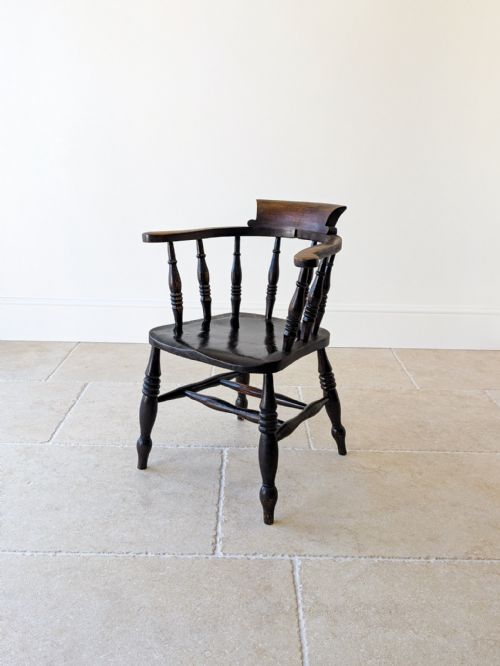
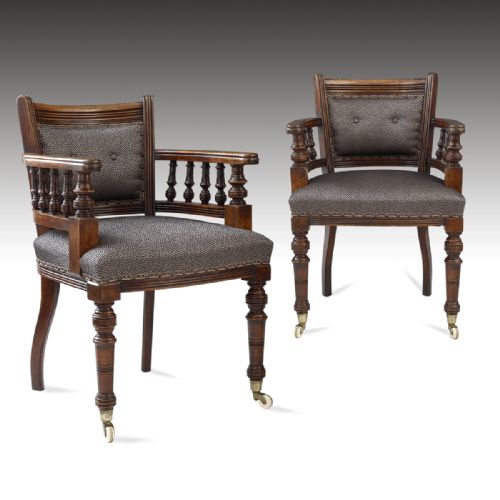
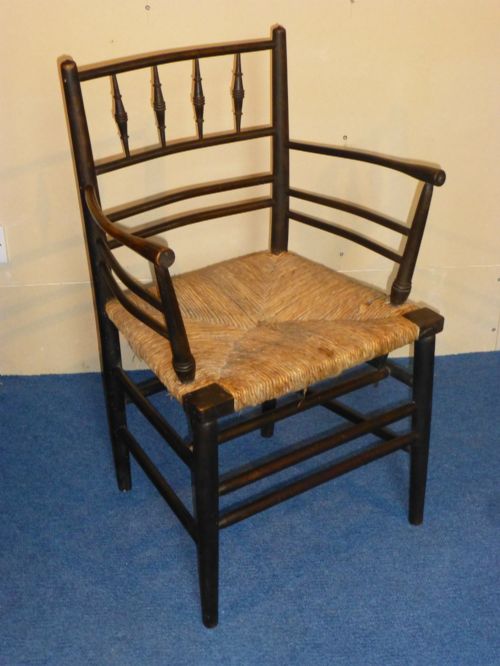
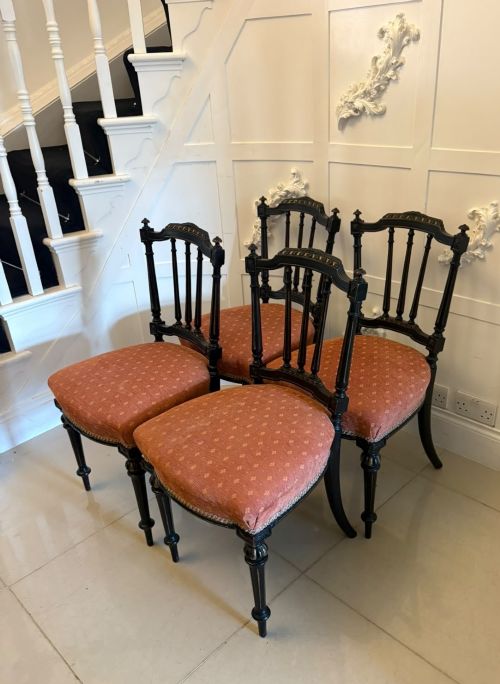
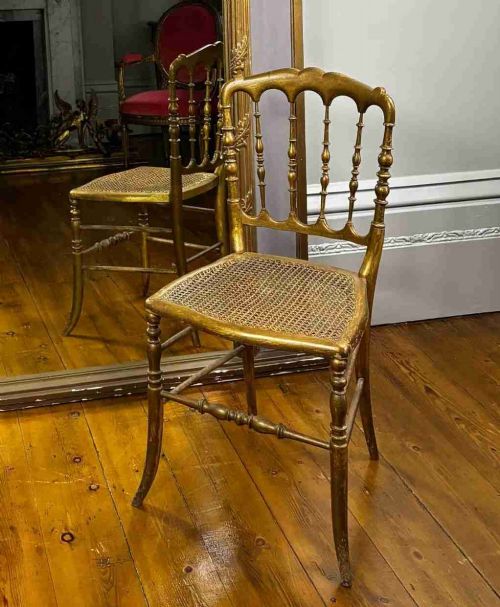
When you search for a victorian turned spindle chair, you are looking at practical seating shaped by nineteenth-century vernacular and country traditions. These pieces include armchairs, desk chairs, and kitchen chairs produced across the Victorian period, along with related examples from the Edwardian era.
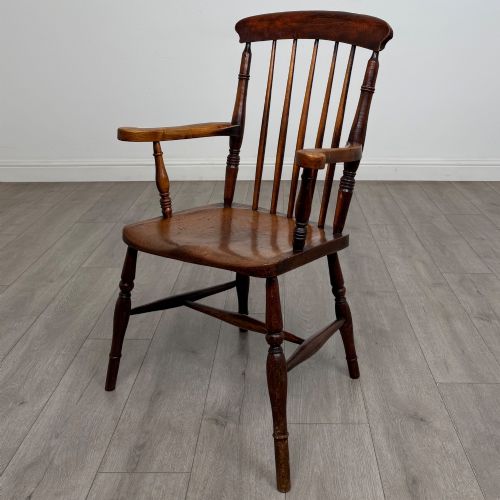
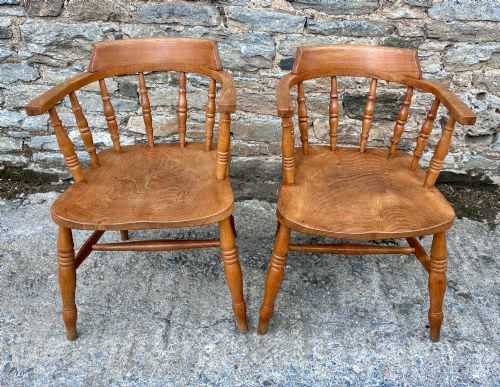
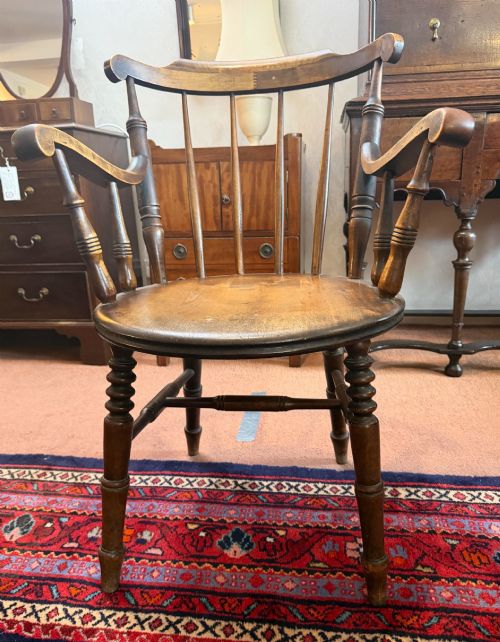
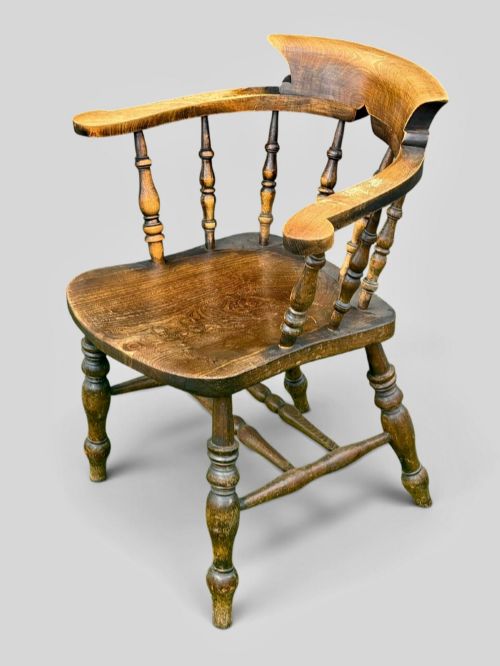
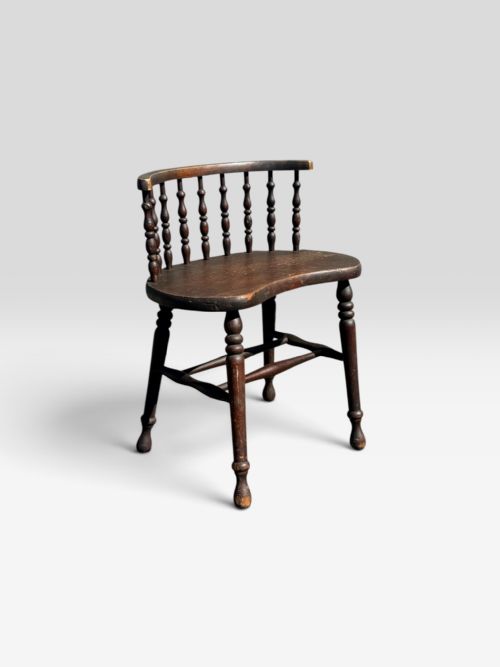
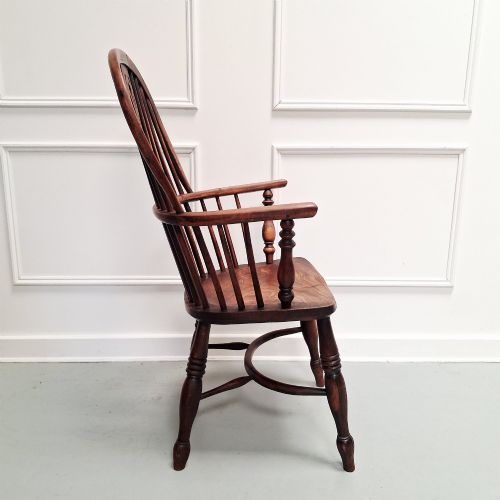
The version you are most likely to meet on this page combines a solid timber seat with turned spindles forming the backrest or arm supports. Many examples emerge from regional traditions such as the Thames Valley or Yorkshire farmhouse workshops.
Makers utilised familiar forms like the smoker's bow, captain's chair, and stick back armchair. These chairs served utility in libraries, offices, kitchens, and country houses.
How They Were Made
Craftsmen built these chairs primarily using native hardwoods such as elm, ash, beech, and oak, often combining multiple timbers within a single frame. Elm frequently provided the solid, shaped seat plank due to its interlocking grain resisting splits, while ash or beech formed the turned spindles and steam-bent components.
Turning lathes shaped the vertical spindles, legs, and stretchers, creating rhythmic profiles that defined the backrest and structural framing. Joinery relied on traditional wedged tenons and mortises to secure uprights directly into the solid wooden seats.
Listings feature nineteenth-century periods, including Victorian and Edwardian eras, alongside materials like elm, ash, beech, oak, and rush.
What Varies in Quality
The distinction between ordinary utility seating and finer examples rests on timber selection and the crispness of the turning work. Chairs utilising well-figured elm seats paired with carefully matched ash or beech turnings demonstrate superior workshop standards.
Proportion and structural integrity also separate pieces at different levels of the market. Refined arm profiles, balanced spindle spacing, and original surface patination elevate certain examples above standard utilitarian kitchen seating.
Morris & Co·Philip Webb·J Spencer·E W Godwin·Gillows
The Victorian Turned Spindle Chair Glossary
- Spindle
- A slender, turned rod of wood used decoratively or structurally in chair backs. These elements are shaped on a lathe to create cylindrical profiles.
- Smoker's Bow
- A low-backed Windsor armchair with a continuous curved armrail resting on short spindles. This form is frequently associated with captains and vernacular seating.
- Vernacular
- Everyday objects made by regional craftsmen following local traditions rather than high-style academic designs. These pieces prioritise utility and local timber availability.
- Rush
- Dried marsh grass twisted into cords and woven to create flexible, durable seats. This material appears frequently on Arts and Crafts and Sussex style chairs.
- Stretcher
- A horizontal wooden brace connecting the legs of a chair to provide structural stability. Crinoline stretchers curve backward in a horseshoe shape.
Victorian Turned Spindle Chair: Frequently Asked Questions
What is a turned spindle chair?
A turned spindle chair is a wooden seat featuring vertical turned wooden rods that form the backrest or support the arms. These chairs draw on nineteenth-century vernacular traditions.
They appear in various forms including kitchen chairs, office seating, and fireside armchairs.
How were these chairs used?
These chairs served utilitarian roles throughout nineteenth-century homes, offices, and libraries. Captains chairs and desk chairs provided practical seating for working spaces.
Kitchen and farmhouse variants offered durable seating for daily domestic life.
What woods were used?
Makers relied on durable native hardwoods such as elm, ash, beech, and oak. Elm was typically selected for the solid seat plank.
Ash and beech were common choices for turned spindles and steam-bent components.
How do I identify a Victorian chair?
Identification involves examining timber types, construction methods, and stylistic cues associated with nineteenth-century manufacturing. Evidence of lathe-turned spindles and traditional joinery points toward the period.
Details like rush seats or ebonised finishes often connect examples to Arts and Crafts or Aesthetic Movement styles.