



Oak Corner Armchair
An oak corner armchair solves the problem of difficult room angles while providing a sturdy, enveloping seat.
Oak Corner Armchair
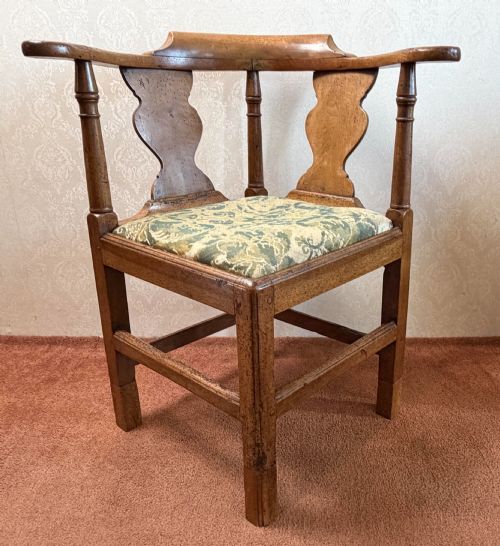
An oak corner armchair is specifically designed to fit snugly into the junction of two walls, making clever use of awkward domestic spaces. These pieces combine a diagonal footprint with a supportive curved backrest and arms, placing the sitter squarely across the corner.
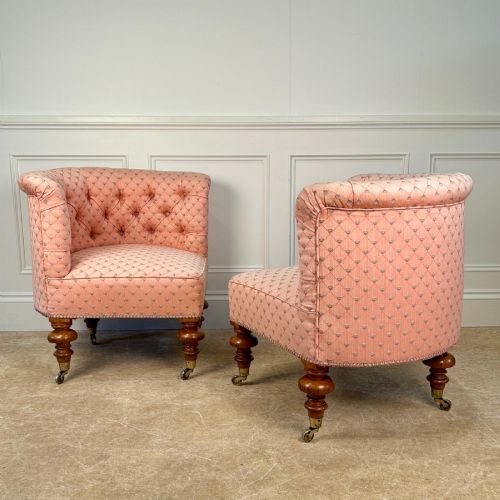
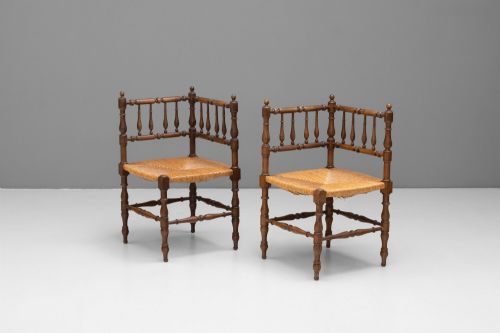
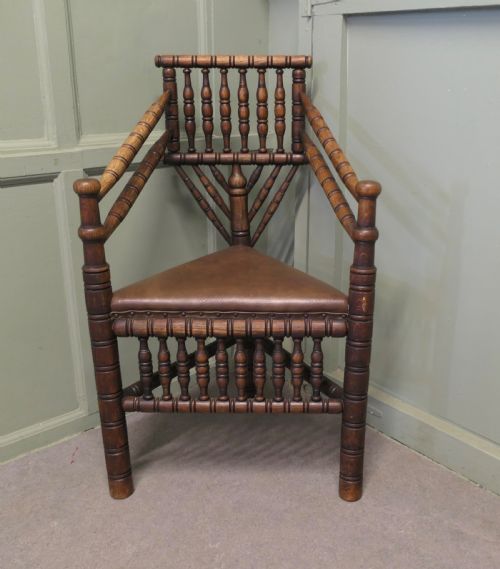
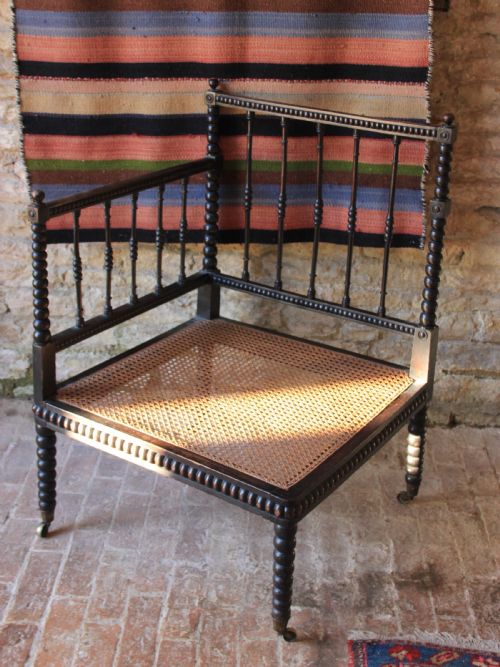
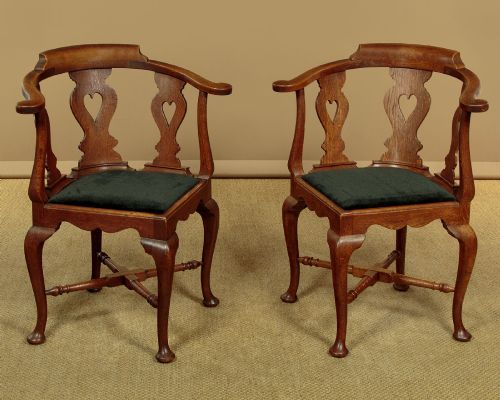
The selections span from robust 18th-century country examples to ornate Victorian Gothic revivals and turn-of-the-century interpretations. Buyers encounter forms ranging from simple turned spindle models to heavily carved elbow seats and rush-seated variants.
Materials and Construction
Makers relied principally upon oak, occasionally combining it with secondary woods such as fruitwood or beech, and sometimes incorporating rush, cane, or leather for the seating surfaces. Joinery techniques involved traditional pegged mortise and tenon joints alongside precise lathe turning for bobbin or spindle components.
Surface detailing often includes deep relief carving in revivalist styles, whilst other examples showcase the natural grain of the timber through plain polished finishes. Upholstered versions utilise fabric or leather secured with traditional brass tacking.
The listings span from the 18th century through to the Edwardian period, featuring oak, fruitwood, beech, rush, cane, and leather.
Judging Quality and Execution
Quality rests upon the crispness of the turned members and the depth and execution of any hand-carving applied to the crest rails and splats. Superior examples display tight, stable joinery and well-selected timber stock with consistent figuring.
The integrity of the seat base - whether woven rush, tightly stretched cane, or pad upholstery - strongly influences the overall standard of the piece. Proportion also matters, as finer chairs maintain balanced geometry without appearing overly bulky in their arms and back rails.
S&H Jewell
The Oak Corner Armchair Glossary
- Turned chair
- A seating form constructed almost entirely from shaped cylindrical components produced on a lathe. These often feature distinctive bobbin or spindle arrangements.
- Corner chair
- A chair designed with a diagonal plan to sit in the angle of a room, typically featuring a continuous curved armrest supported by multiple upright pillars.
- Gothic revival
- An architectural and decorative style popular during the 19th century that reinterprets medieval motifs, pointed arches, and heavy tracery in furniture design.
- Rush seat
- A traditional bottom woven from dried marsh grasses twisted into cords. This technique provides a resilient and textured surface for vernacular seating.
- Bergère
- An enclosed upholstered armchair with wooden framing exposed at the sides and back. Some variants incorporate woven cane panels within the wooden framework.
Oak Corner Armchair: Frequently Asked Questions
Where should I place an oak corner armchair?
These chairs fit naturally into neglected room junctions, unused hallway spaces, or corners of a study where standard seating proves too cumbersome. Their diagonal orientation allows them to occupy minimal floor space whilst offering a proper armchair experience.
Positioning one near a light source creates an inviting reading nook without obstructing pathways through the room.
How do I distinguish an 18th-century corner chair from a Victorian revival?
Eighteenth-century examples generally rely on restrained lines, simpler splats, and fruitwood or oak construction with genuine age-related wear in the timber. Victorian revival pieces often introduce heavier, deeper carving, more complex turned spindles, and sometimes darker applied finishes.
Inspecting the underside and joint construction reveals the age of the pegging and the tools utilised by the maker.
Are these chairs comfortable for daily use?
The comfort level depends significantly on the specific seat type, ranging from firm wooden seats to sprung upholstered pads or supportive woven rush. Their unique geometry places the sitter at an angle, which suits relaxed conversation or reading.
Adding a small scatter cushion helps tailor the back support to individual preferences.
How should I care for an antique oak frame?
Maintain the timber by applying a microcrystalline wax polish sparingly to nourish the wood and protect the surface from excessive dryness. Avoid placing the chair near direct heat sources or in strong sunlight, which can cause timber to split and finishes to fade.
Dust regularly with a soft, dry cloth to prevent particulate buildup in carved crevices.