


Victorian Trumpet Vase
A victorian trumpet vase brings undeniable vertical flair to a tabletop, shaped to hold a single magnificent bloom or crown an epergne centrepiece.
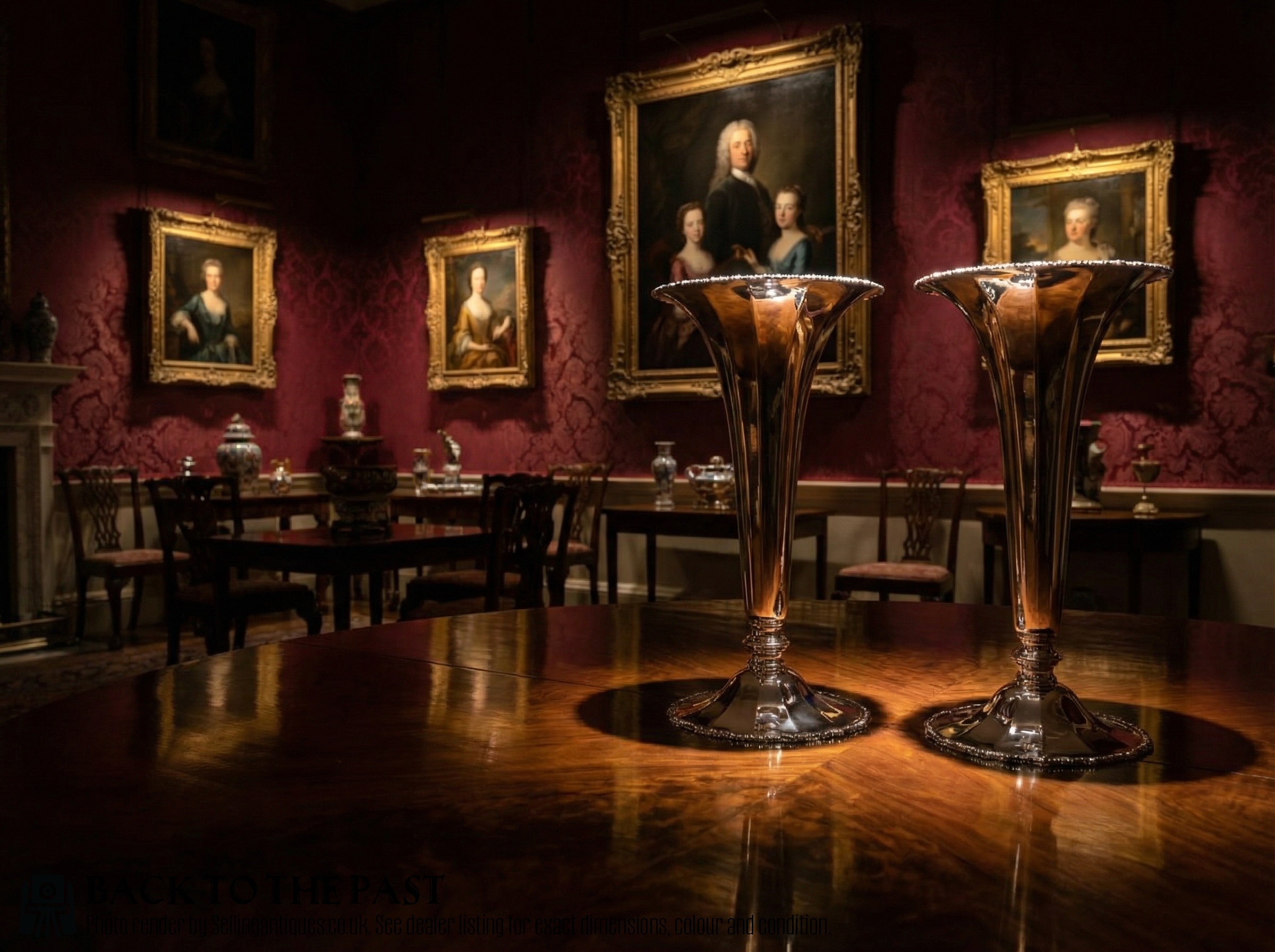
Victorian Trumpet Vase
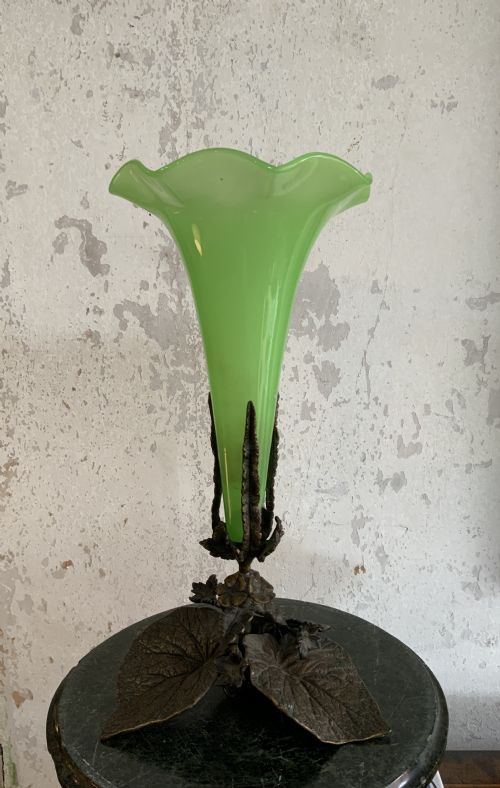
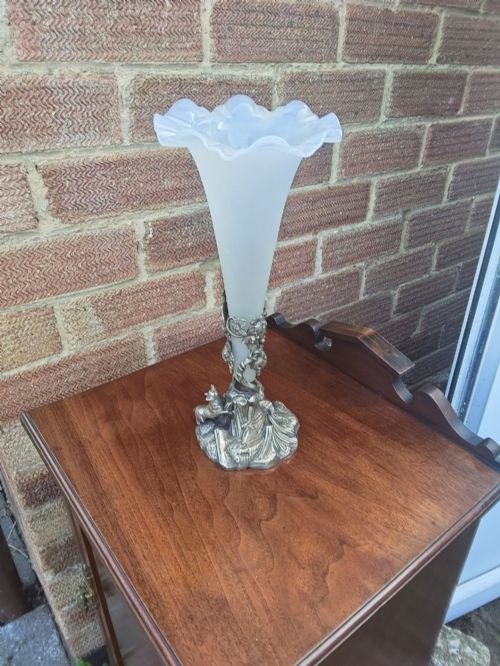
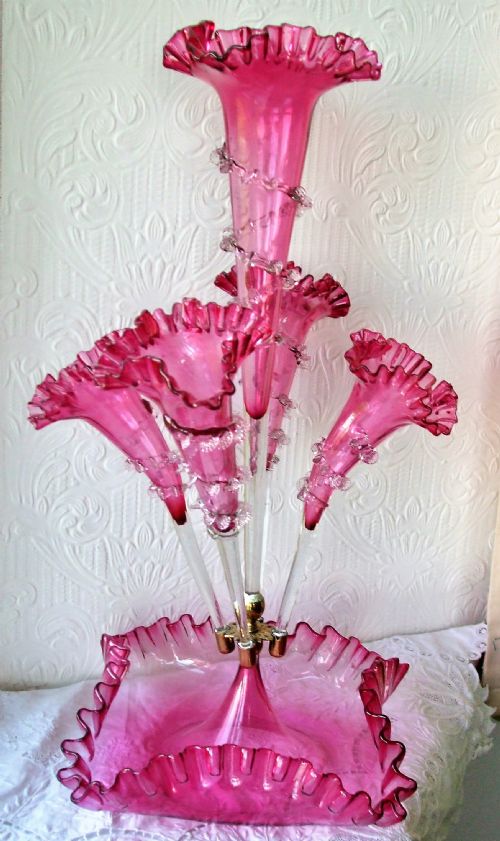
When you search for a victorian trumpet vase, you encounter pieces spanning the nineteenth century and into the early twentieth century, taking the form of standalone vessels, pairs, or central trumpets within larger epergne arrangements. The form naturally widens from a narrow base to a flared rim designed to support long stems.
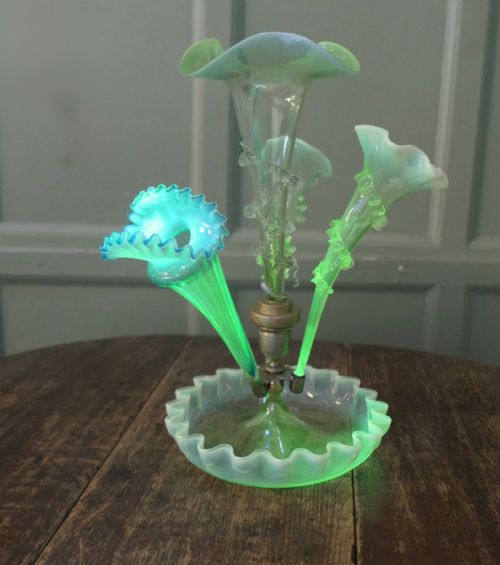
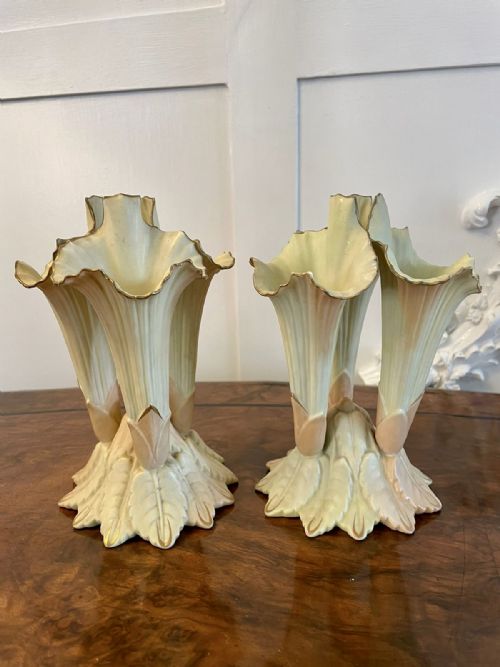
Many examples appear as part of multi-trumpet epergnes or table centrepieces, while others survive as pairs of standalone silver, silver plated, or ceramic spill vases. Dating stretches from the 1860s through the Edwardian period, encompassing distinct stylistic shifts from high Victorian opulence to flowing Art Nouveau lines.
Materials and technique
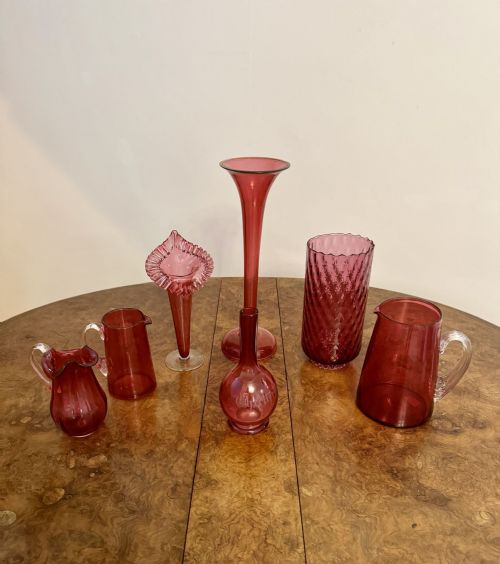
Makers utilised vibrant coloured glass such as cranberry, vaseline, and uranium glass, frequently shaped by hand blowing or cased in layers to achieve rich depth of colour. Crystal and opaque white glass also feature prominently, sometimes enhanced with delicate trailing or white cane decoration.
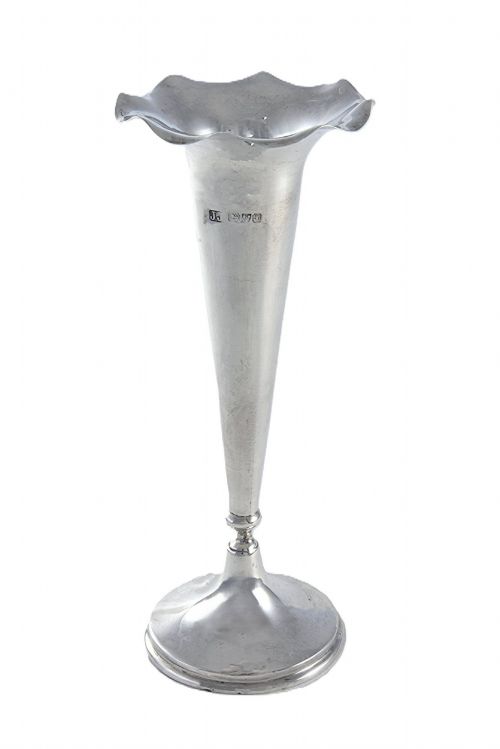
Metalwork versions rely on sterling silver, silver plate, and white metal, often incorporating pierced floral rims or paired with glass liners. Carved wood supports, such as Black Forest work, occasionally combine with baccarat crystal or bronze mounts to anchor the glass trumpet structures.
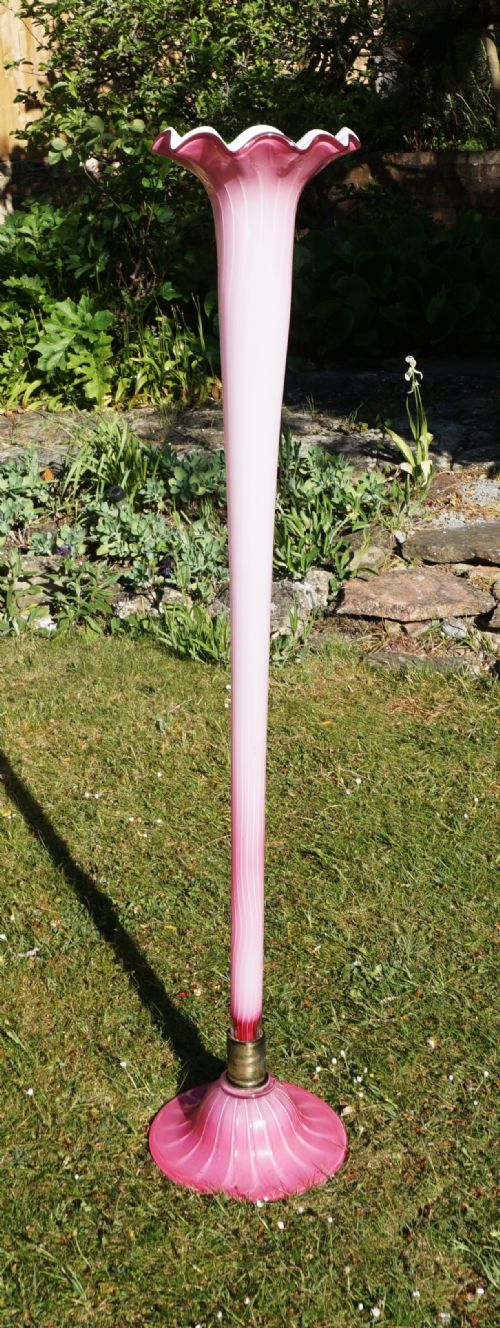
Some towering glass trumpets reach forty inches tall, demanding remarkably steady hands when filling them with water.
Judging the range
Quality rests heavily on the crispness of the hand-blown glass forming the trumpet or the precision of the piercing and hallmarks on silver examples. Pieces that display confident, balanced proportions between the slender stem and the flared rim achieve greater visual harmony.
The sophistication of secondary materials - such as heavy cast bronze mounts, intricate silver plating, or the depth of cased colour in the glass - separates standard production items from truly ambitious studio work.
Locke & Co.·Josiah Williams & Co·Daniel & Arter·William Comyns
The Victorian Trumpet Vase Glossary
- Epergne
- A large table centrepiece featuring a central bowl or basket surrounded by multiple detachable trumpet vases for holding flowers or fruit.
- Cranberry Glass
- A rich red-pink transparent glass created by adding gold chloride to the molten batch, widely used throughout the Victorian era.
- Vaseline Glass
- A transparent yellowish-green glass containing uranium dioxide that glows under ultraviolet light, popular in late nineteenth-century tableware.
- Spill Vase
- A tall, narrow receptacle designed to hold tapers used for lighting candles or fires before the invention of safety matches.
- Hallmark
- An official stamp applied to precious metals indicating the standard of purity, assay office, and year of manufacture.
Victorian Trumpet Vase: Frequently Asked Questions
What is a victorian trumpet vase?
It is an elongated, bell-mouthed vessel designed primarily for displaying cut flowers, appearing either as a single piece or as part of a multi-trumpet table epergne.
These pieces typically date from the nineteenth century, utilising materials ranging from coloured art glass to hallmarked sterling silver.
How were epergnes used?
Epergnes served as grand table centrepieces during formal Victorian dining, holding fruit in the base bowl and cut flowers in the surrounding trumpet vases.
They acted as both decorative focal points and functional vessels for entertaining guests.
How do I style a trumpet vase?
Their slender profile makes them ideal for holding single long-stemmed blooms or delicate architectural foliage that benefits from height without blocking conversation across a table.
Pated pairs look particularly striking placed symmetrically on sideboards or mantelpieces.
How do I date glass trumpet vases?
Dating relies on identifying specific manufacturing techniques, colour palettes such as cranberry or vaseline glass, and associated metal mounts or hallmarks.
Stylistic shifts from mid-Victorian ornamentation to late nineteenth-century Art Nouveau curves also help narrow the period of origin.