
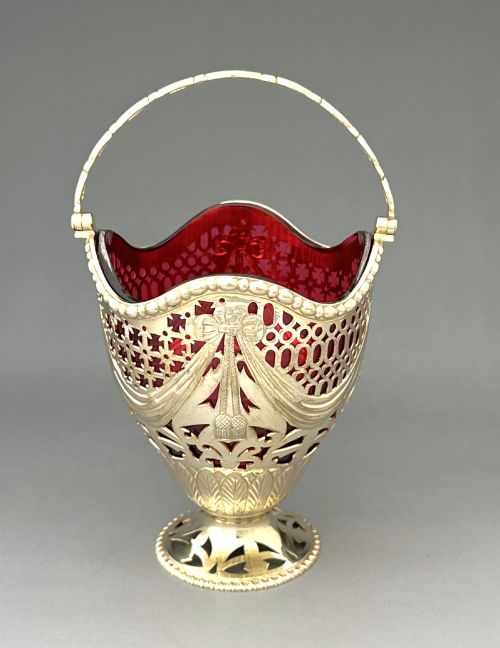
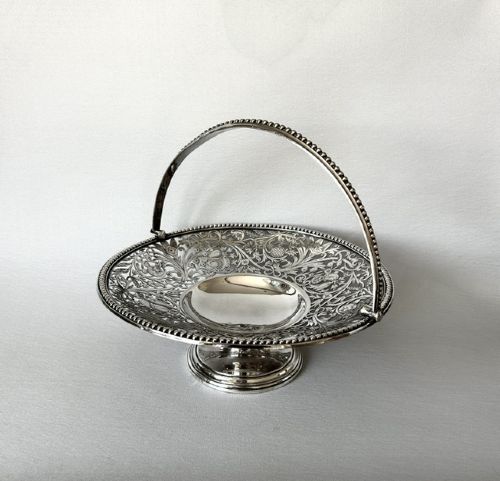
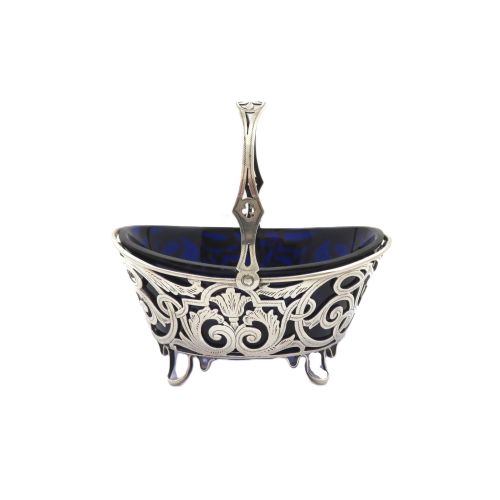
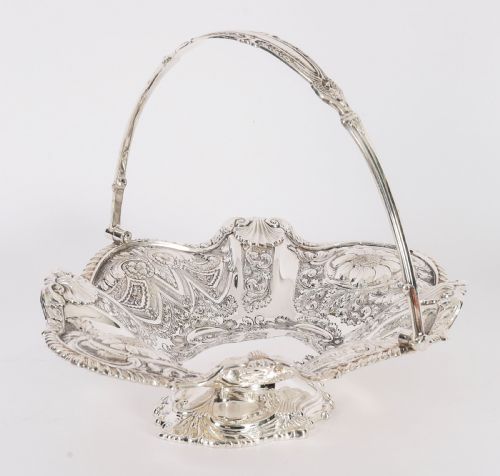


Victorian Swing Handle Basket
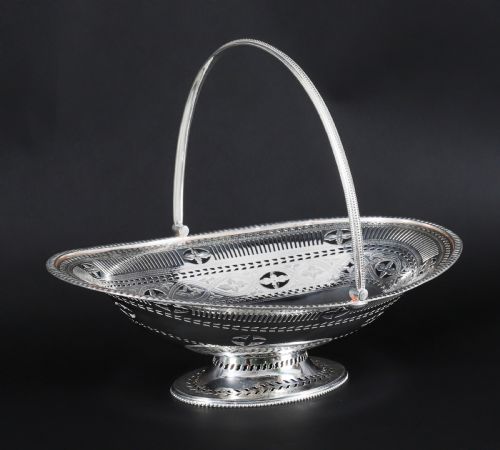
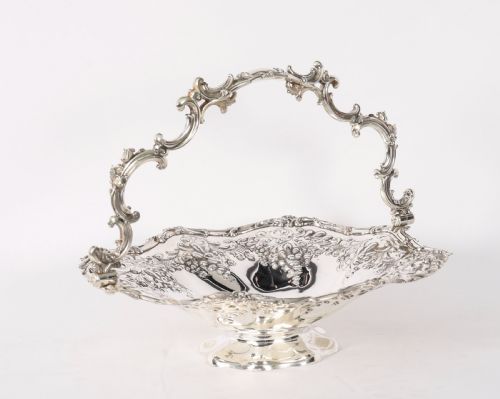
A Victorian swing handle basket sits ready for fruit, sugar or bread, offering graceful movement and substantial metalwork that elevate any table.
Victorian Swing Handle Basket
A Victorian swing handle basket brings domestic utility together with nineteenth-century ornamentation, serving purposes from large fruit displays to smaller sugar bowls and sweet bowls. The forms vary from expansive bread baskets and cake baskets down to diminutive sugar baskets fitted with colourful glass liners.
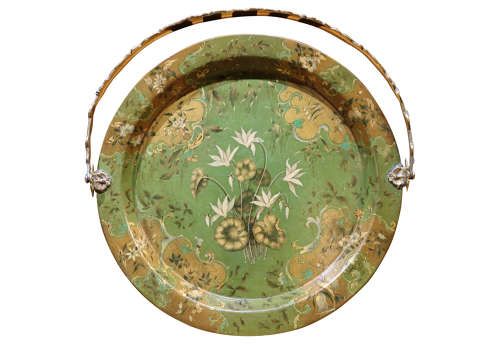
Most examples encountered here belong to the nineteenth century, spanning silver plated and sterling silver construction alongside occasional copper or papier mache alternatives. Makers utilised pierced work, embossed detailing, cast floral handles and woven wire to create distinct visual weight.
The pivoting handle defines the group, designed to drop to the side for access and storage while remaining sturdy enough to support heavy silver or glass bowls. Buyers select these pieces for their mix of functional design and period style, whether Neoclassical, Rococo Revival or Art Nouveau.
Materials and Construction
Silversmiths and electroplaters worked sterling silver and silver plate over base metals, shaping the body through piercing, embossing and wire-weaving techniques. Handles were cast with floral or scroll motifs and attached via secure pivots that allowed the arc to swing smoothly.
Many baskets incorporated fitted glass liners in cobalt blue, cranberry red or ruby glass, held securely within pierced or openwork metal galleries. Wrought iron and copper appeared in heavier utility vessels, paired with simpler swing mechanisms for everyday household service.
One exceptionally hefty cauldron required a wrought iron swing handle just to move the copper weight.
Distinctions in Quality
Quality rests upon the crispness of the chased or pierced decoration and the solid weight of the metal or silver plate. Heavier gauge silver and thicker cast feet or handles indicate superior manufacture compared to lighter, purely utilitarian wares.
The presence of an undamaged original glass liner in cobalt or cranberry hues elevates an item, as does documented maker attribution to established silversmiths or firms. Finer execution shows in the precision of the woven wire and the balanced movement of the swing handle itself.
George W. Scott & Sons Ltd·James Deakin & Sons·W M F·George Fox·James Dixon·Bernard
The Victorian Swing Handle Basket Glossary
- Pierced work
- Metal cut through in decorative patterns to lighten the vessel and display coloured glass liners beneath. This technique required precise hand-sawing by skilled metalworkers.
- Swing handle
- A movable arched metal handle attached to pivot pins on either side of the basket rim. It drops flat against the vessel for easy storage and serving access.
- Silver gilt
- Silver covered with a thin layer of gold on its surface, giving a warm golden sheen. It was frequently used for sugar baskets and interior bowls.
- Glass liner
- A removable insert made from coloured glass, such as cranberry or cobalt, fitted inside pierced silver baskets. It protected the metal from acidic foods like fruit and sugar.
- Embossed detailing
- Ornamentation raised from the reverse side of the metal using punches and hammers. This method created bold relief patterns of flowers, fruit and scrolls.
Victorian Swing Handle Basket: Frequently Asked Questions
What were swing handle baskets used for?
These vessels served a variety of dining and domestic duties, holding fresh fruit, bread, small cakes or loose sugar crystals on the Victorian table. The movable handle allowed servants or diners to lift and pass the basket with ease during formal meals.
Smaller versions paired with glass liners held sugar or confectionery, while larger footed bowls managed heavy loads of fruit or baked goods for family gatherings.
How do I care for silver plated baskets?
Clean silver plate and sterling silver gently using a specialised soft cloth and mild silver polish to avoid removing the plating over time. Wash glass liners separately in warm soapy water without submerging antique metal mounts.
Store the baskets in a dry environment away from direct sunlight to prevent tarnishing and protect the original finishes of both metal and glass.
How do I distinguish sterling silver from silver plate?
Look for hallmarks stamped into the metal, which typically include a lion passant, city marks and date letters indicating sterling silver standards. Silver plate often displays manufacturer marks or lacks standard British assay office hallmarks altogether.
Heavier weight and consistent metal colour across wear points also point toward solid sterling construction rather than plated base metals.
Why do some baskets have glass inserts?
Coloured glass liners protected the silver or silver plate from corrosion caused by moist fruits, wet preserves or abrasive sugar crystals. The contrast between cobalt blue or cranberry glass and pierced silver created a striking visual effect on the dining table.
These liners were removable to simplify cleaning after meals and to showcase the intricate metalwork underneath when empty.