




Engraved Silver Basket
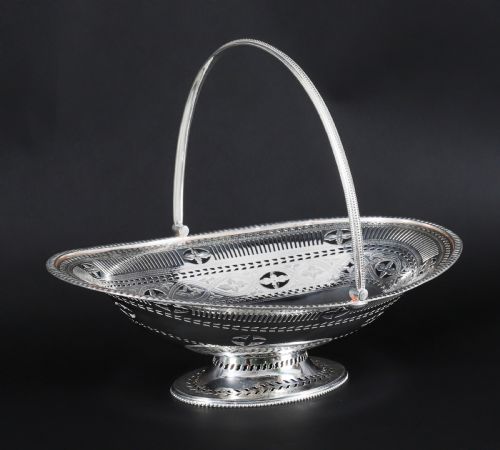
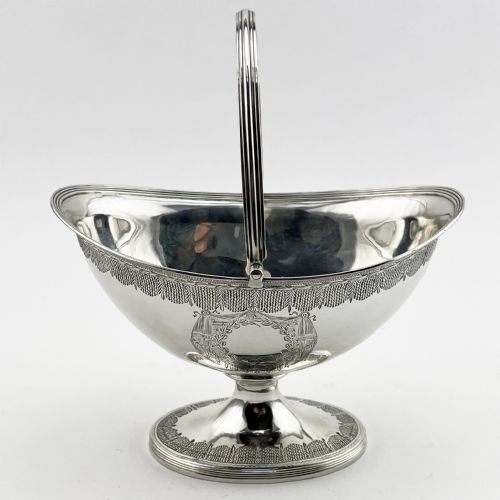
An engraved silver basket brings botanical scrolls and bright metal to the table, formed in sterling or silver plate to hold fruit, sugar or bread.
Engraved Silver Basket
An engraved silver basket spans several distinct functional forms across the Georgian and Victorian eras, taking shape as fruit baskets, sugar baskets, cake baskets and bread dishes. Buyers exploring this selection encounter vessels designed for domestic service, each adapted to hold specific table provisions from bread to sweetmeats.
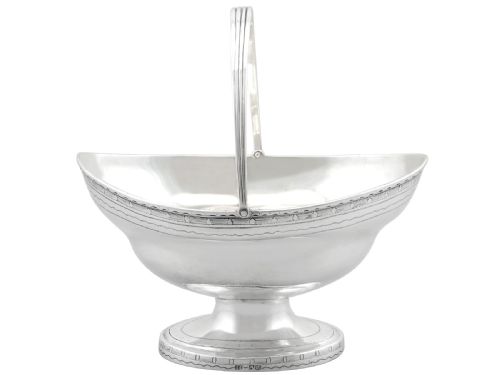
The prevailing examples on this page date from the eighteenth and nineteenth centuries, encompassing George II, George III, Victorian, Edwardian and George V periods. Forms range from deep oval sugar bowls with swing handles to large footed fruit bowls and shaped cake baskets.
Origins vary across British centres, with specific pieces carrying hallmarks from London, Newcastle, Glasgow and Ireland. Alongside solid sterling silver, many surviving specimens utilise old Sheffield plate or silver plate on copper, reflecting the broader manufacturing output of the period.
Materials and construction
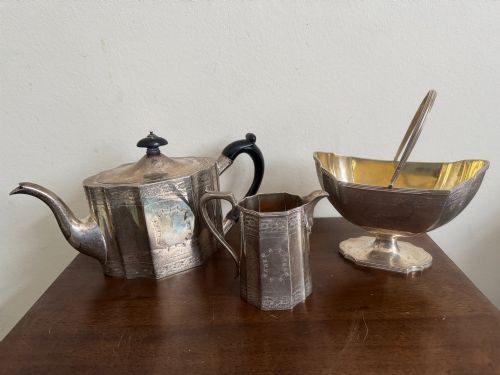
Makers shaped these baskets using sterling silver or plated metals such as old Sheffield plate and EPNS, occasionally incorporating ebony details or applying gold gilding and wash to the interior bowl. The metal was beaten, cast or rolled into sheet form before being pierced, soldered and assembled with swing handles or fixed pedestals.
Surface decoration relies on hand engraving, utilising gravers to cut fern motifs, ribbons, garlands and floral sprays directly into the metal. Piercing and chasing complemented the engraved lines, creating openwork lattices and scroll borders characteristic of Rococo Revival and Neoclassical styles.
Engraved Silver Basket Retail Price Guide 2026
Typical asking prices for engraved silver basket among the pieces listed under this phrase on Sellingantiques today, from the lower quarter to the upper quarter. They describe what is for sale here now, not the wider market.
Listings feature sterling silver and silver plate alongside old Sheffield plate, spanning the Georgian, Victorian, Edwardian and George V periods.
Factors of quality
The distinction between standard utility wares and finer pieces rests on the crispness of the hand engraving and the depth of the metalwork. Crisp, deep floral and fern incisions maintain their definition across the curves of the bowl, whereas lower grade items show shallow or mechanically stamped patterns.
Structural integrity and balance determine the calibre of a basket, particularly in the construction of swing handles and pedestal bases. Superior examples maintain a heavy gauge of silver or plate that resists flex, ensuring the vessel sits squarely without wobble.
Henry Chawner·Walker & Hall·Samuel Herbert·John Walton·James Dixon
The Engraved Silver Basket Glossary
- Sterling silver
- A standard alloy consisting of ninety-two point five percent silver by mass, with the remainder comprising copper or other metals. British pieces commonly display hallmarks confirming this standard.
- Old Sheffield plate
- A composite material made by fusing a thin sheet of sterling silver to a thicker copper base before rolling. This technique preceded modern electroplating.
- Sweetmeat basket
- A small tabletop vessel intended for serving small confections, nuts or dried fruits. These pieces frequently feature delicate piercing and swing handles.
- EPNS
- Electroplated nickel silver, a base metal alloy of copper, nickel and zinc coated with a thin layer of pure silver through electrolysis. It became widespread during the Victorian era.
Engraved Silver Basket: Frequently Asked Questions
What were engraved silver baskets used for?
These vessels held provisions for the table, including fresh fruit, sliced bread, sugar lumps or small sweetmeats during formal meals and afternoon tea.
Servants passed them among guests or placed them centrally on the dining table as part of a matched service.
How do I clean an engraved silver basket?
Maintenance requires a soft cloth and a gentle silver cream formulated to lift tarnish without abrading the fine engraved lines.
Harsh dips should be avoided, particularly on silver plated items where chemical immersion can strip the thin outer layer from the base metal.
How can I tell Georgian from Victorian pieces?
Georgian examples, particularly from the George III period, often exhibit heavier hand-raising, crisp piercing and clear maker marks stamped directly into the silver.
Victorian specimens frequently utilise silver plating techniques, incorporating machine assistance alongside hand engraving such as popular fern and ribbon motifs.
Can I use these baskets for food today?
Sterling silver and silver plated vessels remain suitable for serving dry foods like bread, fruit or wrapped confections.
Acidic foods should not be left in contact with silver for extended periods to prevent surface marking.