
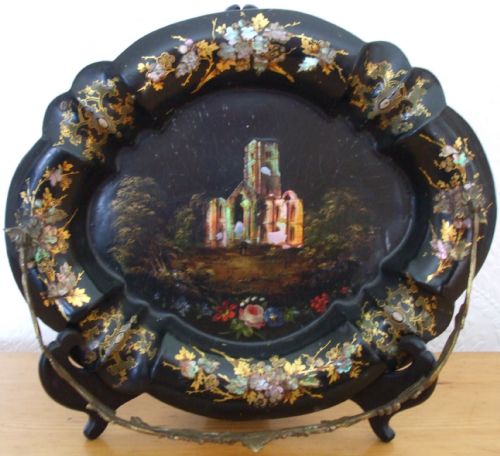


Gilt Handle Basket
A gilt handle basket brings undeniable Regency elegance and Victorian refinement to a table, offering a decorative vessel that collectors prize for its craftsmanship.
Gilt Handle Basket
When a buyer searches for a gilt handle basket, they encounter a diverse array of decorative tableware, centrepieces, and sugar baskets spanning the eighteenth to the early twentieth century. These pieces combine functional forms with ornate metalwork, often featuring prominent gilded handles that elevate their visual presence.
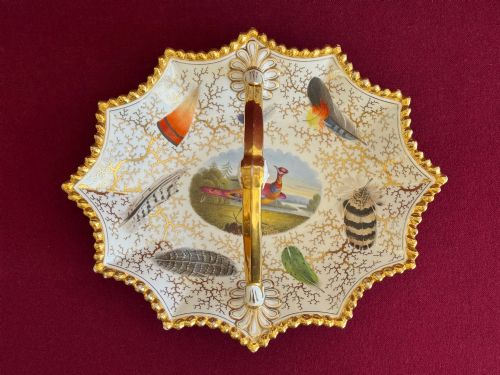
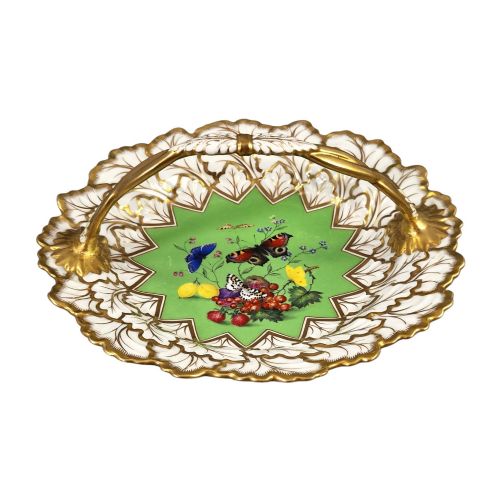
The selections available on this page most frequently showcase Regency porcelain from makers such as Flight, Barr and Barr alongside Victorian and Edwardian metalwork, papier-mâché, and enamel pieces. Buyers find both delicate dessert baskets and robust centrepiece trays designed for display and formal dining.
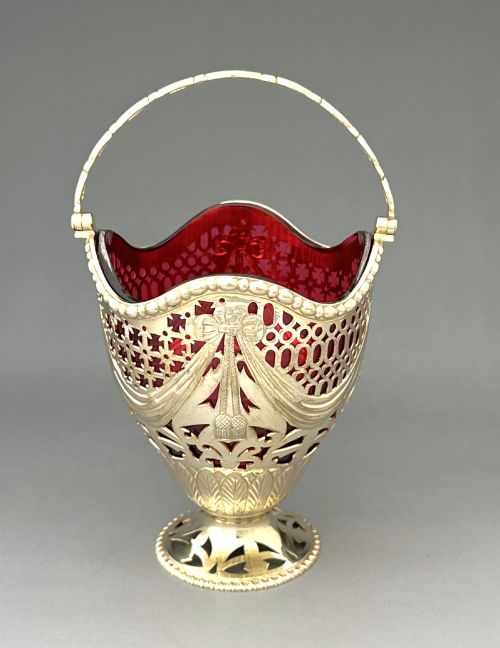
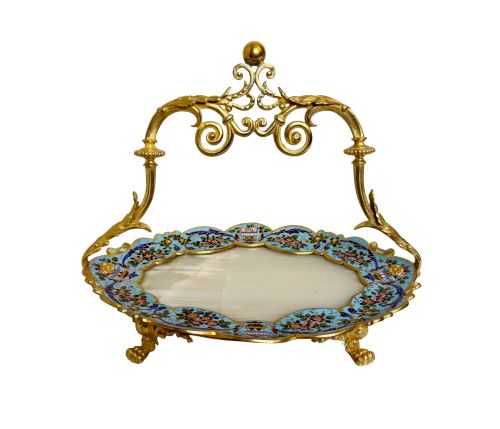
Form and utility merge in these objects, ranging from sweetmeat baskets of the late eighteenth century to champlevé enamel trays of the Belle Epoque. Each specimen reflects the prevailing stylistic revival of its era, particularly French Rococo influences and classical Regency shapes.
Materials and construction methods
The construction of these vessels relies heavily on skilled metalworking, porcelain manufacturing, and papier-mâché moulding. Makers apply fire-gilding or silver-gilding to base metals like brass, copper, and silver, creating a lustrous finish that mimics solid gold.
Porcelain baskets utilise refined ceramic pastes painted with polychrome enamels and applied gilding, then fired in kilns to achieve durable glazes. Papier-mâché pieces involve layered paper pulp compressed and hardened with linseed oil and resin, then lacquered and painted.
Enamelling techniques such as champlevé integrate coloured glass pastes into recessed metal channels before firing and polishing. Ormolu mounts and onyx bases further combine mineral and metallic elements to construct elaborate centrepieces.
Object forms span functional tableware, decorative trays, sweetmeat baskets, and centrepieces created by English and continental makers.
Factors that distinguish quality
The quality of a gilt handle basket rests upon the crispness of its chasing, the depth and evenness of the gilding, and the integrity of any applied enamel or porcelain body. Superior examples demonstrate meticulous hand-finishing where decorative motifs remain sharp and well-defined.
Artisanal execution dictates value, visible in the hand-painted details of Worcester porcelain and the precision of champlevé cells. Pieces bearing clear maker marks or factory attributions command greater attention from discerning collectors.
Flight, Barr and Barr·George Fox
The Gilt Handle Basket Glossary
- Gilt
- A thin layer of gold applied to the surface of another material such as silver, bronze, or brass. This technique enhances the visual richness of the object without the cost of solid gold construction.
- Champlevé
- An enamelling technique where troughs or cells are carved into a metal surface and filled with vitreous enamel powder before firing. The piece is then ground smooth and polished to reveal the metallic outlines.
- Ormolu
- Finely ground high-carat gold-mercury amalgam applied to a bronze object. The mercury is driven off by heat, leaving a rich golden coating on the bronze mount.
- Papier-mâché
- A composite material consisting of paper pieces or pulp reinforced with glue, starch, or resin. It is moulded into shape and lacquered, providing a lightweight base for decorative painting.
- Sweetmeat
- A small confection or sweet served during formal meals from specialised receptacles. These vessels often take the form of miniature baskets or bowls.
Gilt Handle Basket: Frequently Asked Questions
How were these baskets used originally?
In period households, these vessels served practical and decorative functions during formal dining and entertaining. They held sweets, fruit, sugar, or cards depending on their specific form.
Centrepiece trays and dessert baskets occupied prominent positions on tables or sideboards to display culinary treats or floral arrangements.
How do I care for antique gilt metal?
Maintaining gilt surfaces requires gentle dusting with a soft, dry cloth to prevent the accumulation of abrasive particles. Avoid commercial metal cleaners, harsh chemicals, and excessive rubbing, which can wear away the thin layer of gold.
Keep pieces away from direct sunlight and high humidity to preserve the underlying metal and any applied enamels or patinas.
How can I tell Regency pieces apart?
Regency items often display classical restraint, neoclassical motifs, and specific porcelain bodies associated with early nineteenth-century manufactories like Worcester. Their forms favour clean symmetry and refined painted decoration.
Later Victorian and Edwardian examples lean towards heavier ornamentation, revival styles, and more complex material combinations like onyx and champlevé enamel.